
Printable PDF available here. Previous pieces on Ha’azinu are available here and here.
We are approaching the end of the third year of Mareh Kohen. If you are interested in having Mareh Kohen continue (or have any suggestions/feedback), please leave a comment to this post.
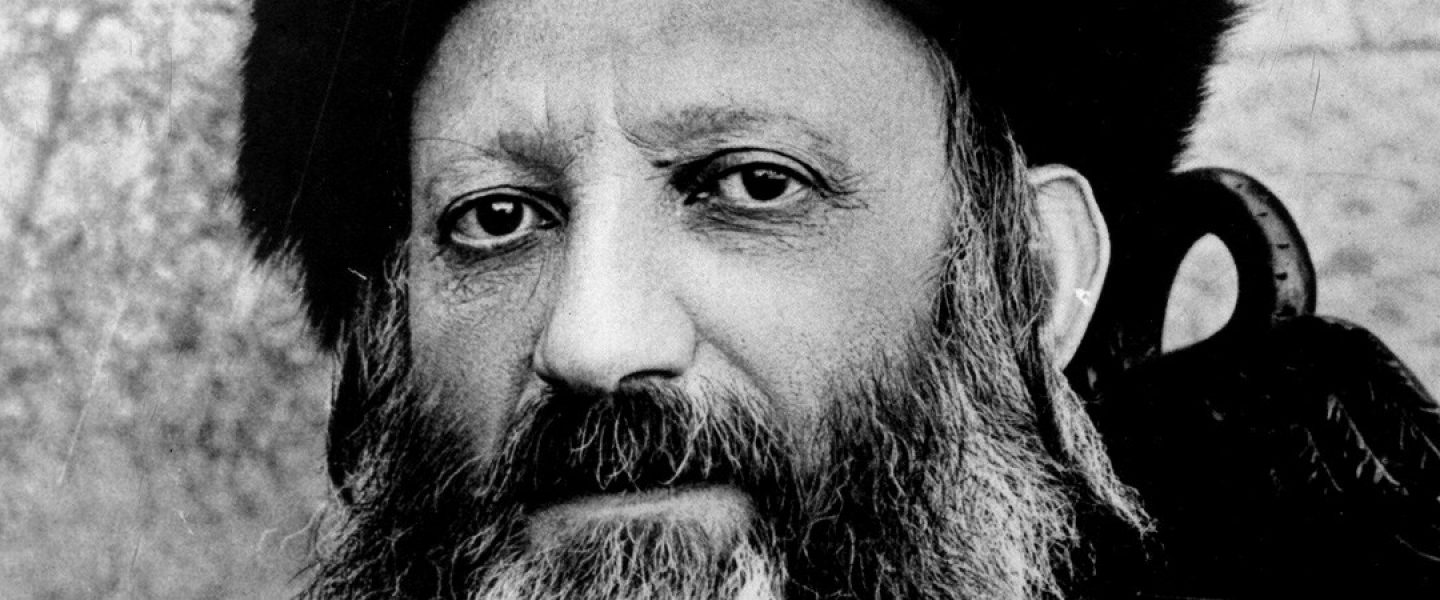
Rav Kook (Based on B’sadeh haRe’iah, Pg. 194)
And now, write for yourselves this song, and teach it to the Children of Israel. Place it into their mouths, in order that this song will be for Me as a witness for the children of Israel. (Devarim 31:19)
And Moses came and spoke all the words of this song into the ears of the people, he and Hoshea the son of Nun. (Devarim 32:44)
On a simple level, the “song” referred to here is the parshah of Ha’azinu. However, a deeper interpretation offered by our tradition is that the entire Torah is referred to a song. This is the basis of the mitzvah that every Jew must write their own sefer Torah. It is unclear, however, why G-d has to speak in code and refer to the Torah as a “song,” as we don’t find this usage anywhere else. There must be some deeper meaning intended, but what is it?
It seems that the answer is latent in the broader context in which Ha’azinu appears. Immediately before, in Parshat Nitzavim, the Jews entered into a new covenant with G-d at the Plains of Moav. At that time, Moshe declared:
You are all standing this day before the Lord, your G-d the leaders of your tribes, your elders and your officers, every man of Israel, your young children, your women, and your convert who is within your camp both your woodcutters and your water drawers, that you may enter the covenant of the Lord, your G-d, and His oath, which the Lord, your G-d, is making with you this day…
Although Israel was already bound by the covenant at Sinai, our Sages teach that this covenant added a new dimension of obligation. At Sinai, the people had pledged fealty to G-d as individuals. Each person assumed responsibility for their own individual spiritual successes and failures – but nothing more. However, according to the Talmud (Sotah 37b), at the Plains of Moav the people accepted responsibility for each other’s fulfillment or non-fulfillment of the Divine covenant. The Talmud refers to this is arvut, literally “guarantorship.” Just as a lender can collect from the guarantor when the borrower fails to pay, each Jew is a guarantor for his or her fellow’s loyalty to the Divine covenant. A laissez-faire policy of “live and let live” is not a Jewish concept.
Our Sages also teach (Sanhedrin 43b) that the additional covenant of arvut did not come into force until the Jews entered Eretz Yisrael. For it is only in Eretz Yisrael that Torah life is a totalizing affair undertaken by the collective (lit. הכלל), instead of the pursuit of a conglomeration of like-minded individuals.
Thus, as Moshe prepares to teach Parshat Ha’azinu to the people, the higher collective dimension of Torah stands ready to emerge, beckoning from just beyond the Jordan River. For this reason, it is only now that the Torah can be referred to as a “song.” As the Maharal taught, true song emerges from a state of wholeness and completeness (lit. שלימות). The Torah can only rise to this level in the Land of Israel, but nowhere else. Thus, it was only in anticipation of Israel’s imminent entry into the Land that Torah became a song. Only in Israel can the song of the Torah be written on our hearts.
Food for Thought
Rabbi Josh Flug (Arvut: The Responsibility to Ensure that Other Jews Observe Mitzvot): The Magen Avraham seems to be of the opinion that the obligation of arvut is more important than fulfilling one’s own mitzvah in a preferred manner. He rules (671:1) that if one has the exact amount of oil to fulfill mehadrin on Chanukah and one’s neighbor doesn’t have any oil, one should give some oil to the neighbor and both will fulfill the basic mitzvah. R. Chaim Sofer (1822-1886, Machaneh Chaim 3:19) explains that Magen Avraham’s ruling is based on the concept of arvut. Magen Avraham (658:12) also rules that if one owns an etrog in a place where the community has one available for everyone to use and there is another community that doesn’t have any etrogim, he should send his private etrog to the other community and fulfill his obligation with his community’s etrog. R. Shammai Gross (Shevet HaKehati, Orach Chaim 5:108) explains that Magen Avraham’s ruling is based on the idea that the etrog owner’s obligation of arvut demands that he forgo the preferred method of fulfilling the mitzvah in order that other people should be able to fulfill the basic requirement.
Rambam (Hilchot Tefillin, Mezuzah and Sefer Torah 8:1): It is a positive commandment for each and every Jewish man to write a Torah scroll for himself, as it says (Devarim 31:19): “And now, write down this song for yourselves,” i.e., write down the [entire] Torah which contains this song. One may not write only a few parshiot of Torah [and therefore the command to write Ha’azinu translates is in effectively a command to write the entire Torah].
Rabbi Zushe Greenberg: In the ‘60s, a rabbi from Connecticut had a personal audience with the [Lubavitcher] rebbe. This rabbi had been very instrumental in establishing the local Jewish day school and was well respected in his community. He asked the rebbe if he should make aliyah to Israel. The rebbe responded, “If you made up your mind to go, you have my blessing. But if you ask my opinion, I think you should stay in Connecticut.” The rebbe concluded, “There are plenty of rabbis in Israel. Connecticut needs you!” The rebbe inspired generations of young couples to leave their hometowns and go off into the world to share their Jewish experience with others. In my own family, many of my siblings moved to far-flung corners of the world just to be part of the building of a new Jewish community.
Rabbi Ezra Bick: We have all been brought up in an extremely individualistic ethos, which pervades the western world today. Man is responsible for himself. Of course, most of us – and most western societies – accept that I should help my fellow man. This is called altruism, and serves to moderate extreme individualism to some extent. But altruism is very different from the ethos that lies behind arvut; in fact, it is almost the opposite. Arvut declares that I am responsible for others just as I am responsible for myself. It is not goodheartedness to help others, it is collective self-interest. The failure of my neighbor is not merely a lost opportunity for me to have practiced philanthropy, it is simply my own failure.
For the forty years in the desert each Jewish individual had a relationship with G-d based on the fact that he too had received the Torah. At this point, before entering the Land of Israel (i.e., before entering on the road of national destiny), G-d molds these disparate individuals into a nation, a collective, a community. … The covenant is not between the individual and G-d, but between the metaphysical entity called Israel and G-d. The nation as a whole and as a unity is given the Torah this time; hence the conclusion of arvut – if the nation as a whole and as a unity does not keep the Torah, the covenant has not been fulfilled…
In the beginning of this week’s shiur, I began with the application of “arvut” to a ritual matter, in order to demonstrate that the concept should be taken seriously and not merely as a sort of metaphor for a general obligation to look out for others. But of course, the concept has immediate applications in many other areas as well. My attitude towards other Jews is one of obligation – mutual obligation and responsibility. If another Jew is in trouble, I will go to help him, not merely because I think that helping others is an ethical imperative, and I am a generous and helpful soul, but because we both belong to a greater unit which binds us and defines my own identity. Were I not to help him, I would not only sin against him, but I would be untrue to myself, to my identity as a Jew. I do not mean to belittle generosity, not at all. Giving to others, “chesed,” is itself a powerful and essential trait, one defined halakhically as basic to the image of G-d in which all of us are created… The concept of arvut is a parallel one, based not on love and giving, but on responsibility. Think of it as family – above and beyond, and totally separately from the obligations of giving and feelings of love, one takes care of one’s children because one is responsible for them, because one belongs to a unit – the family – that is part of one’s individual personality and identity. I think that if we knew a mother who took care of her children, in a perfectly wonderful manner, only out of the pity and love that one has for one’s fellow man, or even out of the love that one naturally has for one’s offspring, there would be something missing. The practical difference perhaps is what happens when one is tired or grouchy, or if the child is unworthy or unwilling, but I think the point is true even if there is no immediate practical difference at all. Arvut seeks to raise the responsibility of family to a higher level.
Rabbi Jonathan Sacks (Covenant and Conversation, Ha’azinu 5777): Music has extraordinary power to evoke emotion. The Kol Nidrei prayer with which Yom Kippur begins is not really a prayer at all. It is a dry legal formula for the annulment of vows. There can be little doubt that it is its ancient, haunting melody that has given it its hold over the Jewish imagination. It is hard to hear those notes and not feel that you are in the presence of G-d on the Day of Judgment, standing in the company of Jews of all places and times as they plead with heaven for forgiveness. It is the holy of holies of the Jewish soul… Faith is more like music than science. Science analyses, music integrates. And as music connects note to note, so faith connects episode to episode, life to life, age to age in a timeless melody that breaks into time. G-d is the composer and librettist. We are each called on to be voices in the choir, singers of G-d’s song. Faith is the ability to hear the music beneath the noise. So music is a signal of transcendence. The philosopher and musician Roger Scruton writes that it is “an encounter with the pure subject, released from the world of objects, and moving in obedience to the laws of freedom alone.” He quotes Rilke: “Words still go softly out towards the unsayable / And music, always new, from palpitating stones / builds in useless space its G-dly home.” The history of the Jewish spirit is written in its songs…
Questions for Discussion
- How is Jewish life in Eretz Yisrael different than in the Diaspora?
- Read the story about the Lubavitcher Rebbe in “Food for Thought” above. How did arvut shape his relationship to Eretz Yisrael differently than Rav Kook’s?
- What can you do to take responsibility for the spiritual or physical welfare of other Jews?
- Rav Kook’s teaching is based on the Maharal, who writes that “True song emerges from a state of wholeness and completeness.” What do you think this means?
- In what way is it true that “a state of wholeness and completeness” is only attainable in the Land of Israel? Conversely, are there things that the Jews can accomplish in the Diaspora that they can’t accomplish in the Land of Israel?
- What are some other ways that the Torah can be considered a “song”?

