Salt of Sodom – Parshat Vayeira

Printable PDF available here. Previous year’s pieces on Parshat Vayeira can be found here and here.

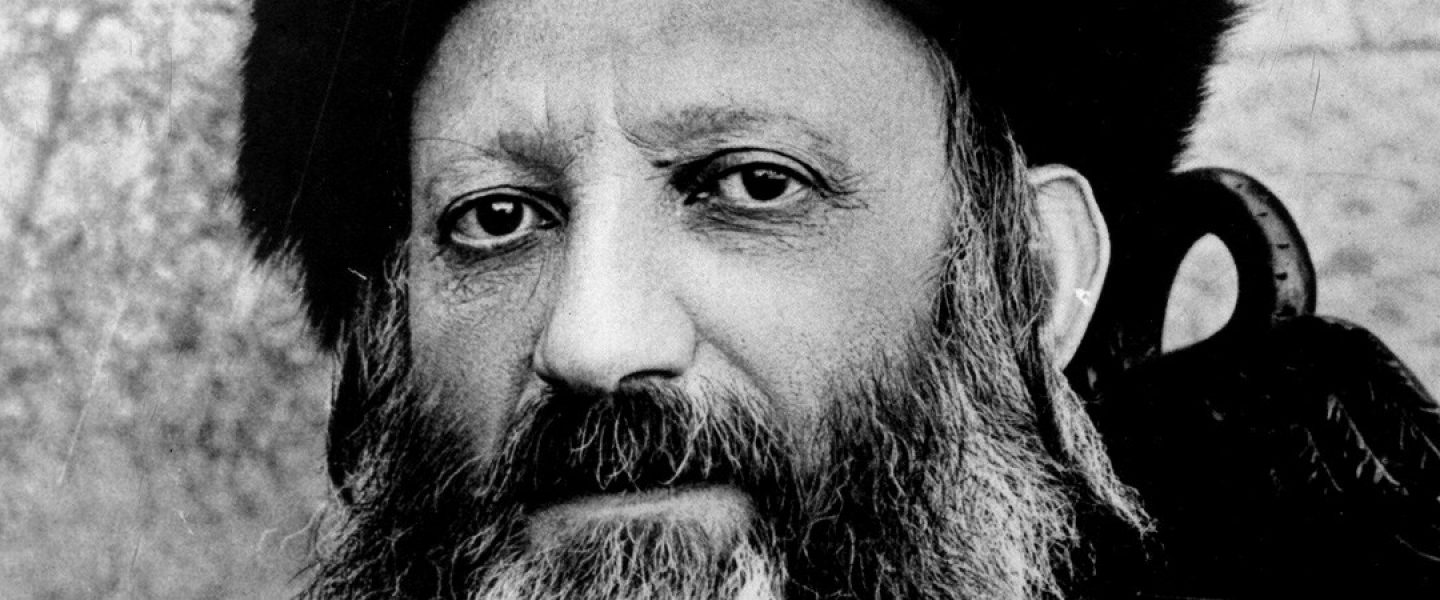
Rav Kook (Ein Ayah, Berachot 6)

 “Sulfur and salt have burned up its entire land. It cannot be sown, nor can it grow anything, not even any grass will sprout upon it, like the overturning of Sodom, Gemorrah, Admah and Zeboiim, which the Lord overturned in His fury and in His rage.” (Devarim 29:22)

Mayim achronim (washing one’s hands after a meal) is obligatory because of Sodomite salt, which [gets on a person’s hands while eating] and can harm a person’s eyes. (Gemara Chullin 105b)

The gemara in Chullin gives a seemingly prosaic reason for mayim achronim – nothing more than making sure salt from the meal doesn’t get in your eyes. However, there are always deeper layers of meaning for us to uncover in the Torah. What is the spiritual message of mayim achronim? And why do Chazal say specifically that the concern is salt of Sodom(lit. מלח סדומית)? Salt hurts your eyes no matter where it comes from. And besides, there are many places proximate to Israel where salt is supplied from. Finally, as already noted by the Rishonim, the Sages give an entirely different explanation of mayim achronim in Gemara Berachot (22a), where it is derived from the verse “and you shall be holy” (Vayikra 11:44). That makes mayim achronim sound like it has some intrinsic spiritual value, as opposed to just being a matter of health or hygiene.

To answer these questions, we have to understand that the concern for getting salt in our eyes is about much more than just health or hygience. There is a deep ethical message as well, one that explains why our Sages were specifically concerned about “salt of Sodom.” As is clear from this week’s parshah, Sodom was not a pleasant place and its citizens had a penchant for violence and abuse of strangers. However, the book of Yechezkel (16:49) gives a very different diagnosis of why Sodom was destroyed – “Behold this was the iniquity of Sodom your sister – pride, abundance of bread, and careless ease were hers and her daughters’, and she did not strengthen the hand of the poor and needy.” Yechezkel castigates Sodom for its heartless abandonment of charity, for the way its residents greedily amassed wealth and turned a blind eye to those in need. Sodom was drunk on its wealth and the thirst for more, and so it lost its moral compass – the most basic indicator of which is the practice of chesed and compassion for fellow human beings.

Whenever one is involved in any physical pleasure, he risks blunting his spiritual sensitivity and losing – to some degree – his attunement to the needs of others. And this is certainly true of eating. For this reason, our Sages established a spiritual framework for mealtime, which is bookended by mayim rishonim at the beginning and mayim achronim at the end. Mayim rishonim is a sort of preventative medicine (lit. תרופה קודמת) to the self-centeredness of the act of eating. It is modeled after the practice of the Kohanim sanctifying their hands before performing service in the Temple. It is an advance reminder to be ‘on guard’ against the dangers of raw, unrefined desire, and of the imperative to bring the sanctity of the Temple into our physical lives.

However, even with the most potent of reminders, it is difficult for anyone to go through a meal without some degree of self-centeredness, without losing some level of focus on the needs of others. Our Sages thus established mayim achronim as well. It reminds us to cleanse ourselves of the “salt of Sodom,” which refers not only to actual salt, but also the poisonous and warped values that Sodom espoused. We come away from the meal with “clean hands,” ready to act in the world in a holy way and be conscious of the needs of others, without our eyes being “blinded” by the noxious ideology of Sodom.

We can now explain why our Sages derive an additional source for mayim achronim from the verse “and you shall be holy.” Holiness is a difficult and complex concept to articulate, but it comes from being rooted in spiritual values and living with consciousness of G-d. Someone immersed in physical pleasures lives with smallness, with a world that centers around him and his needs. He is always asking “What is in it for me?” But a holy person sees a bigger picture. He realizes that he is bound to every other living being, which, like him, is also a creation of G-d. Chesed and rachamim, compassion for all, pour out from the depths of his very being. But this is simply the positive articulation of the warning to cleanse ourselves from the salt of Sodom.

Thus, far from being a mundane hygenic practice, mayim achronim is an opportunity to recharge our ethical sensitivities, and remind ourselves that true holiness is impossible without love and concern for our fellow human beings.

Food for Thought

Rav Samson Raphael Hirsch (Bereishit 18:23-26): Both in Abraham’s request and in G-d’s reply is the marked stress on בתוך העיר. Abraham does not say בעיר but בתוך העיר , the answer even runs בסדום בתוך העיר…. The idea of a righteous man in the midst of Sodomite depravity which Abraham visualizes, for whose sake the city might be saved, is not one who keeps to his own four walls, in haughty pride of his own superiority gives up the masses and just looks on at their ruinous moral lapses, who thinks he has done quite enough if he saves himself and at most his own household. Yea, such a one Abraham would not class as righteous, he would not consider that he had at all fulfilled the duty which lies on man in bad surroundings. The ruin of the masses whom he had long given up, would leave such a man cold, he might even possibly feel a certain smug satisfaction in it.

Rav Soloveitchik (Festival of Freedom, pg. 21): Man has the choice to eat either in hiding, alone, like the beast in its lair, or in community, before the Lord. When eating rises to a great service, to an experience of G-d found and held not by reason but by feeling the discomfort and embarrassment of those who have not and inviting them to join those who have, a new community is born, a community which consists of master, mistress, servant, and pauper. The birth of this community hallows the meal and endows it with sanctity. There is no division into host and guest, into master and servant, into giver and recipient, into a generous philanthropist and an embarrassed individual who is in need. There is a strange halakhic institution, the zimmun, through which Birkat ha-Mazon assumes a new dimension. Saying Birkat ha-Mazon with a zimmun, if truly understood and implemented, represents a communal recitation of the blessings: one person says them aloud, and the rest of the company listens quietly and answers “Amen.” (Such is the ideal practice of zimmun, although we do not implement it in this fashion today; see Mishnah Berurah 183.27.) The idea which this halakhah tries to translate into a ceremonial is that of a community formed by the act of eating. The se’udah is designed not only to satisfy man’s physical needs, but also to take him out of his sheltered seclusion and loneliness and let him join the thou. Eating becomes a cohesive force bringing together people who were shut up in their own small worlds and coalescing them into a community. The Halakhah is aware of the fact that a meal partaken together unites people, fosters friendship, and fashions a company of eaters that may, in the long run, become a community of G-d-seekers and the G-d-committed.

Homeless shelters are dividing Jews on NY’s Upper West Side (JTA, August 2020): The conversion of three hotels on the Upper West Side into temporary homeless shelters has divided the local Jewish community. Rabbis and other area residents are lining up on both sides of a heated debate over the relocation of some 700 homeless individuals, which critics say has brought drug use, crime and vagrancy to the relatively affluent area…. The community response — evident in opposing Facebook groups each with thousands of members, dueling petitions, and countless calls and Zoom meetings with local politicians — touches upon several lightning rod issues, including racism, safety, privilege and the interpretation of the Jewish edict to help the poor. In Upper West Siders for Safer Streets, a private Facebook group that has amassed over 7,000 members over the course of days, local residents have been angrily sharing concerns. “We are for homeless assistance & compassion but we are against registered sex offenders and drug use in our community,” the page description reads… The Facebook group includes numerous photographs of homeless people, largely unmasked, sitting on street corners, injecting drugs and urinating in public… [However] Jewish residents of the Upper West Side have also been mainstays of the counter-effort to support the new homeless residents.

Rav Yuval Cherlow: The prophet’s [i.e. Yechezkel’s] description combined with what the Torah reveals to us gives us the following picture: the people of Sodom insisted on preserving their high quality of living to such an extent they established a principle not to let the poor and homeless reside in their city. Consequently, when a destitute person would come seeking help, they would revoke his right to any welfare – public or private! By doing this they figured they would preserve an elite upper-class community who would monopolize the profits that the bountiful land offers without having to distribute any revenues to a “lower class” of people. An opinion in the Mishna in Avot 5:10 further strengthens this picture of moral depravity when it defines the Sodomite as one who says, “What’s mine is mine and what’s yours is yours.” The Mishna decries a man who wishes to remove himself from the social responsibility of welfare by closing himself and his wealth from others, even if he makes the claim that he is not taking away from anyone else.

Rav Samson Raphael Hirsch (Horeb, pg. 159): [The requirement of male and female for reproduction of species ensures] that no creature in the world of creation could in its selfishness form a closed circle. Instead, a great order of give and take thus embraced all beings with love and engendered life—life which is naught but receiving and nurturing that which has been received for the further gift of life to others; life which is also giving and by that giving receiving the consummation of self in one’s fulfilment of the duty of creating.

Questions for Discussion

  1. Read the excerpt from the newspaper article above in “Food for Thought.” Who is right? How should Rav Kook’s teachings – and Torah values in general – be applied to this situation?
  2. Where else does salt figure in the story of Sodom in this week’s parshah?
  3. If Avraham was the paradigmatic ‘man of chesed,’ how could he pray to G-d for Sodom to be preserved?
  4. How does Yechezkel’s description of Sodom’s sin fit with the one provided by the Torah? How can they be reconciled? (See Rav Yuval Cherlow in “Food for Thought” above if you are stumped.)
  5. It seems like non-Jews are not commanded to give tzedakah. So how could Sodom be punished?
  6. What other practices did our Sages institute to give a spiritual character to the act of consuming food?
  7. Where in the parsha do we see Avraham acting as the polar opposite of Sodom?

Sleeping Through the Night – Parshat Vayeira

angel-akeida.jpg

Printable PDF available here.

Rav Kook (Olat Re’iah)

“And Avraham rose up early in the morning.” (Bereishit 22:3).

Evidently, Avraham slept soundly the night before the Akeidah. The peace of mind of this holy soul, of the holy father, the mighty native, did not cease. His sleep was not gone from him, because of the clear knowledge, which came to him through the word of G-d, and no feeling of darkness, negligence, or depression became intermixed in the longings of his purified heart. He passed the night in the restful and gaily holy sleep of the upright, and the time of rising arrived as usual. And the strength of G-d which turns his legs into hinds, to run as a stag and be mighty as a lion, to do the will of G-d, blessed be He, supported him, for he rose early in the morning…

This holy old man went off to this amazing task, the opposite of all the natural ways of the human soul, neither stooped nor with failed strength, but rather fully erect and girded in might. His entire journey was powered by the fullness of supremely elevated love.

Food for Thought

Rav Soloveitchik (Divrei Hashkafa, pg. 254-255): I recoil from all talk that goes round and round a single topic: that the observance of mitzvot is beneficial for digestion, for sound sleep, for family harmony, and for social position.

The religious act is fundamentally an experience of suffering. When man meets G-d, G-d demands self-sacrifice, which expresses itself in struggle with his primitive passions, in breaking his will, in accepting a transcendental “burden,” in giving up exaggerated carnal desire, in occasional withdrawal from the sweet and pleasant, in dedication to the strangely bitter, in clash with secular rule, and in his yearning for a paradoxical world that is incomprehensible to others. Offer your sacrifice! This is the fundamental command given to the man of religion. The chosen of the nation, from the moment that they revealed G-d, occupied themselves in a continual act of sacrifice.

G-d says to Avraham: “Take now your son, your only one, whom you love, Isaac, etc.” That is to say, I demand of you the greatest sacrifice. I want your son who is your only son, and also the one whom you love. Do not fool yourself to think that after you obey Me and bring your son up for a burnt-offering, I will give you another son in place of Yitzchak. When Yitzchak will be slaughtered on the altar – you will remain alone and childless. You will not have another child. You will live your life in incomparable solitude. I want your only son who is irreplaceable. Neither should you think that you will succeed to forget Yitzchak and remove him from your mind. All your life you will think about him. I am interested in your son whom you love and whom you will love forever. You will spend your nights awake, picking at your emotional wounds. Out of your sleep you will call for Yitzchak, and when you wake up you will find your tent desolate and forsaken. Your life will turn into a long chain of emotional suffering. And nevertheless, I demand this sacrifice.

Clearly the experience, which was rooted in dread and suffering, ended in ceaseless joy. When Avraham removed his son from the altar at the angel’s command, his suffering turned into everlasting gladness, his dread into perpetual happiness. The religious act begins with the sacrifice of one’s self, and ends with the finding of that self. But man cannot find himself without sacrificing himself prior to the finding.

Rav Chaim Navon (Genesis In Jewish Thought, Chapter 22]): According to the thinkers thus far mentioned, the message of the Akeida emphasizes the worship of G-d through fear and acceptance of His yoke. This is also what follows from the plain sense of Scripture, which, following the Akeida, designates Avraham as “one who fears G-d.” Those thinkers who advocate other approaches can argue, of course, that the Akeida gives expression to only one element of religious experience. Indeed, Rabbi Avraham Yitzchak Kook, whose approach to serving G-d emphasizes loving G-d and identifying with Him, refused to accept this interpretation, even partially, and even with respect to the act of the Akeida itself…

How different are Rabbi Kook’s words from those of Rabbi Soloveitchik! In contrast to the sleeplessness described by Rabbi Soloveitchik, Rabbi Kook speaks of “the restful and gaily holy sleep of the upright.” As opposed to the sacrifice emphasized by Rabbi Soloveitchik, Rabbi Kook speaks of “supremely elevated love.”

As we stated earlier, one may adopt Rabbi Kook’s theological approach without forcing this idea onto the Akeida. It would suffice to argue that whereas Avraham’s initial feeling may have been one of sacrifice, what is most important from our perspective is what happened at the end: Yitzchak’s ultimate rescue, which is the dominant element that has become impressed in the hearts of believers. It would appear that Rabbi Kook wished to go a step further, emphasizing the love that was in Avraham’s heart the entire length of the Akeida saga.

Prof. Chaim Charles Cohen (contemporary): We who want to build a Jewish State in the Land of Israel frequently are called upon to respond to crisis. We are engaged in frequent crises because we are still in a ‘revolutionary’ stage of building our homeland and state, and hastening the redemption. Rav Soloveitchik and Rav Kook describe ways of heroically coping with crisis. Sometimes, like Rav Soloveitchik’s Abraham, we cognitively and emotionally debate- within ourselves and with others-the anxieties, demands, and dilemmas of the crisis, and then we make a heroic leap of faith and commitment, and engage the crisis with all of our powers.

Or, like Rav Kook’s Abraham, we respond to the crisis by instinctively and ‘explosively’ identifying and feeling one with our People of Israel (Klal Yisrael), our G-d, and our Torah. We then heroically rush into action, like an attacking soldier in an elite fighting unit. As the adage says, for true believers there are no questions, only a plethora of answers. Total identification with our People and our G-d brings us to spiritual heights we could not achieve simply relying on our own sense of selfhood.

In my own life, I understand and identify with Rav Soloveitchik’s description of Abraham’s self-sacrifice/transformation. I was only able to make the leap of faith and become an observant Jew through a very incremental, lonely six-year internal debate of ‘trial and error’ doing of mitzvoth.

In contrast, most of my children and sons/daughters in law more spontaneously and dramatically throw themselves in spiritual self-transformation.

I did my spiritual searching in America. They did their spiritual ‘leaping to heights’ in Israel, growing up in embattled Judea and Samaria. G-d seems happy to accept both types of self-transformation and self-sacrifice. Both types of Jewish heroism are necessary.

Questions for Discussion

  1. How does one express or develop ahavat Hashem?
  2. What does the Torah tell us about Avraham that makes him a model of ahavat Hashem?
  3. Which is more disconcerting – Rav Kook’s position that Avraham enthusiastically embraced the command to sacrifice Yitzchak or Rav Soloveitchik’s position that “the religious act is fundamentally an experience of suffering”? Why?
  4. Why is ahavat Hashem important to a Jew’s spiritual life?
  5. Rav Kook says that Avraham’s love of G-d gave him the capacity to sacrifice his son. How does this fit with what the angel says to Avraham after the Akeidah, that “Now I know that you are a fearer of G-d”?
  6. Do you agree with Rav Kook that Avraham slept soundly the night before the Akeidah?

The Greatness of the Akeidah – Parshat Vayeira

NOTE – Mareh Kohen now has its own Facebook page – please visit and share with your friends.

Translation: Letters of Rav Kook (Igrot haReiah), Vol. 2 Pg. 43

The idolatry practiced by primitive mankind had the total submission of its adherents. We see this clearly in the phenomenon of parents who suppressed their innate compassion and offered up their children as human sacrifices. [1] This phenomenon, although it was undeniably cruel and regarded with disgust by the Torah, [2] is but a profaned reflection of the realization, buried deep within man’s consciousness, that closeness to God is more important than anything in life. [3] Everything else of value, even one’s children, pales in comparison.

In this regard, paganism had a valid objection against the form of refined monotheism that Avraham sought to introduce to the world. How can an abstract notion of God possibly generate a comparable level of devotion and fiery passion? Granted, paganism enclothed its concept of the divine within ‘filthy garments,’ [4] but can a purified notion of Godliness truly compete with the raw vitality and boundless submission of paganism? Perhaps monotheism is theologically correct in eliminating the tangible reality of idols, but at the terrible cost of confining its adherents to a listless relationship with the Divine. [5]

The Akeidah was Avraham’s answer to this challenge. By passing the test of the Akeidah, Avraham showed the world that his purified conception of God did not lack the slightest in religious fervor and fiery devotion. [6] And in showing that a refined concept of God could indeed penetrate the very depths of one’s heart, without any need for the tangible forms of idolatry, Avraham created a paradigm for future generations and for his descendants. [7] Without the Akeidah, man would have had to choose between the polluted and wild emotionality of idolatry and its vigorous pursuit of godliness, and a lukewarm monotheism devoid of depth and life.

For this reason, the Akeidah is an extremely great and elevated episode [in its impact] for future generations, and is more than just a part of our tefilah or liturgy. [8] As the Torah itself says, “Because you have done this thing and not withheld your only son from Me, therefore I will bless you… and your descendants will inherit the gates of their enemies.” [9]

And how extraordinary is our prayer that G-d recall the merit of our first forefather’s battles against the barbaric delusions of idolatry. Paganism’s only feeble merit was its popular reach, the extent to which it suffused the hearts of the masses. Paganism claimed that culture could not exist without it, that a purified conception of G-d was too elevated and too pure to satisfy the people. Along came Avraham, the “father of a multitude of peoples” [10] and proved them wrong. [11]


[1] See Vayikra 20:2 regarding Molech (which most commentators understand as involving the death of the child) and Devarim 12:31.

[2] Devarim, ibid., refers to child sacrifice as a תועבה (lit. abomination).

[3] Contrast Rav Kook’s interpretation of the motivation behind paganism with:

a) the Rambam’s position (Hilchot Avoda Zara, Chapter 1) that paganism originated in theological confusion between the stature of G-d and angelic forces/other intermediaries; and

b) the notion that paganism is not about submission at all, but is rooted in primitive attempts to control natural forces believed to be controlled by pagan gods.

[4] The notion that sparks of holiness are concealed (or ‘enclothed,’ as Rav Kook puts it) even in the lowest and most corrupted forms of expression is one of the defining features of Rav Kook’s thought. He develops this theme at length in his writings on Christianity. For a similar, but less mystical expression of the same point, see Rambam at the end of Hilchot Melachim.

[5] Rav Hirsch writes about this problem in his Commentary on the Torah (Bereishit 8:21, s.v ויאמר ה׳ אל לבו) – “The danger of getting some corporeal conception of God is by far not so great as that of volatalising Him [i.e. distilling Him down] to a vague, obscure, metaphysical idea. It is much more important to be convinced of the personality of God, and of His intimate relations to every man on earth, than to speculate on the transcendental conceptions of infinity, incorporeality, etc. which have almost as little to do with the morality of our lives as algebraic ciphers.” See also Rav Aharon Lichtenstein’s criticism (Return and Renewal, pg. 73) of the “gut instinct… that crying [in prayer] is for the ignorant and the superstitious; but we are sophisticated and intellectual, and therefore decorous and restrained.”

[6] In passing, Rav Kook emphasizes that he does not mean to downplay the intrinsic superiority of monotheism, and that he is only addressing a discrete, potential shortcoming of monotheism as compared to paganism.

[7] Later in this letter, Rav Kook explains that the devotion demonstrated by Avraham at the Akeidah became part of the Jewish people’s ‘spiritual DNA.’ In this connection, note that during the Crusades, many parents in medieval Ashkenaz killed their children instead of surrendering them to forced conversion, and that much of the literature and liturgy surrounding this tragic phenomenon (including the Kinot of Tisha b’Av) deliberately invokes the imagery and memory of the Akeidah.

[8] I.e. on Rosh haShanah. Many also have a custom to recite the verses of the Akeidah as part of Shacharit.

[9] Bereishit 22:16-17.

[10] Bereishit 17:5.

[11] In the Shemonah Kevatzim (Vol. 2, pg. 340), Rav Kook cites a midrash (Bereishit Rabbah, Lech L’chah, Parsha 39) that Avraham was afraid of his sinful, idolatrous past. In response, Hashem told him “לך טל ילדותיך, To you is the dew of your youth (Tehillim 110:3). Just as dew is a sign of blessing to the world, so too the years that you served idols are a sign of blessing to the world.” Rav Kook explains that Hashem yearned for the days, as it were, when Avraham had been a passionate idolater. God told Avraham ‘I want you to serve Me by returning to your original excitement and self-sacrifice. I do not want you to become a believer whose faith leads to coldness and separation between man and God.’ (I have taken this explanation of the piece in Shemonah Kevatzim from Rav Moshe Weinberger’s Song of Teshuva, Vol. 2, pg. 248.)

Questions for Reflection and Discussion

What are some challenges that make it hard for us to tap into the passion and vibrancy embodied by Avraham at the Akeidah? Are those challenges related to living in twenty first century, or have we always had them?

Rav Moshe Weinberger notes (Song of Teshuva, Vol. 2, pg. 248-249) that many Jews who become ba’alei teshuva were previously sensitive people who enjoyed poetry, music and the arts, but those interests become ignored or even suppressed after they take on greater religious observance. Based on the passage above, what would Rav Kook would say about this phenomenon?

What could I do or take on in order to better embody (in an authentic way) the passionate approach to avodat Hashem that Rav Kook understands as epitomized by the Akeidah? Who is a role model I could look to in that regard?

Do some segments of Orthodoxy do a better job at encouraging the vibrant and passionate dedication that Rav Kook regards as an ideal? How so?

About this Piece

Igrot haReiah is a three-volume set of Rav Kook’s letters on a variety of topics in halacha, hashkafa and other areas of Torah, as well as communal and political matters. It has never been translated into English, although selected excerpts have been translated (see here and here, both unfortunately out of print). An excellent series of written shiurim on Igros haReiah is available from Yeshivat Har Etzion’s Virtual Beit Midrash, here.