
Printable PDF available here. Previous years’ pieces on Parshat Shoftim can be found here and here.
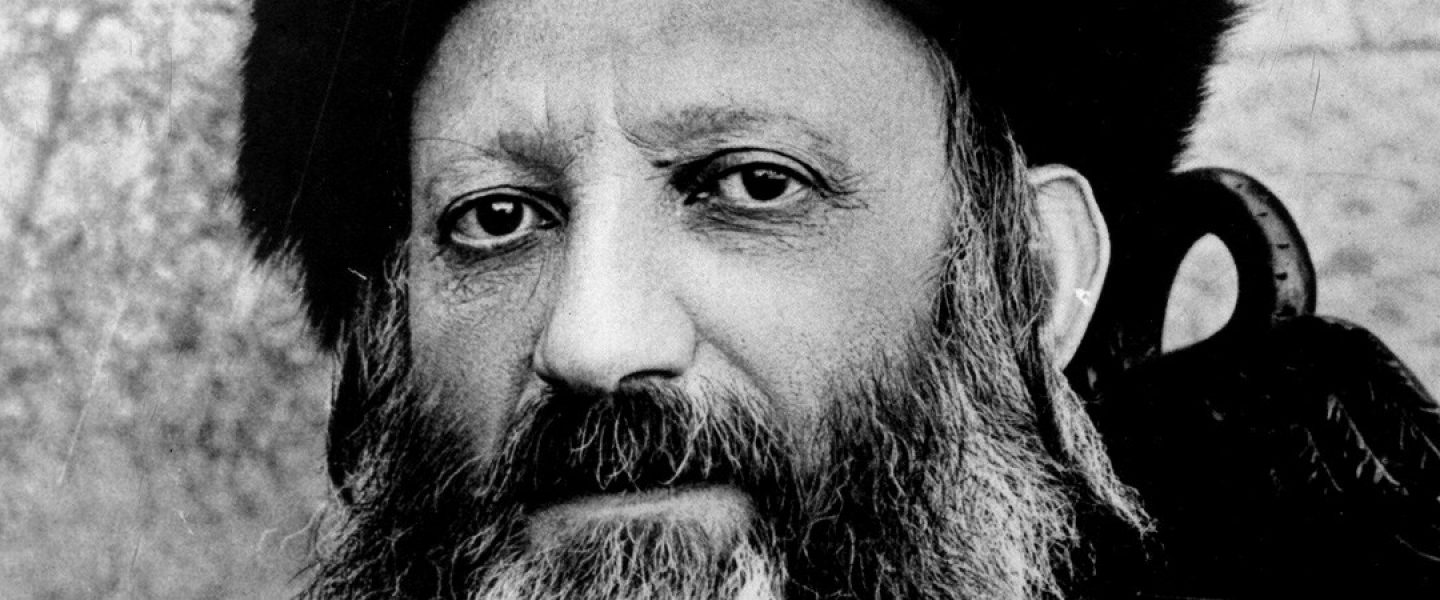
Rav Kook (Based on Igrot ha’Reiah 103)
If a matter eludes you in judgment… then you shall rise and go up to the place the Lord, your G-d, chooses. And you shall come to the Levitic kohanim and to the judge who will be in those days, and you shall inquire, and they will tell you the words of judgment. And you shall do according to the word they tell you, from the place the Lord will choose, and you shall observe to do according to all they instruct you. (Devarim 17:8-10)
I believe that it is incumbent on us to create an opening in the partition that separates the disciplines of halacha and Aggadah. Each discipline can benefit from and draw upon the unique wisdom of its counterpart. Aggadah speaks to the wisdom of the heart and the mind, and all of the Torah’s laws regarding beliefs and thought draw upon the domain of Aggadah. By contrast, halacha is the wisdom of practical conduct.
Each of these domains is nourished from a different ‘root’ in the holy Torah. The world of halacha draws on human wisdom and cognition, while Aggadah is rooted in the world of prophecy. Maimonides (Hilchot Yesodei haTorah, Chapter 9) erected an iron wall between these two disciplines, insisting that prophetic insight has absolutely no role to play in the halachic process. However, it is apparent that other Rishonim disagreed and saw nothing wrong with granting some level of halachic credence to prophecy. Indeed, this is the simple meaning of the first mishnah in Pirkei Avot, which records the early chain of transmission of the Oral Torah. That mishnah teaches that the “elders” passed the tradition on to the Prophets (lit. וזקנים לנביאים). It seems implausible to assert – as Maimonides presumably would – that their prophetic powers had no role in their custodianship of the tradition, that they received the tradition in their capacity as Sages and not in their capacity as prophets. Other Talmudic proofs can similarly be marshalled to demonstrate the role of prophecy in halacha.
Because the Land of Israel is the only place where prophecy exists, the prophetic dimension of halacha finds unique expression in the Land. Ordinary halachic discourse is deductive and methodical. Arriving at a conclusion involves a lengthy series of proofs, counterproofs and analogies, as anyone familiar with the Babylonian Talmud can testify. In contrast, prophecy arrives at truth rapidly and by means of an inner intuition. Instead of plodding forward on a dark path with a candle in one’s hands, flashes of lightning illuminate one’s entire surroundings. The structured and logical process of pure halachic reasoning is bypassed and one is led by a higher form of consciousness.
This is why the Talmud Yerushalmi is terse and concise, in contrast to the exhaustive and sprawling style of the Talmud Bavli. Unlike their counterparts in Babylonia, the inner intuition of the Talmudic sages in Eretz Israel enabled them to clarify matters with directness and brevity. Illuminated by a supernal light, their broad gaze could intuit halachic conclusions from the most subtle of hints or allusions. “The very air of the Land of Israel makes one wise” (Gemara Bava Basra, 158b).
The different spiritual paths of the Talmud Bavli and Talmud Yerushalmi may illustrate a dispute regarding the zaken mamre, the rebellious elder who brazenly disregards the ruling of the Sanhedrin. The Torah writes that the disputed ruling relates to a ‘matter’ (lit. דבר). While the Talmud Bavli interprets this as a reference to Halacha, the Talmud Yerushalmi understands it as a reference to Aggadah.
Apparently, the Sages of Israel maintained that even aggadic matters – issues of belief and faith – were subject to definitive adjudication by the nation’s highest court, while the Sages of Babylonia disagreed. The basis of this dispute is readily apparent. In the Land of Israel, the style of Torah study was permeated with prophecy and transcendent spiritual wisdom. And so even aggadic matters could be clarified with decisive finality. The Sages of Babylonia did not believe that this was possible. For them, human reason was the primary means of determining halachic truth. Granted, the human intellect is powerful enough to be Divinely entrusted with binding authority in matters of halacha. But it will always fall short of absolute certainty in the matters of belief and faith that compromise the world of Aggadah.
Food for Thought
Chovot haLevavot (Introduction): Scripture says “if there arise a matter too hard for you in judgment, between blood and blood, between plea and plea, between affliction and affliction…and you shall do according to the sentence which they declare to you” (Deut. 17:8-10). If you examine what subjects are included in the first verse, you will find they are things which need to be detailed, distinguished, and discussed by the method of Tradition, and not by that of logical demonstration from Reason alone. You can see, the verse does not include matters which can be attained through Reason. For he did not say, for example, “when you have a question on the Unity of G-d”; or regarding the Names and attributes of the Creator, or as to any of the roots of the religion, such as the service of G-d, trusting in Him, submission before Him, devoting activities to Him, purifying conduct from the damage of detrimental things, repentance from sins, fear and love of Him, being abashed before Him, making a spiritual accounting, and similar duties which can be fulfilled through reason and recognition. He did not say to accept them on the authority of the Torah Sages and to rely only on the Tradition. On the contrary, Scripture says in regard to these to reflect on them to your heart and to apply your intellect on them after having first accepted them from the Tradition, which covers all the commandments of the Torah, their roots and branches. You should investigate them with your intellect, understanding, and judgment, until you will sift the truth of it from the false [notions], as written “therefore, know this day and consider it within your heart, that the Lord, He is G-d” (Deut. 4:39).
More Regarding the Talmud Yerushalmi (from Simcha Friedman, Emunat Hakhamim, Tradition 27:4): Rashi (on the above passage in the Babylonian Talmud) states: davar refers to the halakhot given to Moses at Sinai.” The commentators to the Jerusalem Talmud – the authors of Korban ha-Edah and Penei Moshe (in his Mar’eh ha-Panim) – follow suit. The latter echoes Rashi in explaining the term aggadah used in the Jerusalem Talmud in its non-literal meaning: “It may be that “aggadah”… is that which was told (mah shehugad) orally, hearkening back to the halakhah given to Moses at Sinai.”
Rabbi Chaim Eisnen (Maharal’s Be’er ha-Golah and His Revolution in Aggadic Scholarship): In the halakhic domain of talmudic literature, a staggering wealth of systematic analyses and codifications emerged during the medieval period of the rishonim (early rabbinical commentators). These classics remain the foundation of all serious talmudic erudition. Astoundingly, there was little simultaneous, parallel development in the realm of Aggadah. With some notable exceptions, this vast corpus eluded comprehensive treatment until the early period of the aḥaronim (later rabbinical commentators)…
Ramban (as quoted and discussed by Rabbi Marc Angel): The demand that one must believe all the words of our sages in the aggadah came into question in the famous disputation in Barcelona in 1263. Rabbi Mosheh ben Nahman, the Ramban, was challenged by his Christian opponent with an aggadah that stated that the Messiah was born on the day that the Temple in Jerusalem was destroyed. The Ramban responded: “I do not believe in this aggadah at all…” He went on to explain that Jewish religious writings are divided into three traditional categories: Bible, Talmud and Midrash. “The first we believe entirely…; the second we believe when it explains laws. We have yet a third book which is called Midrash, sermons so to speak…; and this book, if one wishes to believe it he may, and one who does not believe it does not have to… We call it a book of aggadah, which is to say discourses, that is to say that it merely consists of stories which people tell one another. “
This explanation of the Ramban was rejected by those who insisted on maintaining the truth of all the words of our sages. Some argued that the Ramban never meant what he said, that he only said it to deflect the challenge of his opponent. The Sedei Hemed wrote that it is forbidden even to think that the Ramban meant what he said. Writing over two centuries after the disputation, Rabbi Yitzhak Abravanel strongly disavowed the statement of the Ramban because “it opens the gates to undermine all rabbinic authority when we consider any of their words as errors or foolishness.
Questions for Discussion
- Could there be an alternative explanation for why the Talmud Yerushalmi is much shorter and terser than the Talmud Bavli?
- What are some differences between contemporary religious life/Torah learning in Israel vs. in the Diaspora?
- Why is it important to learn aggadah?
- What do you think Rav Kook means by creating “an opening in the partition that separates the disciplines of halacha and Aggadah”?
- In the absence of a Sanhedrin, how do we determine what positions in matters of belief and faith are beyond the pale?
