The World of Divine Ideals – Parshat Ki Tavo

Printable PDF available here. Previous pieces on Ki Tavo are available here and here.

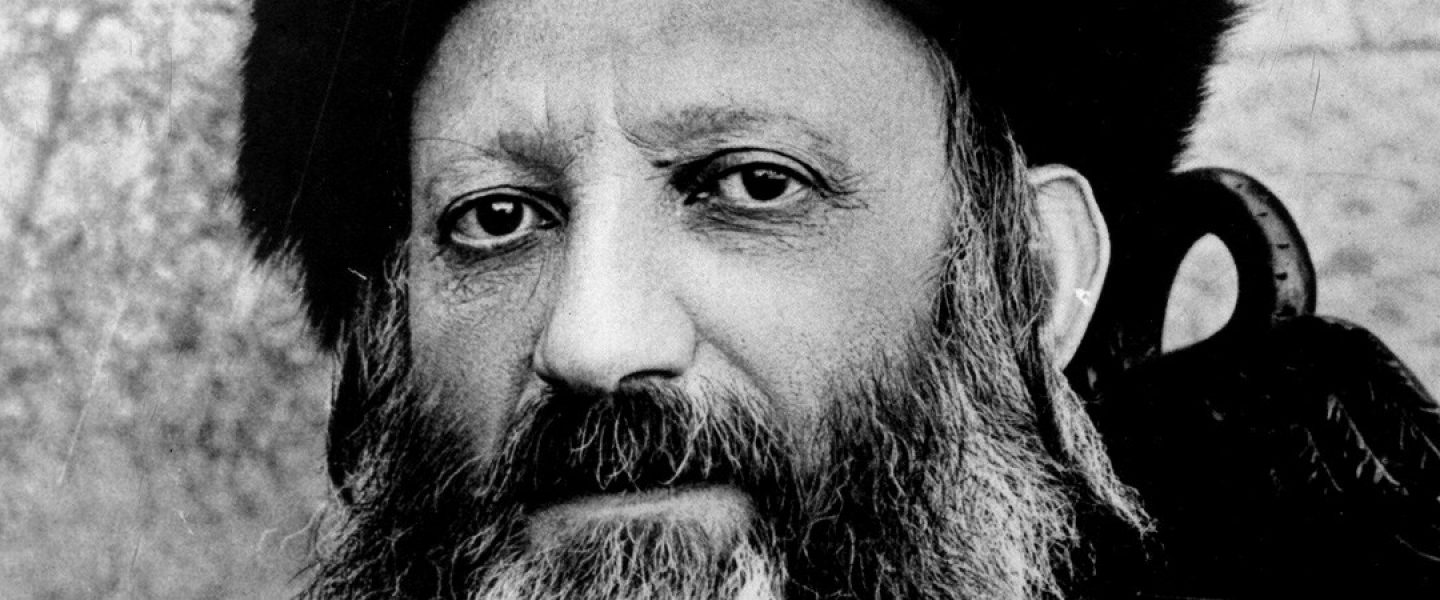
Rav Kook (Ikvei ha’Tzon)

“G–d will confirm you for Himself as a holy people, as He swore to you, if you observe the mitzvot of the Lord your G-d, and you go in His ways (lit. והלכת בדכריו).” (Devarim 28:9)

To the extent that one’s inner conception of G-d matures, his service of G-d will advance as well. The understanding of Divine worship (lit. avodat elokim) as the servitude of a slave (lit. avodat eved) derives from a crude and immature conception of G-d. And thus, if a person’s ethical and intellectual faculties are well developed (in accordance with his nature and the state of his generation), but his conception of G-d is immature, the inevitable result will be a profound inner aversion to the entire notion of Divine service.

The only cure is to raise up one’s inner conception of the Divine Name – ideally by means of an ennobled and comprehensive understanding, but at the very least, in a manner that accords with his soul’s conceptions of greatness and elevation. This is alluded to by our Sages’ teaching (Gemara Berachot 21a) that derives the blessing before Torah study from the verse “When I call out the name of the Lord, attribute greatness to our G-d” (lit. כי שם ה׳ אקרא הבו גודל לאלוקינו) (Devarim 32:3).

It is a commonly believed that Divine service relates to G-d Himself, that it is a means for us to connect to His very essence. But this is a crude faith, even if it is articulated by means of sophisticated metaphysics and philosophy, and it turns man into a terrified slave who quivers in G-d’s presence. The notion that humanity can deal directly with G-d is foreign to Israel. It is a defining trait of non-Jewish belief and readily degrades into paganism.

In place of ‘religion,’ Israel’s mature Divine service is rooted not in superficial subjugation to some abstract, transcendent power, but G-dly ideals. The depth of Torah [that is, Kabbalah] teaches that even the names of G-d signify not G-d’s essence but rather Divine ideals. The ideals, which the Torah refers to as the “ways of G-d” (lit. דרכי ה׳), are mapped by Kabbalah as the world of Atzilut, the Divine attributes and sefirot. Kabbalah charts this vibrant multitude of paths and conduits, through which an infinite G-d channels His interactions with our finite world. We are summoned to exert ourselves to perfect and raise up these ideals, to raise them up and invest them with splendor on the individual, national and cosmic planes. This task broadens and elevates the soul. Indeed, the Torah teems with elevated ideals and contains Divine blueprints for manifesting them.

This constitutes Israel’s unique and enlightened form of Divine service, the service of sons and daughters who sense within themselves an inner affinity to their Divine father, the author and source of all goodness, life and light. Here there is neither dry theology nor the quivering worship of terrified slaves – themselves two sides of the same blighted coin. The Divine ideals fortify and enrich the soul, bring joy and healthy psychic repose, inner confidence, delight and love in their wake.

“Israel will rejoice with its Maker; the children of Zion will exult with their King” (Tehillim 149:2).

Commentary

Kabbalah has a long and complex history as part of Jewish tradition, and not all sources are of one mind regarding the purpose of Kabbalistic knowledge. Some sources present Kabbalah as a gateway to an ecstatic mystical experience, while others idealize meditative contemplation. Various other sources emphasize theurgic and magical dimensions of kabbalah, articulating man’s ability to affect heavenly worlds by his thoughts and actions. Rav Kook charts a revolutionary and entirely different path.[1]According to Rav Kook, Kabbalah charts a precise map of the traits manifested by G-d in His interactions with the world, which we are called upon to emulate. The sefirot, partzufim and other phenomena identified by Kabbalah and its unique vocabulary are really “Divine Ideals” that humanity (and particularly Israel) is meant to manifest. For Rav Kook, this is the deeper meaning of “following in Hashem’s ways.” Kabbalah is the deepest and most profound manifestation of the ethical.

[1] Rav Kook’s approach is explicated by Yosef Avivi in his recently-published and magisterial four-volume work titled קבלת הראי׳ה.

Food for Thought

Shemot (33 and 34): וְעַתָּה אִם נָא מָצָאתִי חֵן בְּעֵינֶיךָ, הוֹדִעֵנִי נָא אֶת דְּרָכֶךָ, וְאֵדָעֲךָ, לְמַעַן אֶמְצָא חֵן בְּעֵינֶיךָ; וּרְאֵה, כִּי עַמְּךָ הַגּוֹי הַזֶּה… וַיֹּאמַר: הַרְאֵנִי נָא, אֶת כְּבֹדֶךָ. וַיֹּאמֶר, אֲנִי אַעֲבִיר כָּל טוּבִי עַל פָּנֶיךָ, וְקָרָאתִי בְשֵׁם יקוק, לְפָנֶיךָ; וְחַנֹּתִי אֶת אֲשֶׁר אָחֹן, וְרִחַמְתִּי אֶת אֲשֶׁר אֲרַחֵם. וַיֹּאמֶר, לֹא תוּכַל לִרְאֹת אֶת פָּנָי: כִּי לֹא יִרְאַנִי הָאָדָם, וָחָי… וַיֵּרֶד יקוק בֶּעָנָן, וַיִּתְיַצֵּב עִמּוֹ שָׁם; וַיִּקְרָא בְשֵׁם, יקוק. וַיַּעֲבֹר יקוק עַל פָּנָיו, וַיִּקְרָא, יקוק יקוק, אֵל רַחוּם וְחַנּוּן אֶרֶךְ אַפַּיִם, וְרַב חֶסֶד וֶאֱמֶת. נֹצֵר חֶסֶד לָאֲלָפִים, נֹשֵׂא עָו‍ֹן וָפֶשַׁע וְחַטָּאָה; וְנַקֵּה, לֹא יְנַקֶּה פֹּקֵד עֲו‍ֹן אָבוֹת עַל בָּנִים וְעַל בְּנֵי בָנִים, עַל שִׁלֵּשִׁים וְעַל רִבֵּעִים. וַיְמַהֵר, מֹשֶׁה; וַיִּקֹּד אַרְצָה, וַיִּשְׁתָּחוּ.

Gemara Rosh haShanah (17b): “And The Lord passed before him and proclaimed” (Exodus 34:6). Rabbi Yochanan said: Were a verse not written, it would be impossible to say it. This teaches that the Holy One, Blessed is He, wrapped Himself like a prayer leader and demonstrated to Moses the order of prayer. He said to him: Any time that Israel sins, let them perform before me this procedure and I shall forgive them.”… Rav Yehudah said: a covenant has been made regarding the Thirteen Attributes that they never return empty, as it is stated, Behold I make a covenant (Exodus 34:10)….

Reishit Hokhmah (Sha’ar Anavah 1): And the matter is difficult because we have seen many times in which we have proclaimed the 13 attributes and [our prayers] are not answered. Rather the Geonim say that the meaning of “let them perform before Me this procedure” is not merely the wrapping of a talit. Rather that they should perform the attributes which the Holy One Blessed be He taught to Moshe: that He is a merciful and compassionate G-d. That is, just as He is compassionate so too you should be compassionate, etc. And likewise for all 13 attributes.

Is There a Jewish Philosophy? (Leon Roth): [I]t is not possible to extrapolate any positive theory of ethics from the notion of imitatio Dei, and second, judging from the import of the biblical texts themselves, no one has ever attempted so to do. And the reason is obvious. The G-d of Israel is a G-d who “hides Himself” (Isaiah 45:15) whose name, according to the Talmud’s perceptive interpretation u of Exodus 3:15 is le’olam: not ‘forever’, but ‘must be hidden’ (le’alem). What is hidden from us we can neither imitate nor emulate…. It is, moreover, quite certain that this was already appreciated in antiquity, for many a scholar has endeavoured to discover, from talmudic literature, the consequences of emulation, or, to use the conventional term, imitation, of G-d. But, as one of them has observed, the rabbis did not call upon people to imitate all the divine characteristics as they are described in the Hebrew Bible: and, from the philosophical point of view, this is the heart of the matter. We find no such summons as ‘just as I am “jealous and vengeful” [cf. Nahum 1:2] so be you likewise jealous and vengeful.’ Here is proof that the essence of the whole concept, even when propounded according to the foregoing formula, is not simply imitation. There is a selectivity of the appropriate characteristics for emulation; and once this is granted, imitation, as such, is not the touchstone.

Gemara Sotah (14a): What is the meaning of that which is written: “After the Lord your G-d shall you walk…” (Deuteronomy 13:5)? But is it actually possible for a person to follow the Divine Presence? But hasn’t it already been stated: “For the Lord your G-d is a devouring fire, a jealous G-d” (Deuteronomy 4:24)? Rather, the meaning is that one should follow the attributes of the Holy One, Blessed be He. Just as He clothes the naked, as it is written: “And the Lord G-d made for Adam and for his wife garments of skin, and clothed them” (Genesis 3:21), so too, should you clothe the naked. Just as He clothes the naked, as it is written: “And the Lord G-d made for Adam and for his wife garments of skin, and clothed them” (Genesis 3:21), so too, should you clothe the naked. Just as the Holy One, Blessed be He, visits the sick, as it is written with regard to G-d’s appearing to Abraham following his circumcision: “And the Lord appeared unto him by the terebinths of Mamre” (Genesis 18:1), so too, should you visit the sick. Just as the Holy One, Blessed be He, consoles mourners, as it is written: “And it came to pass after the death of Abraham, that G-d blessed Isaac his son” (Genesis 25:11), so too, should you console mourners. Just as the Holy One, Blessed be He, buried the dead, as it is written: “And he was buried in the valley in the land of Moab” (Deuteronomy 34:6), so too, should you bury the dead.

Moreh Nevuchim (1:54): When [Moshe] asked for knowledge of the attributes and asked for forgiveness for the nation, he was given a [favorable] answer with regard to their being forgiven. Then he asked for the apprehension of His essence, may He be exalted. This is what he means when he says “Show me, I pray Thee, Thy glory;” whereupon he received a [favorable] answer with regard to what he had asked for at first – namely, “Show me Thy ways.” …It is then clear that the “ways” – for a knowledge of which he had asked and which, in consequence, were made known to him – are the actions proceeding from G-d, may He be exalted. The Sages call them “characteristics” and speak of the “thirteen characteristics.” This term, as they use it, is applied to moral qualities…For the utmost virtue of man is to become like unto Him, may He be exalted, as far as he is able; which means that we should make our actions like unto His, as the Sages made clear when interpreting the verse “You shall be holy.” They said: “He is gracious, so be you also gracious; He is merciful, so be you also merciful.”

Rav Eliyahu Dessler (Michtav M’eliyahu, Vol. V, p. 21): When a person contracts his ego, he walks in the ways of G-d. [How so?] it is known [according to kabbalah] that G-d contracted Himself, as it were, for the sake of creating the world, for the ultimate purpose of revealing Himself here. So too, a person contracts his ego for the sake of revealing G-d’s honor and greatness. This is the [deeper] meaning of the verse: “And cleave to him” (Devarim 13:5) which Rashi explains as: “Cleave to His ways, perform acts of kindness [bury the dead, visit the sick, just as G-d did].”

Questions for Discussion

  1. See the first few sources in “Food for Thought” above. How does the practice of reciting Selichot connect to Rav Kook’s insights on “following G-d’s ways”?
  2. Rav Kook writes that “The notion that humanity can deal directly with G-d… readily degrades into paganism.” Why?
  3. How do we learn/discover what traits of G-d we are supposed to emulate? (See Is There a Jewish Philosophy? in “Food for Thought” above.)
  4. According to Rav Kook, is Kabbalah meant to lead to a withdrawal from the world or to a deeper engagement with it?
  5. What kind of behaviors does the Talmud put under the rubric of “walking after G-d?”
  6. Rav Kook believes that Kabbalah is the key to the deepest fulfillment of “following G-d’s ways.” What are other ways in which this mitzvah could be understood?

Concentric Circles of Perfection – Parshat Ki Tavo

Untitled

Printable PDF available here. Last year’s piece on Ki Tavo is available here.

Rav Kook (Based on Ein Ayah, Peah)

Then you shall say before the Lord, your G-d, “I have removed the holy [portion] from the house, and I have also given it to the Levite, the stranger, the orphan, and the widow, according to all Your commandment that You commanded me; I have not transgressed Your commandments, nor have I forgotten.” (Devarim 26:13)

[A]ccording to all Your commandment that You commanded me – That is to say, “I have given everything in its proper sequence. I did not give terumah before bikurim, nor ma’aser before terumah, nor ma’aser sheni before ma’aser rishon.” This is a reference to the law stated by the Sages that the Torah prohibits giving tithes out of sequence. (Rashi, based on Mishnah Ma’aser Mishnah)

Obligations and responsibilities need a proper structure. It is not enough to merely ‘check everything off the list.’ Many positive ethical values bring tremendous good at the proper time, but result in destruction and harm when they are implemented prematurely. Thus, we must make sure that we have a proper hierarchy of values, and that primary values are not trampled underfoot in the hasty pursuit of relatively less important matters.

If this seems overly abstract, let us consider the concentric circles of interpersonal responsibilities. A person has primary responsibility to his own family, and after that to his nation, and only after that to all of humanity. When this hierarchy is maintained, tremendous good comes to the world and G-d’s plan for humanity is advanced. Even if a person or generation is unable to make progress on all of these levels, every step is valuable in G-d’s eyes and has merit.

Many times, values of lesser importance do not need to be entirely set aside. Other times, the generation in which a person lives is entirely unprepared, and so certain spiritual ‘fruits’ must be left to ripen. At the end of history, humanity will succeed at rectifying all levels of its existence. With the perfection of spiritual and physical reality, poverty, warfare, sickness and death will become a thing of the past. Humanity’s inner yearning to help others and perform chesed will no longer have any outlets within human society. At that point, it will be our responsibility to turn toward the animal kingdom, to uplift and refine the natural world until it is permeated with love and kindness. As Isaiah (11:7) declares in his Messianic vision, “A wolf shall live with a lamb, and a leopard shall lie with a kid; and a calf and a lion cub and a fatling [shall lie] together, and a small child shall lead them. And a cow and a bear shall graze together, their children shall lie; and a lion, like cattle, shall eat straw.” Man will take his rightful place as the beneficent ruler of the entire natural world, and Divine hashgacha will be poured out over all of G-d’s creations.

This is a beautiful vision, but the time has obviously not yet arrived for it to be implemented. We still live in a broken and imperfect world, a world that overflows with the bloodshed of war, a world that is full of falsehood and devoid of pure knowledge of G-d, full of injustice and oppression of the poor. In the face of all of this brokenness, we must focus on the areas of our primary responsibility, beginning with our own families and our own nation. It is hasty and foolish to skip over these areas and pour one’s energies into fixing all of humanity, just as one cannot build the upper stories of a building without a robust foundation. The inevitable result will be terrible physical and spiritual suffering for humanity, far in excess of whatever meager improvements once manages to achieve.

In our times, it is similarly shortsighted to turn aside from human welfare altogether and focus on the advancement of the animal world. How can anyone with a pure conscience allocate their chesed to a horse or camel, a dog or a pig, when their family, their fellow citizens and fellow human beings cry out in suffering in our imperfect world?

According to our Sages, this is the lesson taught by vidui ma’aser. It is not enough simply to give everything that one owes. One must follow the proper sequence, and ensure that their obligations and responsibilities are structured properly, in accordance with a Divine hierarchy of values.

Food for Thought

Rav Yehuda Amital (Commitment and Complexity, pg. 79): In all spheres there are differences of degree and level. There are major issues and minor issues. Even when it comes to major issues, there are different levels of importance. In the realm of sanctity, too, there is the Kodesh (Holy), and there is the Kodesh ha-Kodashim (Holy of Holies). The world of values is likewise structured like a ladder: there are the more important values, and there are less important values. A person’s stature and wisdom are measured by his ability to live by a scale of values whose order is established in accordance with the truth of Torah: “a ladder that is placed on the ground and whose top reaches the heavens” (Bereishit 28:12). This is the ladder of G-d; the righteous shall ascend it.

Rav Chaim Vital: There are many people who do abundant chesed with others, but are not generous or giving with their spouse or other members of their family. Such people expect tremendous reward in Gan Eden. But when they get there, they will find that all of their chesed is regarded as empty and not worth anything.

Esti Rosenberg (Eulogy for Rav Aharon Lichtenstein, A Life Steady and Whole pg. 81): The heaven your ladder reached was one of Torah learning, of awe, faith and virtue, of morality, kindness and astounding humility, of sensitivity and greatness in intense Torah study – all combined with gemilut hesed in the fullest. And indeed, you have now arrived in the heavens. As your many students looked up to you from afar with an uplifting sense of awe, they feared not living up to your expectations. Your conduct and deeds… your integrity and your modesty, all often seemed far beyond their reach.

But to us, your children, our spouses, and your grandchildren, you were a ladder set firmly on the ground. You were a person of smiles and simple fatherly compassion; a scholar who learned Torah in his study but was always happy to interrupt to listen to our silly stories about our friends and was deeply involved in our lives. You measured the kitchen cabinets and the new washing machine; booked family vacations months in advance; were interested and involved in all our financial concerns, and found time to come to performances of my youth group and at school. People saw you and could not believe their eyes. They could not believe that you washed dishes on Friday nights and made Tonny her soft-boiled eggs. You prepared the soda siphon and made pudding for all of us with impressive ceremony. You boucded your grandchildren on your knees and even yelped playfully with them. We knew and felt how enormously privileged we were.

Shulchan Aruch (Yoreh Deah 251:3): When it comes to tzedakah, one’s parents take precedence over others, as do one’s other relatives. One’s household takes precedence over the poor of one’s city. The poor of one’s city take precedence over the poor of another city. And the inhabitants of the Land of Israel take precedence over those who live outside it.

Aruch haShulchan (ibid): If we understand these words literally, it implies that there is no requirement to give anythingto groups lower on the hierarchy until those that take precedence have been addressed. But it is well known that every wealthy person has many poor relatives (and all the more so every poor person). How can it possibly be that a poor person without any rich relatives will die of hunger?! It seems clear to me that everyone, whether rich or poor, must give to poor people who are not relatives; the hierarchy of tzedakah means only that one must give more to those who are relatives.

Daniel Gordis: [Note for context – Daniel Gordis, one of the most articulate voices in the Jewish world, became embroiled in a dispute during the recent Gaza war. With his two sons serving in the IDF and poised on the border of Gaza for an imminent invasion (that never took place), Gordis was deeply troubled by a missive written by Rabbi Sharon Brous to her congregation, which Gordis considered “even-handed” to the point of “betrayal.” He wrote a response in The Times of Israel] Universalism, Cynthia Ozick once noted, has become the particularism of the Jews. Increasingly, our most fundamental belief about ourselves is that we dare not care about ourselves any more than we can about others…

This inability to distinguish ourselves from the mass of humanity, this inability to celebrate our own origins, our own People and our own homeland, I argue in my latest book, The Promise of Israel, is dysfunctional. Do we not care about our own children more than we care about other people’s children? And shouldn’t we? Are our own parents not our responsibility in a way that other people’s parents are not?…

That an utterly universalized Judaism is almost entirely divorced from the richness of Jewish heritage and the worldview of our classic texts is bad enough. But on weeks like this, with hundreds of thousands of Israelis sleeping in bomb shelters and many millions more unspeakably frightened, it’s become clear that this universalized Judaism has rendered not only platitudinous Jews, but something worse. It bequeaths us a new Jew utterly incapable of feeling loyalty. The need for balance is so pervasive that even an expression of gut-level love for Israelis more than for their enemies is impossible. Balance has now bequeathed betrayal.

… As I read Rabbi Brous’s missive, I couldn’t stop thinking about my two sons, both in the army, each doing his share to save the Jewish state from this latest onslaught. What I wanted to hear was that Rabbi Brous cares about my boys (for whom she actually babysat when we were all much younger) more than she cares about the children of terrorists. Especially this week, I wanted her to tell her community to love my family and my neighbors more than they love the people who elected Hamas and who celebrate each time a suicide bomber kills Jews. Is that really too much to ask?”

Questions for Discussion/Food for Thought

  1. As Torah Jews, how can we make sure that we have a proper hierarchy of values?
  2. See the Shulchan Aruch in “Food for Thought” above. Does it support Rav Kook’s point about having a hierarchy of values? (Make sure to see the Aruch haShulchan’s commentary, also excerpted above.)
  3. Rav Kook says that “terrible physical and spiritual suffering” are the result of pursuing ambitious universal goals before rectifying one’s family and particular nation. What do you think he is referring to?
  4. Rav Kook talks about three levels – the family, the nation, and humanity. Are there any other intermediate ‘levels’ that should be added to the hierarchy of priorities?
  5. How can we focus on our energies on our families and Jewish communities without losing sight of our responsibilities to the broader society that we are part of?
  6. Why does Rav Kook disapprove of vegetarianism?

Savoring Success – Parshat Ki Tavo

success.jpg

Printable PDF available here.

Rav Kook – Ein Ayah (Ma’aser Sheni 5:10)

When you have finished tithing your produce… you shall give them to the Levite, the stranger, the orphan, and the widow, so that they can eat to satiety in your cities. Then you shall say before the Lord, your G-d, “I have removed the holy portion from the house, and also given it to the Levite, the stranger, the orphan, and the widow, according to all Your commandment that You commanded me. I have not transgressed Your commandments, nor have I forgotten them… I obeyed the Lord, my G-d; I did according to all that You commanded me.” (Devarim 26:12-14)

In the fourth and seventh years of the shemita cycle, there is a mitzvah to declare our proper observance of the tithes given to the Kohanim, Levi’im and the poor. Puzzlingly, our Sages label this mitzvah as וידוי מעשרות – literally ‘vidui for tithes.’ This is counterintuitive, to say the least. Vidui means to confess, to acknowledge that we have failed and fallen short of G-d’s commands – but this is completely absent from vidui ma’aser! On the contrary, a person publicly declares that he has not forgotten anything and has not transgressed in any way. “I obeyed the Lord, my G-d; I did according to all that You commanded me.” How can our Sages possibly refer to this as vidui? What are they trying to teach us?

To answer this question, we have to address a fundamental tension of Torah life. Being an oved Hashem is an awesome responsibility. Serving G-d is not a hobby or a pastime that we dabble in on Shabbat and holidays. It is an all-encompassing vocation, one that demands maximal exertion in pursuit of holiness and in refining our deeds, our middot and our inner being. It is rare that a person fulfills his religious obligations properly and in their totality. For this reason, tzadikkim tend to be characterized by a deep sense of humility. After all, the closer you come to the Infinite, the more you comprehend how much is truly demanded of you. And although the tzaddik has internalized this awareness, every Jew is supposed to see themselves as imperfect, as having fallen short and a ‘work-in-progress.’

However, this attitude is dangerous if it isn’t properly balanced. A constant awareness of your failures and a nagging sense of being burdened by sin leads to depression and even self-hatred. It undermines your confidence and saps your desire to become a better Jew. After all, if it is so difficult to properly observe G-d’s demands, why try so hard? Or at all?[1]

But G-d wants us to derive joy from our relationship with Him. It is true that we are all imperfect and have fallen short – that “there is no righteous man on earth who does good and sins not” (Kohelet 7:20). But that’s only part of the picture. Every Jew has accomplishments in their resume, not just sins. Granted, it is rare that a person perfectly fulfills their religious obligations properly – but ‘rare’ does not mean ‘never.’

This takes us back to vidui ma’aser. We wondered why our Sages call this mitzvah ‘vidui,’ since there is no apparent mention of sin. The answer is that the premise of the question is wrong. Vidui is not so simple. Usually, vidui is an acknowledgement of sin, but there is another type of vidui as well. In this second type of vidui, a person acknowledges – even publicly declares – the good that they’ve done. Granted, vidui ma’aser relates to a very specific group of agricultural mitzvot that we no longer observe,[2]but it teaches us a lesson about mitzvot in general.[3] Torah is a burden, but one we’re supposed to be able to bear with joy. G-d wants us to derive simchah from our spiritual successes. He wants us to enjoy a sense of tranquility (lit. שלוה) and contentedness (lit. קורת רוח) when we’ve done something right. The G-d of Truth demands that we judge ourselves truthfully. That means acknowledging our failures but also what we’ve done right.

Ironically, being honest about our successes actually helps us identify where we really do need to improve. If we assume – mistakenly – that we’ve fallen short across the board, we may well throw ourselves into improving at something that we’re doing just fine at. Meanwhile, the area of our religious life that truly needs attention festers and remains neglected.

Equally important, however, is the fact that doing vidui for our successes gives us the confidence to build on them. Instead of seeing ourselves as sinful failures, we taste the joy of Torah life, and thirst for more of it.[4] Once we become aware of that joy, we are able to weigh the bitterness of sin against the sweetness of spiritual growth. That encourages us to take another step on the infinite path towards the Infinite.

[1]This is precisely the argument made by Jesus and Christianity regarding observance of the commandments.

[2]Things are actually a little more complicated. From the Star-K website: “The Rambam and Shulchan Aruch write that this mitzvah applies today, even in the absence of the Beis Hamikdash and not in the presence of the Kohanim. However, the Ra’avad and Vilna Gaon write that it does not apply nowadays. In addition, if one has not performed the mitzva completely one cannot say Vidui ; therefore, there are authorities who rule we should not say Vidui. Today, in Israel some do have the custom to recite the Vidui on the seventh day of Pesach. In the Diaspora, it is not the custom to recite the Vidui.

[3]In a portion not translated above, Rav Kook notes that the obligations covered by vidui ma’aser encompass all of mitzvot– there are positive and negative commandments, obligations towards other individuals and responsibilities to the collective, bein adam l’makom and bein adam l’chaveiro.

[4]In a portion not translated above, Rav Kook writes that this too must be properly calibrated. A person shouldn’t dwell on their successes to the point that they become arrogant or no longer feel a need to grow spiritually. This is why vidui ma’aser is an infrequent obligation, i.e. only twice in a seven-year cycle. Rav Kook also writes that the process must be undertaken with as much modesty (lit. צניעות) and humility as possible. He suggests that this is why (i) vidui ma’aser is said late in the agricultural year, at Pesach; (ii) it’s said on the last day of Pesach (instead of the first); and (iii) even then, it isn’t said until the latest possible point of the day, i.e. in the afternoon at minchah time.

Food for Thought (Rebbe Nachman of Breslov, Likutei Moharan 282)

You must search for the good in yourself. When you start looking deep within yourself, you may think there is no good in you at all. You may feel you are full of evil: a negative voice inside you may try to drive you into depression. But you must not allow yourself to fall into depression. Search until you find some little good in you. For how could it be that you never did anything good in your whole life?

When you start to examine the good you have done, you may see many flaws. Maybe you did what you did for the wrong reasons and with the wrong attitude. Even so, how could it be that your mitzvah or good deed contains no good at all? It must contain some element of good. You must search and search until you find some good point within you to give you new life and happiness. When you discover the good that is still inside you, you literally swing the scales from guilt to merit. This will enable you to return to G-d. The good you find inside you will give you new life and bring joy to your soul. Having found one good point, you must continue searching until you find another. Even if you think this good point is also full of flaws, you must still search for some good in it. In the same way, you must continue finding more and more good points…

When a person recognizes the wrong he has done and how grossly materialistic and impure he is, he can become so depressed that he is completely incapable of praying. He simply cannot open his mouth to G-d. This is because of the deep sorrow and heaviness that overcome him when he sees his overwhelming distance from G-d. But finding your good points can give you new life. Even if you know you have done wrong and caused damage and that you are far from G-d, you must search until you find the good that is still inside you. This will give you new life and make you truly happy. You are certainly entitled to feel the greatest joy over every good point you find in yourself, because each good point comes from the holy soul within you. The new life and joy you will gain from this path will enable you to pray, sing and give thanks to G-d.

Questions for Discussion

  1. What well-known verse in this week’s parshah emphasizes the importance of joy in avodat Hashem? (If you need a hint, look at Chapter 28.)
  2. What aspect of Torah life have you done well at in the past year? How can you build on that in the coming year?
  3. The following quote is from the Rambam. Do you think it’s making the same point as Rav Kook, or slightly different? “The joy which a person derives from doing good deeds and from loving G-d, who has commanded us to practice them, is a supreme form of Divine worship. Anyone who refrains from experiencing this joy deserves punishment… On the other hand, anyone who humbles himself on such occasions is indeed great and honored, for he serves the Lord out of love. David, King of Israel, expressed this thought when he said: “I will make myself even more contemptible than this, humbling myself in my own eyes” (Shmuel Beit, 6:22). True greatness and honor are attained only by rejoicing before the Lord, as it is written: “King David was leaping and dancing before the Lord” (Shmuel Beit, 6:16).
  4. Which is more challenging – to be mindful of our spiritual successes or our spiritual failures? Why?
  5. Are there dangers to focusing too much on one’s religious accomplishments? If so, what are they? And how does one avoid them?
  6. In the Talmud (Kiddushin 40b), our Sages teach that “A person should view himself as though he were exactly half-liable and half-meritorious. In other words, he should act as though the plates of his ‘scale’ are balanced, so that if he performs one mitzva he is fortunate, as he tilts his balance to the side of merit. If he transgresses one prohibition, woe to him, as he tilts his balance to the side of liability.” How does this complement Rav Kook’s teachings on vidui ma’aser?
  7. If the term ‘vidui’ encompasses both admitting sins and declaring one’s accomplishments, it seems like “confession” is not a good English translation. What would you suggest as an alternative?