Donations Not Welcome – Parshat Pinchas

Printable PDF available here. Previous pieces on Parshat Pinchas are available here and here.

Rav Kook (Mishpat Kohen 124)

From Rosh Chodesh Nisan until the eighth of the month, the correct law regarding of the daily offering was established. Therefore it was decreed not to eulogize these dates. For the Sadducees maintained that an individual may donate and bring the daily offering. They based this on the verse “The one lamb shall you offer [lit. ta’aseh, in the singular] in the morning…” (Bamidbar 28:4).

To refute the argument of the Sadducees [and prove the accepted tradition that communal offerings must be brought from communal funds] the Sages invoked the verse “Command the children of Israel, and say to them: My food that is presented to Me for offerings made by fire, of a pleasing aroma unto Me, you shall observe [lit. tishmeru, in the plural] to offer to Me in its proper time” (Bamidbar 28:2).

The Talmud records a dispute between the Sadducees and our Sages regarding the daily tamid offering in the Temple. The former maintained that the tamid may be donated by an individual, or purchased with funds donated by an individual. The Sages strongly disagreed and insisted that the tamid must be purchased by the Temple treasury using communal funds. We know of many halachic disputes between the Sages and the Sadducees (among other sectarian groups), but our tradition seems to impute particular significance to this one. Why else would the Sages have established a week-long period of quasi-celebration to commemorate prevailing in this argument? But what exactly is the significance of this machloket? As long as the tamid is offered, why does it matter who pays the bill? It must be that this seemingly technical dispute is really rooted in something much more fundamental.

The Sadducees denied that any sort of special sanctity inheres in the people of Israel as a collective. For them, Israel is merely an amalgamation of independent individuals. From this perspective, the nation of Israel has no independent standing and exists only to serve the interests of its individual members. The Sadducees regarded the community and its endeavors (such as the tamidoffering) as little more than a business partnership, into which one invests in order to receive a ‘return’ on their investment. This is why they maintained that the tamid can be donated by an individual. It seemed nonsensical to them to insist on having the Temple treasury pay for the tamid. After all, they maintained, isn’t the Temple treasury just a large pool of funds donated by different individuals?

But our Sages, from whose waters we drink, knew that this was false. Perhaps for other peoples, there is no metaphysical standing to the concept of nationhood, but Israel is different. The nation of Israel is an eternal entity with its own standing, its own spiritual potentialities, and its own relationship with G-d, one that transcends and exceeds the sum of its individual parts.[1] Collective Israel is a meta-historic entity with its own intrinsic powers, spiritual charisma and covenant with G-d. Thus, our Sages maintained that the tamid offering – like all matters of communal sanctity – must be done in the name of the community itself. No matter how magnificent it is, no individual ‘partner’ can present his or her contribution to G-d in the community’s name.

And for the same reason that the Sadducees could not conceive of the tamid offering as a communal obligation, they also rejected Torah sheba’al peh. Unlike the written Torah, which is fixed in the static reality of parchment and ink, the Oral Torah is written on the hearts and minds of the Jewish people. Transcending generations, it expresses the unique spiritual persona of collective Israel and its distinctive capacity for holiness. Thus, it should not surprise us when our Sages (Gemara Avoda Zara 35a) make the bold claim that rabbinic laws are more beloved by G-d than the Torah itself.[2] For no matter how brightly any individual Jew shines, he is merely a spark in the great flame of Israel’s collective holiness, a holiness that transcends time, history and the constraints of physical reality.

[1] Rav Kook cites a gemara in Bava Metzia (118a) that even if an individual donates materials for communal offerings to the Temple treasury, we do not use them, because “perhaps he will not give it over to the community wholeheartedly.” As Rav Kook explains, we are not concerned about the donor being stingy or having second thoughts. We are concerned that he won’t understand the depth of what it means to give something over to the possession of the metaphysical community of Israel.

[2] In support, Rav Kook references a gemara in Avoda Zara that rabbinic laws are not valid unless they are accepted by the nation as a whole.

Food for Thought

Rav Samson Raphael Hirsch (Collected Writings, Vol. II, pg. 302): The community exists solely for the sake of its individual members, to provide a channel for concerted effort through which every individual can aspire to human perfection in the purest, fullest measure. The flowering of individual life is the sole basis and criterion for the life of the community. Only the individual can endow his community with a firm foundation and true meaning.

Talmud (Temurah 15a): “Tzibbur aino meis” – the community of Klal Yisroel never dies. If an individual designates a korban and then dies, under certain circumstances the korban can no longer be brought. If the tzibbur designates a korban and all of them die, their descendants are still considered the original tzibbur.

Rav Hirsch (Commentary on the Torah, Shemot 3:17): [I]n each single one of them, the whole nation is represented, each single one of them has the courage and the mission to stand alone against the whole world, and to represent and carry on the nation by himself. In the mouths of the Prophets, other nations habitually are described by the picture of an animal, Israel is pictured preferably as a tree. An animal can be killed with a single pressure of the trigger-finger, or a single stab of the dagger. But a tree reproduces with every part, the possibility of the continuance of life of the whole. Even if the root is severed, a branch, a twig, a bud, a germ, is often sufficient to reinstate the destroyed plant, and to save its continued existence)… Our People does not let itself be destroyed. In each single individual is reproduced the spirit, the courage, the decision of the whole.

Rav Soloveitchik (The Community, Tradition 1978): The very instant we pronounce the word “community” we recall, by sheer association, the ancient controversy between collectivism and individualism. Willy nily the old problem of who and what comes first (metaphysically, not chronologically) arises. Is the individual an independent free entity, who gives up basic aspects of his sovereignty in order to live within a communal framework; or is the reverse true: the individual is born into the. community which, in turn, invests him with certain rights? This perennial controversy is still unresolved. Today the controversy transcends the limits of theoretical debate. People try to resolve it, not by propounding theories or by participating in philosophical symposia in the halls of academia, but by resorting to violence and bloodshed…. The political confrontation between the West and the East [i.e. capitalism and communism] is, ipso facto, a philosophical encounter between one-sided collectivism and one-sided individualism.

Let us ask a simple question: what does Judaism say about this conflict? And let us give a simple answer: Judaism rejects both alternatives: neither theory, per se, is true. Both experiences, that of aloneness, as well as that of togetherness, are inseparable basic elements of the I-awareness. In fact, the greatness of man manifests itself in his inner contradiction, in his dialectical nature, in his being single and unrelated to anyone, as well as in his being thou-related and belonging to a community structure…

The community in Judaism is not a functional-utiltarian, but an ontological one. The community is not just an assembly of people who work together for their mutual benefit, but a metaphysical entity, an individuality; I might say, a living whole. In particular, Judaism has stressed the wholeness and the unity of Knesset Israel, the Jewish community. The latter is not a conglomerate. It is an autonomous entity, endowed with a life of its own. We, for instance, lay claim to Eretz Israel. G-d granted the land to us as a gift. To whom did He pledge the land? Neither to an individual, nor to a partnership consisting of millons of people. He gave it to the Knesset Israel, to the community as an independent unity, as a distinct juridic metaphysical person. He did not promise the land to me, to you, to them; nor did He promise the land to all of us together. Abraham did not receive the land as an individual, but as the father of a future nation. The Owner of the Promised Land is the Knesset Israel, which is a community persona.

Rav Hirsch (Commentary on the Torah, Vayikra 1 pg. 217): A community does not die, the Nation knows no death, and the individual too, in as far as he dedicates the efficacy of his earthly life to the community, rescues the fruit of his life here below over and beyond death, already here below he partakes of immortality. Naturally such a point of view does not look on the idea of a Community as being a union of so and so many persons of so and so much material power. Then the community, the Nation and its efforts would lie, even as the individual does, under the power of death and transitoriness. It looks on the Nation as being the eternal bearer of the eternal moral spiritual Truths of Mankind, as representing the never-dying moral spiritual immortality of Mankind.

Questions for Discussion

  1. What does it mean that the Jewish community is a “metaphysical entity”? And what is the scope of this concept? Does it apply only to the entire nation, or even to a local community or a shul?
  2. In what sense is the Jewish sense of community different in Israel than outside of Israel?
  3. Can someone be a good Jew if they are not a member of a community? Why or why not?
  4. Rav Kook claims that unlike the written Torah, the Oral Law “expresses the unique spiritual persona of collective Israel.” What do you think this means?
  5. See the excerpts from Rav Hirsch above in “Food for Thought.” Where does he agree with Rav Kook and where does he differ?

Climb, Rest, Repeat – Parshat Balak

Printable PDF available here. A previous piece on Parshat Balak is available here.

Rav Kook (Olat Re’iah)

How goodly are your tents (lit. אהליך), O Jacob, Your dwellings (lit. משכנותיך), O Israel! (Bamidbar 24:5)

The lifelong process of striving for spiritual completion consists essentially of two different movements, both of which serve as the foundation for all worthy things in life.

The first movement, which is the elevated crown of every attainment, is to be constantly striving for higher levels of spirituality. One must always be yearning for more wisdom and more holiness, to be illuminated by the pure light that comes from G-dly knowledge, from refining one’s emotions and thoughts. One must allow the noble foundation of his or her soul to intensify and be built up in an ever-increasing process of ascent. This process is stormy, dynamic, and does not allow for any rest.

But there must also be a different modality of spiritual work. You cannot be climbing upward at every moment. You must also hold fast to what you have accomplished, and fortify your spiritual gains against the dangers that threaten to wash them away. There is also a risk that one will leap upward toward levels that are not appropriate, or that unchecked and unhealthy spiritual ambition will breach the bounds of morality or Torah. Thus, this second modality is what consolidates the accomplishments of the first, what enables one’s spiritual attainments to last and endure. And unlike its counterpart, this is a process of rest and repose, of being rooted in one’s spiritual ‘place’ instead of seeking to transcend it.

These two forms of spiritual work are symbolized by two different types of structures. The ceaseless process of spiritual ascent is represented by the tent, which is an intrinsically temporary dwelling that is moved from place to place. The other, more poised mode of consolidating and holding fast to one’s spiritual gains is embodied by the Mishkan. Although the Mishkan was always ready to be relocated to another encampment in the desert, it only functioned when the people were no longer traveling, when they had ceased to move and were summoned to stand still. But as we have seen, the very act of ‘standing still’ is itself an important mode of Divine service.

All of this is encapsulated by Bilaam’s pithy declaration “How goodly are your tents, O Jacob, Your dwellings, O Israel!”

Perhaps this is why Jewish custom is to begin the morning prayer service with this very verse. As we prepare to pour out our souls in prayer to our Creator, we invoke the imagery of the “tent,” thus decisively rejecting spiritual complacency. We acknowledge our desire to rise, ascent after ascent, to the highest possible levels of holiness. And at the same time, this vision must be bound up with its counterpart. While taking care to climb higher and higher, we must take care not to slip and fall on our way up. There must be moments to rest, to integrate what one has attained and become, to stay in a “dwelling” and not only a “tent” on the steep cliff of the mountainside.

Only through the unification of these two modalities will we attain the ultimate goodness in all of its vigor and splendor.

Food for Thought

Gemara Sanhedrin (105b): From the blessing of that wicked person, Balaam, you can ascertain what was in his heart. G-d transformed the curses that he planned into blessings. He sought to say that they should not have synagogues and study halls, and he said instead: ”How goodly are your tents, Jacob” (Numbers 24:5), a blessing on their synagogues. He sought to say that the Divine Presence will not rest upon them, and he said instead: ”And your dwellings Israel.”

Seder Rav Amram Gaon (9th Century, Babylonia): One who enters a synagogue says: “How goodly are thy tents, O Jacob, Thy dwellings, O Israel!” (Numbers 24:5). “But as for me, in the abundance of Thy lovingkindness will I come into Thy house; I will bow down toward Thy holy temple in the fear of Thee.” (Psalms 5:8)

Responsa of Maharshal, 64 (1500s, Poland): When I come to synagogue I begin with the verse “But as for me, in the abundance of Thy lovingkindness…” (Psalms 5:8) and skip the first verse “How goodly are thy tents” (Numbers 24:5) because Balaam said it [first] and he said it as a curse as we find in Sanhedrin 105b, and this is not its proper place.

Rabbi Elliot Kaplowitz (moderntoraleadership.com): If, indeed, Bilam was evil, why are his words among the first that we teach our children? Why are they included in the siddur? I suggest an answer to this question based on Yosef Albo’s explanation of prayer in his Sefer Ikarim. Albo wrestles with the philosophical difficulty of how petitional prayer can ever be effective if G-d is all-knowing? Hashem has already declared what the end result will be, and G-d’s will does not change. Logically, then, our prayers should have no impact on the outcome. R. Albo explains that G-d’s will does not change. However, the future outcome is determined for each individual as they are at that moment in time. The act of prayer has the power to transform the individual into a new person – about whom a different decree is possible. Because prayer is transformative, there is no more philosophical difficulty.

The structure and content of the siddur helps us to go through a transformation described by Albo. Throughout the siddur we utter the words of others – beginning with Bilam’s words of Mah Tovu, the words of Tehilim composed by David haMelech that comprise the majority of pesukei de-zimra, the words of Moshe and B’nei Yisrael during Shirat haYam, etc. In one sense, we begin tefilah as a rasha (wicked person) deserving of punishment. If we internalize this sentiment, then our prayers will be more sincere and more passionate. The discomfort of beginning with the word of Bilam further helps us to be open to the transformative power of our prayer.

Rabbeinu Bachya: According to the midrash (Talmud Baba Batra 60a) Bilam speaks of the tents in the desert, seeing that there the Israelites dwelled in tents. When he saw how the entrances of these tents were so arranged [modestly] that they did not face each other, Bilam was inspired to compliment the people on this.

Kedushat Levi: “How goodly are your tents, O Yaakov, ‎your dwellings O Israel.” This may best be understood in ‎light of the sages urging us to set aside definitive hours each day ‎for Torah study. (Avot 1:15). “Yaakov” is the name used for ‎Israel when it is at “low” ebb spiritually, whereas “Israel,” is the ‎name applied to the Jewish people when they are spiritually at ‎their best. When Torah study is only an occasional activity of the ‎Jewish people, they are on the level of “Yaakov.” [The ‎word: ‎אהל‎ always denotes a temporary abode, as opposed to ‎משכן‎ ‎which always describes permanent dwellings. When Torah study ‎comprises a major part of their waking hours, i.e. it is a fixture, ‎they are referred to as Israel.]‎

Questions for Discussion

  1. Rav Kook uses his analysis to explain why we start the morning prayer service with the verse “How goodly are your tents, O Jacob, Your dwellings, O Israel.” What might be an additional (and simpler) explanation? (For a hint, see the gemara in Sanhedrin, cited in “Food for Thought” above.)
  2. Is ambition in worldly matters a positive trait? Why or why not?
  3. What happens if a person is too focused on rising upward spiritually, without taking time to rest and consolidate their gains?
  4. Rav Kook writes that there is a danger that “unchecked and unhealthy spiritual ambition will breach the bounds of morality or Torah.” Is there anyone in Tanach or Jewish history who might serve as an example of this?
  5. According to Rav Kook, the terms “tents” and “dwellings” refer to an internal spiritual process. See Rabeinu Bachya and Kedushat Levi in “Food for Thought” above – how do they understand these terms?
  6. What happens if a person is too cautious about consolidating their spiritual gains, without being sufficiently ambitious or interested in spiritual growth?
  7. It was only in the desert that the Jews had a traveling Mishkan. Once they entered into Eretz Yisrael, they were commanded to build a permanent Temple. What do you think this expresses, in light of Rav Kook’s insights?

The Common Destiny of the Righteous and Wicked – Parshat Chukat

Printable PDF available here. A previous piece on Parshat Chukat is available here.

Rav Kook (Based on Ein Ayah, Shabbat 55b)

The ministering angels said before the Holy One, Blessed be He, “Master of the Universe, why did You penalize Adam, the first man, with death?” He said to them, “I gave him a simple mitzva, and he violated it.” They said to Him, “Didn’t Moses and Aaron, who observed the whole Torah in its entirety, nevertheless die?” The Holy One, Blessed be He, responded to them with the verse (Kohelet 9:2) “All share a common destiny, the righteous and the wicked.”

It is a basic tenet of Jewish faith that every person is defined by his/her free will and moral stature. Our lives are the sum of the moral and spiritual choices that we make, choices for which we alone bear responsibility. Even so, a person is affected by the character of the collective soul of humanity (lit. נפש האנושית בכללה) in ways that transcend freedom of choice. We are all burdened by the spiritual descent engendered by the primordial sin of Adam and Chavah. None of us hear G-d’s presence or encounter Him with the clarity and intensity that they did in the Garden of Eden.

But humanity’s spiritual development will eventually be restored to its height of completeness. Such is the aspiration of G-d’s beneficent will for humanity. But humanity’s elevation is not a simple matter, and it will not be attained by marginal improvements or enhancements. A categorical, qualitative transformation is required.

Death is part of the Divine plan for facilitating this transformation. For death is more than just a punishment or a mere ‘expiration date’ on the lifespans that G-d grants us in this world. It is part of a Divinely decreed process, the passage through which will eventually lead humanity back to Eden and the highest levels of perfection.

It follows that even elite individuals – those who climb to the highest peaks of spiritual accomplishment by their virtuous choices – cannot escape death. Even though such people have perfected every aspect of their individual spiritual persona, a portion of their soul is still bound up with, and draws upon, the collective oversoul of all humanity. In a post-Edenic reality, that portion of their being cannot be propelled to perfection, no matter how hard or vigorously they exert themselves.

Thus, it is not entirely true that death and sin are inextricably linked. Death is not always dependent upon one’s actions. Even Moshe and Aharon had to die – and not because of anything they did wrong by striking the rock at Mei Merivah. As G-d declared to the ministering angels, “All share a common destiny, the righteous and the wicked.” This is not cruel or arbitrary. It is simply a reflection of the reality that humanity is marching toward the day when the “earth is filled with knowledge of G-d like the water covers the ocean floor,” but it is not there yet. Our current way of being in the world – what we call ‘life’ – must come to an end in order for us to eventually reach that destination.

Food for Thought

Abarbanel: The root of the answer is to identify the sin of Moses and Aharon, the sin that sentenced their death, preventing them from entering the Land. This is a very deep matter, who can find it? Indeed, my own opinion is different to all those who preceded me.… Moses and Ahaon did not die due to the sin of Mei Meriva … Aharon, the holy one of G-d, died due to the sin of the Golden Calf, and Moses, our master, died for the sin of the Spies. This is not to say that Moses – G-d forbid – backed up the Spies’ advice. But Aharon as you know, with no evil intent, created the Calf… and even though his intent was to lead them calmly until Moses would arrive, we know the end of the story. Indeed, the people were punished severely for their sin, some died in the plague and others by the sword. They didn’t enter the Land, according to G-d’s decree, and Aharon caused all of this! It would only be appropriate justice that just as Aharon caused many people to die in the wilderness, similarly he should die there and not enter the Land. Admittedly he was not like the others who sinned willingly, and so he was not punished together with them, at that time.

… As for the sin of Moses our teacher, when the people requested Spies, they asked only regarding “the route by which we will invade and the cities we shall meet.” (1:22) Indeed G-d also said simply: “Send men that they shall tour the Land of Canaan.” (Bamidbar 13:2) But our master Moses added many dimensions to their mission, ordering them to investigate the nature of the people there, “strong or weak” (Bamidbar 13:18) and the nature of the land etc. … and there is no doubt that all these questions were well intended to boost the nation’s enthusiasm, but we all know how the story ended! The answers regarding the strength of the people and their fortified cities, and the land that consumes its inhabitants etc. deflated their confidence entirely. This all lead to the decree that the nation not enter the land…”

When, in Parshat Chukat, the people complained regarding the lack of water…then G-d commanded them to perform the action of bringing forth water., Moshe got angry with the people … and G-d was furious with Moses …at this point G-d gave them the punishment for their earlier sin. Mei Meriva was just the trigger; it was not the primary cause.

Rav Moshe Chaim Luzzato (Derech Hashem, I:3): If Adam had not sinned, he would have been able to attain total perfection. His soul would have purified his body step by step, until he reached the level required to permanently partake of everlasting bliss. When Adam sinned, however, things were greatly changed. The amount of evil that existed initially was just enough to assure that man would be in a perfect balance, allowing him to gain perfection through his own efforts. When man sinned, though, he caused evil to increase, both in himself and in all creation. As a result, it became much more difficult for him attain the perfection that G-d intended for him.

At first it was very easy for man to overcome his natural faults and attain perfection. The Highest Wisdom had arranged things in the best and fairest manner. The only reason why evil and deficiency existed in man was to make it a part of his nature, a part that he would willfully abandon in favor of good. By simply disassociating himself from deficiencies [in both himself and in the world] the first man was supposed to bring about the perfection, immediately. [No further effort would be necessary.] When Adam sinned, however, he personally caused concealment of perfection and thus an increase of evil. Man himself was responsible for the greater amount of evil that existed in him, and it therefore became much more difficult for him to abandon it. He could no longer earn perfection as easily as when he personally bore no responsibility for his deficiencies. The effort required to earn perfection was therefore doubled. Man must first bring both himself and the world back to the state in which they existed before the first sin. Only then can he raise himself from that state to his destined level of perfection.

Besides this, justice decreed that neither man nor the world will ever be able to rise to perfection while still in their current fallen state. Because they remain in this spoiled, non-ideal| condition, and evil in the meantime has increased, both must anew go through a stage of destruction before either can arrive at perfection. Man must therefore die, and everything else that was corrupted with him also must perish. The soul cannot purify the body until the body dies and deteriorates and a new structure is composed, that the soul can enter and purify. The entire world must likewise be destroyed and cease to exist in its present form, and it must then be renewed in a new state worthy of perfection.

It was therefore decreed that man should die and then be brought back to life. This is the concept of the Resurrection of the Dead (Techiyas ha-Mesim). The entire world must similarly be destroyed and then renewed. This is the meaning of what our Sages taught, “Six thousand years will the world exist, and for one thousand it will be desolate. At the end of this thousand years, G-d will again renew His world.”

Kohelet 9:2 with Rashi: “Everything [comes to them] as [it comes] to all; [there is] one occurrence for the righteous and for the wicked, for the good, and for the pure, and for the unclean.”

one occurrence: And they know that the end of everyone – whether righteous or wicked – is to die, and they all have one fate in this world. All this they know, but nevertheless, they choose for themselves the good way, because they know that there is a difference between them in the World to Come.

for the good: This is Moses.

and for the pure: This is Aaron.

and for the unclean: These are the Spies. These [Moses and Aaron] spoke well of the Land of Israel, but those spoke derogatorily about it. These did not enter the Land, and those did not enter the Land; hence, they have one fate.

Food for Thought

  1. Why is free will a basic tenet of Jewish faith?
  2. According to Rav Kook, individual spiritual development is constrained by humanity’s spiritual level on a cosmic, meta-historical level. To make these ideas a little more ‘down to earth,’ are there ways that our spiritual development is constrained/limited by the generation that we live in? If so, how?
  3. See Abarbanel in “Food for Thought” above. In what sense does he agree with the gemara in Shabbat about Moshe and Aharon not deserving to die? And in what sense does he disagree?
  4. Rav Kook claims that humanity cannot reach the highest levels of perfection without experiencing death. What do you think he means? How does death help humanity reach perfection? (See Derech Hashem above for a possible explanation.)
  5. See the midrash cited by Rashi in “Food for Thought” above. How is it different from the gemara in Shabbat and how is it the same?
  6. Rav Kook refers to a “collective soul of humanity.” What is that, and how else does it express itself?

Living in the Future – Parshat Korach

Printable PDF available here. Previous pieces on Parshat Korach can be found here and here.

The Lord spoke further to Aaron: I hereby give you charge of My gifts, all the sacred donations of the Israelites; I grant them to you and to your sons as an eternal portion…. The choice of the oil and the choice of the wine and grain, the first of which they give to the Lord, to you I have given them. (Bamidbar 18)

Rav Kook (Based on Ein Ayah, Shabbat 32b)

Tremendous goodness comes to Israel through the influence of the Kohanim, from the incorporation of such exalted individuals into collective Israel. Alas, the blessing that flows from the institution of the priesthood is not manifest at this stage in history, for this institution is currently but a shadow of its true essence. The G-dly directives that bind the Kohanim to the people and the people the Kohanim – commandments like tithes – [apply only in Israel and] are either ignored, or fulfilled begrudgingly out of a sense of obligation, a desire to fulfill the barest letter of the law.

This is regrettable, but also understandable. Our generation does not comprehend the purpose of life in its full true and eternal character. It cannot see that the honor and dignity owed to the institution of priesthood is not on account of its present stature. Like all spiritual matters, the kehuna is cherished due to its future greatness, from the storehouse of spiritual goodness that accumulates over generations of contributions in past, present, and future. It is part of a Divine edifice built by Torah and mitzvot, whose bricks are laid over many lifetimes.

But we fail to perceive this. We relate to priesthood as little more than a vestigial quirk of yichus (lineage), to Kohanic entitlements (such as tithes) as a tax and a burden to be discharged. With such a limited outlook, life will offer little satisfaction and the soul will find no contentedness from any of its accomplishments. What good is material success when life’s inner content is empty and misunderstood, when humanity’s refined feelings and higher consciousness are incapable of being nourished and have no soil to grow in? This state of mind cannot serve as a vessel for receiving Divine blessing.

We must broaden our outlook and strive to perceive reality from the highest peaks. Our gaze must encompass and embrace all generations and the fulness of all existence. Only with such an outlook can the nation be ready to receive a profusion of blessings, both spiritual and material. It is with regard to this attitude toward tithing that the prophet Malachi (3:10) declared, “Bring all the tithes to the storehouse, so that there is food in My house. Test Me in this, says the Lord of hosts, if I will not open for you the windows of Heaven, and pour out to you blessing until there is more than enough” (lit. עד בלי די).

The prophet does not mean to assert that tithes are a currency in some sort of Divine gumball machine, that if we pay our taxes to the Kohanim [and Leviim], G-d will reward us. Divine reward does not operate in such arbitrary, transactional ways. Malachi is teaching us that when we appreciate and cherish the priesthood – which, as we have already said, requires being rooted in and appreciating the past, present, and (especially) the future – it is then that we have created a vessel for G-d’s unlimited blessings. It is only in such a state that we will find contentedness and inner peace, that we will find our souls permeated with Divine goodness and sense the essential goodness of life, from its heights to its depths. For when life is not limited to or constricted by the flaws of the present, nothing is lacking.(1)

(1) Rav Kook concludes by citing the Sages’ homiletical interpretation (Gemara Shabbat 32b) of the phase עד בלי די in Malachi -“Until one’s lips are worn out from declaring ‘Enough!’”

Rav Kook (Orot ha’Techiah 5); translated by Bezalel Naor

Great is our past and even greater is our future, which is clarified when we desire the righteous ideals hidden in our souls. With this great power all the moments of the present live and exist in our midst with a full spirit of life, and all the memories by their might fill a multitude of deeds with vitality; infuse mitzvot, customs, and orders with a special power of insight, a distinctive creative ability, an outstanding world-outlook. These are all full of meaning and romance, love and ecstasy, and drenched with the dew of life, of courage and majesty, from our ecstasy, from our courage, from our singular majesty.

The quintessential form of all the arrangements of the life of the society according to the divine formula that corresponds to life – broadening life, purifying and uplifting it to freedom and to the concentration of all the media that make freedom a truly good gift – is hidden [among other places] in the system of the mitzvot dependent on the Land… The future does not desist from demanding of the present its role, and the present becomes interesting to the degree that it knows the future is in need of it. Thus the present is not inconsequential vis-à-vis the future but rather fills up thereby with all its character and essence, and its inclusion in the aspiration of the future and its exalted height adds to it pleasure and living strength.

Therefore, full of life are the memories stored in the commemorations we perform… The things look to us now shriveled, their outer appearance is meager, but inside they are full of life and content. We circumvent the observance of shemitah (the sabbatical year) by selling the lands to a non-Jew; we observe the giving of tithes to the Kohen and to the Levite by a device that inflicts no great loss on the giver, nor brings great profit to the receiver; we bless and tithe, and redeem ma‘aser sheni (the second tithe) worthy of being eaten in sanctity in the central city, holy and living, the site chosen by the Lord, the heart of the nation with all the streams of its life…

But in these minute grains great potential for growth is contained, for all that they long, from all that has grown in the past, and all that they will eventually produce. All this is contained in them in a typical way, and they silently influence the observant soul, constantly fanning a holy fire of love of the land – through these shares of holiness, through the divine, religious, national and ethical superiority of these actions. They educate the people in its days of lowliness to its spirit of greatness. Knesset Israel, its sons and builders, understood this and did not cease from actualizing these memoirs, as much as was possible in the lands of its wanderings, but especially upon its return in any form to its place, its inheritance.

The majesty and beauty, and the special glory that there is in the mitzvot dependent on the Land – when observed now in the Land of Israel by us, by that pioneering force building the ancestral land and preparing a more certain, clearer prospect for the coming generation – is revealed to us from the strength of our inner desire that pounds within our soul, to assert the character of our nation in our ancestral land with its full countenance, with all the contours and lines that make up its character, which stress that this is our nation with its original, lofty value, with its body, spirit, and soul. For this, we aspire to renew upon us early days, as in the days of old, and as in former years. Behold, we slept a national slumber during a long and very difficult galut (exile). Our national energies remained absorbed within our midst. Outside all becomes atrophied and aged, but inside the dew of life continuously streams.

Just as the practical mitzvot in general, in their fullness, went with us in exile and preserved for us in exile our vitality and our inner, essential spirit, bringing us to these days, the beginning of the period of the resurrection of the desire of national renascence in our land, so the mitzvot dependent on the Land will bring us to the upliftment of life, as they [i.e., those mitzvot] were determined by life’s full dimension. The more we contemplate the essence of all the mitzvot dependent on the Land, seeing how far they are from us, how much healthier and stronger our lives must be in order for these mitzvot to be observed by us, so will the ardor grow in us to observe with love and honor that portion that we can observe as a commemoration, a holy commemoration, a remembrance of whole life that will come to us when complete salvation will come to our people on our soil, an eternal salvation. When we observe those mitzvot now, we enrich the soul of our nation with that holy fire that will become a holy flame full of life at the time of rebirth. When we fulfill now the mitzvah of tithes, even though we do not have all the concrete foundations upon which these mitzvot are constructed, “neither a kohen at his service nor a Levite at his song” – behold this vision appears before us and we are filled with a spirit of song exalted as the flight of eagles, in view of the light of the happy days that await our nation on our blessed soil: Here is the Temple on its foundation, a pride and honor for all the nations and kingdoms, and here we carry with joy sheaves of our Land of Delight.

We come with a spirit full of true freedom and pure trust to the silo and winery, full of grain and wine, and our heart is gladdened by the abundance of a Land of Delight. There appear before us priests, holy men, servants of the Temple of the Lord, G-d of Israel. Their hearts are full of love and kindness, the holy spirit floods their faces, and we recall the crescendo of holy feelings that filled us at the time we saw their faces, when we went up on pilgrimage; when we saw them standing to serve within our Temple pride of our strength and delight of our eyes. How handsome and pleasant they are to us, and now here is our silo full of the blessing of the Lord from this Land of Delight that we inherited from our fathers, and the portions of these men, men of spirit, are with us. We are happy to give to them their tithes; we find within our midst an exalted feeling and rise together with the tithe to the spiritual plane where these holy men ascend.

Our soul is drenched with the bounty of heaven. And behold the Levites, these delicate ones who captivated our hearts with their harmonious music in the holy place during the festival, when we went up to see the glorious Temple of G-d in Jerusalem, to behold the face of the Master, the Lord, G-d of Israel. Their joyous, delicate faces remind us of their holy music; we float in streams of spiritual joy and give them with a happy heart their portion, the tithe. Soon we will once again meet on the Mountain of the Lord at the next festival. How proud we will be to see these kohanim (priests) and Levites of the Lord at their holy work and music! Happy the people who has this; happy the people whose G-d is the Lord.

Questions for Discussion/Further Thought

  1. What role are the Kohanim meant to serve?
  2. Why did the Kohanim need to be supported by the people?
  3. Rav Kook encourages us to move from a narrow perspective focused on the present to one that “encompasses and embraces all generations and the fulness of all existence.” That sounds like a lofty goal. How do we achieve it?
  4. Why are the priestly entitlements reiterated in Parshat Korach?
  5. Are the two pieces above from Rav Kook saying the same thing, or is there a slightly different emphasis in each?
  6. Rav Kook writes that “Behold, we slept a national slumber during a long and very difficult galut (exile). Our national energies remained absorbed within our midst. Outside all becomes atrophied and aged, but inside the dew of life continuously streams.” What do you think he means?
  7. What problems does contemporary culture/society face as a result of being excessively focused on the present?

Pray it Upward – Parshat Beha’alotkha

Printable PDF available here. Previous years’ pieces can be found here and here.

Rav Kook (Based on Ein Ayah, Berachot 32a)

The people took to complaining bitterly before G-d. G-d heard and was incensed; a fire of G-d broke out against them, ravaging the outskirts of the camp. The people cried out to Moshe, and Moshe prayed to the Lord (lit. אל ה׳) and the fire subsided. (Bamidbar 11:1-2)

Moshe ‘hurled words toward G-d on high’ (lit. הטיח דברים כלפי מעלה), as it is stated “And Moshe prayed to the Lord and the fire subsided.” As the letters aleph and ayin can be interchangeable, this should not be understood as “to G-d” (lit. אל ה׳) – as is written in the Torah – but rather “upwards toward G-d” (lit. על ה׳).

This statement of our Sages is puzzling. What exactly is the difference between praying “to” G-d and “casting one’s prayers upwards” to Him? Do our Sages approve of Moshe’s style of prayer here, or are they criticizing him?[1] And even if there is some sort of difference between these two modes of prayer, why did Moshe choose to “cast” his words here, as opposed to any other time that he prayed?

To answer these questions, a deeper understanding of prayer is needed. We are habituated to thinking of prayer as an activity, as an action of pronouncing of specific words at particular times. But this is merely an outer expression of prayer. The true essence of prayer is an inward experience, a journey into higher levels of spiritual consciousness that brings an outpouring of enlightened emotion within the soul. The goal of prayer is to uplift man’s emotional realm, to make one enlivened and impassioned by reflection upon profound spiritual truths. To highlight the introspective nature of prayer, Hebrew uses the world hitpalel, a reflexive grammatical form, for prayer.

For the same reason, it is very unusual for the Torah to describe someone as praying “to G-d.” Almost always, prayer is described as taking place “before G-d” (lit. לפני ה׳). This formulation emphasizes the emotional, experiential dimension of prayer – it describes prayer as something that happens in G-d’s presence, and not a conversation directly to Him.[2]

Prayer thus strengthens and fertilizes the emotional dimension of man’s relationship with G-d. The intellect does not play a dominant role. However, because the intellect is the most essential way of attaining truth about the Creator, this means that the spiritual clarity provided by prayer is somewhat imperfect. For this reason, the Torah does not usually speak about praying “to G-d.” To “pray to G-d” would indicate either that (i) one’s prayers brought them to the highest and clearest levels of understanding the Divine, or that (ii) in a moment of the most abstract intellectual contemplation, one simultaneously experienced an outpouring of enlightened emotion within his soul. But each of these is an impossible paradox, like driving a car forward and in reverse at the same time. The intellect and emotion are both necessary for man’s spiritual development, but they cannot both be in the driver’s seat at the same time.

Our Sages were thus bothered by the verse in this parshah describing Moshe as praying “to G-d.” On this basis, they concluded that the aleph and ayin in the verse must be interchanged, and that Moshe did not pray “to G-d” but rather “upwards toward G-d.” This is meant to convey an image of Moshe defying the natural limitations of prayer, like one forcefully throwing an object upwards higher than his hands can reach. Moshe could readily ‘grasp’ why G-d had just punished the people for their complaints and rebelliousness. It did not take much profundity to understand that the people had sinned and thus deserved the Divine anger that had “ravaged the outskirts of the camp.” But Moshe’s lofty soul overflowed with such passionate yearning for perfection, such pure and incredible love for Israel, that his prayer was able to surpass his intellectual grasp of G-d’s providence and His conduct of the universe.

[1] Most commentaries understand the phrase “hurling words up to G-d” as indicating impudence or some level of disrespect.

[2] Rav Kook does not mean to assert that prayer is some kind of abstract meditative exercise, which it most certainly is not. He is speaking about the inner experience and purpose of prayer, not the act of prayer itself.

Food for Thought

Rav Hirsch (Commentary on the Torah, Bereishit 20:7):  התפלל means to take the element of G-d’s truth, make it penetrate all phases and conditions of our being and our life, and thereby gain for ourselves the harmonious even tenor of our whole existence in G-d. Jewish tefilah is accordingly, the most complete contrast to what is generally called “prayer.” It is not an outflowing from within, an expression of that with which the heart is already filled – for that we have other expressions (siach, techinah, etc.) – but it is a renewed intake and penetration of truth which come from outside. If our prayers were not tefilah, if our praying were not התפלל, working on our inner self to bring it on the heights of recognition of the Truth, and to resolutions for serving G-d, there would be no sense in having fixed times and prescribed forms for them. For this assumes that periodically at fixed times the masses of a community are always filled with one and the same state of feelings, one and the same trend of thoughts. Yea, such prayers would be rather superfluous. Feelings and thoughts which are already lively within us have no need first to be expressed, and least of all in set phrases placed in our hands. When the heart is full it can always find its own way to express itself, or it can be so full, that words, mere words, mean nothing, and inarticulate silence is the only expression of such depths of feeling. Hence our prescribed prayers are not facts, truths, which they assume we are already fully conscious of, but are such that they wish to awaken, reanimate and keep ever afresh in us. One can truly say that the less we feel inclined to prayers, the greater is the necessity for saying them, the greater the importance, the greater the effect on us, of the work which we have to accomplish on ourselves by tefilah. The lack of the inclination for it is itself the clearest sign of the clouding over and darkening of that spirit and that recognition of the great Truth which does not assume us to have, but which it is rather to create, animate and set right in us.

Rabbi Jonathan Sacks: Prayer is the act of turning ourselves into a vehicle for the Divine. We are not the same after we have stood in the Divine presence as we were before. We have been transformed. We see the world in a different light. Perhaps we radiate a different light. We have spoken to and listened to G-d. We have aligned ourselves with the moral energies of the universe. We have become, in Lurianic terminology, vessels for G-d’s blessing. We are changed by prayer.

Prayer changes the world because it changes us. At its height, it is a profoundly transformative experience. If we have truly prayed, we come in the course of time to know that the world was made, and we were made, for a purpose; that G-d, though immeasurably vast, is also intensely close; that “though my father and mother may reject me, G-d will gather me in”; that G-d is with us in our efforts, and that we do not labor in vain. We know, too, that we are part of the community of faith, and with us are four thousand years of history and the prayers and hopes of those who came before us. However far we feel from G-d, He is there behind us, and all we have to do is turn to face Him. Faith is born and lives in prayer, and faith is the antidote to fear: “The Lord is the stronghold of my life—of whom shall I be afraid?”

It makes a difference to be brushed by the wings of eternity. Regular thrice-daily prayer works on us in ways not immediately apparent. As the sea smoothes the stone, as the repeated hammer-blows of the sculptor shape the marble, so prayer—cyclical, tracking the rhythms of time itself—gradually wears away the jagged edges of our character, turning it into a work of devotional art. We begin to see the beauty of the created world. We locate ourselves as part of the story of our people. Slowly, we come to think less of the “I,” more of the “We”; less of what we lack than of what we have; less of what we need from the world, more of what the world needs from us. Prayer is less about getting what we want than about learning what to want. Our priorities change; we become less angular; we learn the deep happiness that comes from learning to give praise and thanks. The world we build tomorrow is born in the prayers we say today.

Questions for Discussion/Further Thought

  1. Rav Kook writes that prayer is primarily an emotional and experiential activity, as opposed to an intellectual one. Do you agree?
  2. Do Rav Kook’s insights resolve the philosophical difficulty with praying in order to change G-d’s mind?
  3. See Rav Hirsch and Rabbi Jonathan Sacks above in “Food for Thought.” Are they saying the same thing as Rav Kook? Or are there points of disagreement between them?
  4. Why is it hard to pray?

How might Rav Kook’s insights enhance our tefilah?

The Multifaceted Nazirite – Parshat Naso

Printable PDF available here. Previous pieces on Naso are available here and here.

Rav Kook: Three Different Thoughts on the Nazir

Orot haKodesh (6:22): It is true and correct that the way of moderation (lit. דרך הממוצע) is the path that leads to flourishing life. The avoidance of extremes is appropriate for the vast majority, in accordance with Divine wisdom and the Torah’s counsel. It is this path of moderation that the Torah refers to as “the way they [Israel] are to go and the practices they are to follow” (Shemot 18:20).

However, the spiritual character of humanity is such that extraordinary individuals, for whom the path of moderation is not fitting, are bound to emerge. These unique personalities perceive reality with a supernal, penetrating gaze. For them, a life of extreme asceticism (lit. פרישות) and purity is appropriate. While their journey, being unsuited for the masses, is a lonely one, it is undertaken [not out of elitism or hatred for the world, but rather] to bring supernal light to the entire community and uplift the entire world.

One might think that as a result of their austere and self-denying path, these spiritually elite personalities are unhappy, repressed and sickly, that life is a burden to them. The opposite is the truth. They are not lacking in fulfillment and satisfaction from life. On the contrary, they enjoy the richness of life to an even greater extent than the masses who follow the way of moderation.

These masters of extreme piety are an essential expression of Israel’s holiness and its ineffable spiritual character (lit. סגולת ישראל). Few are qualified to follow their path, but all Israel benefits greatly from their influence. These spiritual giants have done much to illuminate the darkness of raw and unrefined physical reality, to straighten that which is crooked, and bright us light in our dark exile.

Pinkasei ha’Reiah (1:164): Our Sages teach that the existence of teshuva preceded the creation of the world. A full and complete existence comes from living in accordance with our nature (lit. טבע), but our physical nature is unthinking and blind to the spiritual dimension of reality. Our desires and instincts can serve G-dly purposes, but they often distance us from G-d. In this regard, sin is an organic and inseparable part of our reality. To be human is to be liable to sin. “For there is not one righteous man on earth who does only what is good and never errs” (Kohelet 7:20). But G-d has given us a tool to repair what we break. This tool is teshuva.

But one might feel that this process of teshuva, of climbing out of the pit of sinfulness to return to G-d and His holiness, is too difficult and exhausting. If our physical nature is what makes us susceptible to sin, perhaps we should strive to negate it. Perhaps it is not sin that is our enemy, but rather life itself. Perhaps the road to spiritual flourishing runs through asceticism and self-denial.

To this, the Torah answers as a resounding “No!” It declares that the attempt to escape sin by negating life is the greatest possible sin. This is the lesson of the sin offering brought by the Nazirite, the individual who takes on a vow to abstain from wine. “The Kohen shall offer one [bird] as a sin offering… and atone on the Nazirite’s behalf for the guilt that he incurred by signing against his soul” (lit. מאשר חטא על הנפש) (Bamidbar 6:11).

For this reason, the very foundation of existence and the key to man’s ultimate freedom is teshuva. Thus has declared G-d, to whom Tanach [1] refers to for this very reason as “The G-d of Life” (lit. אלוקים חיים).

[1] Devarim 5:23; Shmuel Aleph 17:26 and 36; Yirmiyahu 10:10 and 23:36.

Shemonah Kevatzim (30:12): A Nazirite is considered a sinner for depriving himself of wine. Similarly, the Talmud Yerushalmi declares that a person must eventually give an accounting for every permitted pleasure that he denies himself, and that one of the Talmudic Sages would even save his ‘small change’ to purchase and eat various kinds of fruit. Apparently, there is religious value in developing one’s physical senses and connecting to G-d through experiences of physical pleasure.

It is even more true that one must give an accounting for failing to actualize their spiritual sensitivities. Allowing one’s spiritual faculties to languish in an unrefined and undeveloped state is a far more serious matter than missing out on exotic fruits. The soul is capable of deep thought and refined emotions. It can attain experiences of supernal delight that far exceed any physical pleasure in intensity and magnitude. One for whom this spiritual dimension of life is missing lives a frail, withered existence, regardless of the extent to which his capacity for physical pleasure has been sharpened and refined.

Food for Thought

Talmud Yerushalmi (Hagiga 2:1): This Torah is like two paths: one of fire, and the other of snow; Turn toward the one—die in the fire; turn to the other—die in the snow. What should one do? Walk in the middle.

Maimonides (Mishnah Torah, Hilchot De’ot 3:1): A person might say, “Since envy, desire, [the pursuit] of honor, and the like, are a wrong path and drive a person from the world, I shall separate from them to a very great degree and move away from them to the opposite extreme.” For example, he will not eat meat, nor drink wine, nor live in a pleasant home, nor wear fine clothing, but, rather, [wear] sackcloth and coarse wool and the like – just as the pagan priests do.

This, too, is a bad path and it is forbidden to walk upon it. Whoever follows this path is called a sinner [as implied by Numbers 6:11’s] statement concerning a nazarite: “and he [the priest] shall make an atonement for him, for his having sinned regarding [his] soul.” Our sages declared: If the nazarite who abstained only from wine requires atonement, how much more so does one who abstains from everything.

Therefore, our Sages directed man to abstain only from those things which the Torah denies him and not to forbid himself permitted things by vows and oaths [of abstention]. Thus, our Sages stated: Are not those things which the Torah has prohibited sufficient for you that you must forbid additional things to yourself?

This general statement also refers to those who fast constantly. They are not following a good path, [for] our Sages have forbidden a man to mortify himself by fasting. Of all the above, and their like, Solomon directed and said: “Do not be overly righteous and do not be overly clever; why make yourself desolate?” (Ecclesiastes 7:16).

The Kotzker Rebbe: You see, the two sides of the road are for human beings; only horses walk in the middle.

Ramban (Bamidbar 6:14): The reason why a Nazirite must bring a sin-offering has not been explained. In accordance with the plain meaning of Scripture, [it is because] this man sins against his soul on the day of completion of his Naziritehood; for until now he was separated in sanctity and the service of G-d, and he should therefore have remained separated forever, continuing all his life consecrated and sanctified to his G-d, as it is said “And I raised up of your sons for prophets, and of your young men for Nazirites” (Amos 2:11). We thus see that Scripture compares the Nazirite to a prophet. It is also written, “All the days of his Naziritehood he is holy unto the Eternal” (Bamidbar 6:8. Thus [when he completes his Naziritehood and returns to his normal life] he requires atonement, since he goes back to be defiled by [material] desires of the world.

Aish.com: In the twilight years of his life, Rabbi Shimshon Raphael Hirsch, the extraordinary leader of 19th century German Jewry, announced his plans to visit the Swiss Alps. When pressed for the reason behind planning so arduous a journey at his advanced age, Rabbi Hirsch replied, “I may have only a few years left, and when I stand before the Almighty on Judgment Day, I don’t want Him to ask me, ‘Shimshon, why didn’t you see My Alps?'”

Rav Yuval Cherlow (The Divine Image): Living this type of spiritual life is no simple task. In Man’s mind, his constant yearning to see G-d’s face demands a life of asceticism and monasticism. The body is a burden, and life’s desires are an encumbrance. Engaging with physical reality creates a sense of distance from the divine purity of the world of faith and religious thought. The transience of matter and recurring experiences raise profound thoughts of “vanity of vanities; all is vanity?’ Moral failings, resulting from excessive desires, generate an aversion to constant contact with these desires. Other matters push Man towards a dichotomous understanding, which distances him from the vitality of natural life found in the world around him. Furthermore, it is easier to find spiritual life at the extremes than to experience a constant tug-of-war between two forces.

Questions for Discussion/Further Thought

  1. What exactly does “moderation” mean? Are we supposed to be only “moderately” committed to Torah values? Only “moderately” good at our mitzvah observance?
  2. Rav Kook writes that when elite individuals adopt an extreme/ascetic approach to life, it brings light and inspiration to broader community. In what way is this true?
  3. Where in the Torah and halacha do we find a positive attitude to human life?
  4. What famous statement of the Sages uses the phrase אלוקים חיים?
  5. If a Nazirite is a sinner, why does the Torah allow for this institution in the first place?
  6. Does our community have a healthy attitude toward permitted pleasures?

The Fires of the Kohanim – Parshat Bamidbar

Printable PDF is available here. Previous pieces on Bamidbar are available here and here.

Rav Kook (Based on Ein Ayah, Gemara Shabbat 20a)

These were the names of Aaron’s sons: Nadab, the first-born, and Abihu, Elazar and Itamar; those were the names of Aaron’s sons, the anointed priests who were ordained for priesthood. (Vayikra 3:2-3)

A mishna teaches that one may kindle a fire in a [particular chamber] of the Temple on Shabbat eve just before nightfall and allow the fire to spread throughout the entire bonfire. [And we are not concerned that the Kohanim will stoke the coals and violate Shabbat.] The reason is because Kohanim are vigilant (lit. כהנים זריזים הם), and they will certainly not come to stoke the coals. (Gemara Shabbat 20a)

On the most basic level, our relationship with G-d expresses itself in two dimensions – the intellectual and the emotional. The world of the intellect – where rigid structure, poise and clear consciousness dominate – is primarily associated with Torah study. The world of the emotions – of prayer, love of G-d, song and poetry, among other – is far more stormy and turbulent. Preserving the proper balance between these two worlds is a challenge.

Consider the dangers of unbridled emotional religious fervor. A person swept up in an emotional current of religious experience is liable to become unmoored from the structure and guidance of Torah law. Such a person can lose clarity and cease to be grounded in the Divine structure of “Thou shalt” and “Thou shalt not.” These imperatives constitute the supernal architecture that bring heaven down to earth, that lift us up to a higher level of existence – but they can be swept away in a flood of shortsighted emotive fervor, with the claim that “Love covers up all faults” (lit. על כל פשעים תכסה אהבה) (Mishlei 10:12).”

But this is a mistake. True closeness to G-d cannot come through the world of emotion alone. The intellect, the revealed and structured dimension of Torah, must guide the soul’s emotive faculties and channel them in an appropriate direction.

This was the greatness of the Kohanim, whom our Sages permitted to kindle a fire in the Temple immediately before sundown on Friday, so that they could warm themselves on the Sabbath day. The Sages were not concerned that the Kohanim would stoke the coals and violate Shabbat. Our Sages are speaking on multiple levels, for this teaching is about more than just a literal bonfire. Fire represents the ‘warm’ aspect of emotional Divine service, as opposed to the ‘coldness’ of intellect. Even when the Kohanim transitioned from intellect and engaged their emotions, they maintained a sense of vigilance (lit. זריזות). Their sense of judgment did not remain dormant. They maintained consciousness of the Sabbath and the restrictions of Torah law, and would not ‘stir the coals’ of emotional fervor in breach of the Divine law.

While not all Jews are Kohanim, we are all Divinely tasked to strive for harmony in our inner worlds, between our emotion and our intellect. “If you will obey Me faithfully and keep My covenant… you shall be to Me a kingdom of Kohanim and a holy nation” (Shemot 19:5-6). We must be a “kingdom of Kohanim” – with a wealth of spiritual passion and sentiment – and also a “holy nation” – with the transcendent[1] and structured perspective conferred by the Holy Fire of the Law (lit. אש דת, a reference to Devarim 33:2).

[1] The word קודש has a connotation of being separate and set apart.

Food for Thought

Rabbi Jonathan Sacks (Covenant and Conversation, Ha’azinu): Emotions matter. They guide our choices. They move us to action. Intellect alone cannot do this. It has been a failing of intellectuals throughout history to believe that all we need to do is to think straight and we will act well. It isn’t so. Without a capacity for sympathy and empathy, we become more like a computer than a human being, and that is fraught with danger.

It was precisely this point – the need for emotional intelligence – about which Rabbi Soloveitchik spoke in one of his most moving addresses, ‘A Tribute to the Rebbetzin of Talne.’ People, he said, are mistaken when they think there is only one Mesorah, one Jewish tradition handed on through the generations. In fact, he said, there are two: one handed down by fathers, the other by mothers. He quoted the famous verse from Proverbs 1:8, “Listen, my son, to the instruction of your father (mussar avikha), and do not forsake the teaching of your mother (torat imekha).” These are two distinct but interwoven strands of the religious personality. From a father, he said, we learn how to read a text, comprehend, analyze, conceptualise, classify, infer and apply. We also learn how to act: what to do and what not to do. The father-tradition is “an intellectual-moral one.” Turning to “the teaching of your mother,” Soloveitchik became personal, speaking of what he learned from his own mother. From her, he said:

I learned that Judaism expresses itself not only in formal compliance with the law but also in a living experience. She taught me that there is a flavour, a scent and warmth to mitzvot. I learned from her the most important thing in life – to feel the presence of the Almighty and the gentle pressure of His hand resting upon my frail shoulders. Without her teachings, which quite often were transmitted to me in silence, I would have grown up a soulless being, dry and insensitive.

To put it in other words: Torat imekha is about emotional intelligence. I have long felt that alongside Rabbi Soloveitchik’s great essay, Halakhic Man, there was another one he might have written called Aggadic Woman. Halakhah is an intellectual-moral enterprise. But aggadah, the non-halakhic dimension of rabbinic Judaism, is directed to the broader aspects of what it is to be a Jew. It is written in narrative rather than law. It invites us to enter the minds and hearts of our spiritual forebears, their experiences and dilemmas, their achievements and their pain. It is the emotional dimension of the life of faith….

We are all called on to develop both sensibilities. But they are radically different. Halakhah is part of Torat Cohanim, Judaism’s priestly voice. In the Torah, its key verbs are le-havdil, to distinguish/analyze/categorize, and le-horot, to instruct/guide/issue a ruling. But in Judaism there is also a prophetic voice. The key words for the prophet are tzedek u-mishpat, righteousness and justice, and hessed ve-rahamim, kindness and compassion. These are about I-Thou relationships, between humans, and between us and G0d.

The priest thinks in terms of universal rules that are eternally valid. The prophet is attuned to the particularities of a given situation and the relationships between those involved. The prophet has emotional intelligence. He or she (there were, of course, women prophets: Sarah, Miriam, Deborah, Hannah, Abigail, Huldah and Esther) reads the mood of the moment and how it relates to longstanding relationships. The prophet hears the silent cry of the oppressed, and the incipient anger of Heaven. Without the law of the priest, Judaism would have no structure or continuity. But without the emotional intelligence of the prophet, it would become, as Rav Soloveitchik said, soulless, dry and insensitive….

Without the prophetic passion of an Amos, a Hosea, an Isaiah, a Jeremiah, without the music of the Psalms and the songs of the Levites in the Temple, Judaism would have been a plant without water or sunlight; it would have withered and died. Intellect alone does not inspire in us the passion to change the world. This is a life-changing idea: If you want to change lives, speak to people’s feelings, not just to their minds. Enter their fears and calm them. Understand their anxieties and allay them. Kindle their hopes and instruct them. Raise their sights and enlarge them. Humans are more than algorithms. We are emotion-driven beings. Speak from the heart to the heart, and mind and deed will follow.

Encyclopedia Judaica (Emotions): Genesis introduces feelings of Love, Joy, Fear, and their opposites (in, e.g., 3:6; 4:5; 29:18; and 37:3) that are later found in such figures as Saul and David, the psalmist, and the lovers of the Song of Songs. Similarly, in His initial appearances G-d is portrayed as a deity who acts out of deep feelings of compassion and anger (Gen. 4:10; 15; 6:5; 8:21; 18:17; 29:31), emotions which are revealed at Sinai as essential to His nature (Ex. 20:5, 6; 34:6). The Israelites encountered G-d’s fearsome, possessive love, frequently expressed in jealous wrath and moral indignation, in their desert wanderings, and the prophets tended to identify with these same emotions (see Ex. 19:3; 32:9; Num. 14:11; 17:8; Isa. 65:3; Jer. 7:19; Ezek. 16:36). However, the Torah advocates a different set of relationships and emotions as an ideal, one in which G-d loves His people and wishes them to respond in love as well as fear (Deut. 6:5; 10:12, 15), and in which man is exhorted to rid himself of hatred and lust, relate to his fellow man in love and kindness, and joyfully observe G-d’s commandments (Ex. 20:14; Lev. 14:17, 18; Deut. 16:11).

Questions for Discussion/Further Thought

  1. Rav Kook writes that intellect must serve as a guide for emotion. In “Food for Thought” above, Rabbi Sacks claims “Speak from the heart to the heart, and mind and deed will follow.” Who do you agree with, and why?
  2. What aspects of Jewish life are associated with the intellect? What aspects are associated with the emotions?
  3. Rav Kook talks about the danger of excessive emotionality. What are some of the dangers of an excessive emphasis on the intellect?
  4. According to Rav Kook, the Kohanim embodied a proper balance between the intellect and the emotions. How did they accomplish this balance? Where did it come from?
  5. As noted in Encylopedia Judaica in “Food for Thought” above, Tanach is replete with descriptions of Divine emotion. What might this mean about the role of emotion of religious life?

Ulterior Motives – Parshat Pinchas

wb-047194-Full-Image_GalleryBackground-en-US-1483993558755._SX1080_.jpg

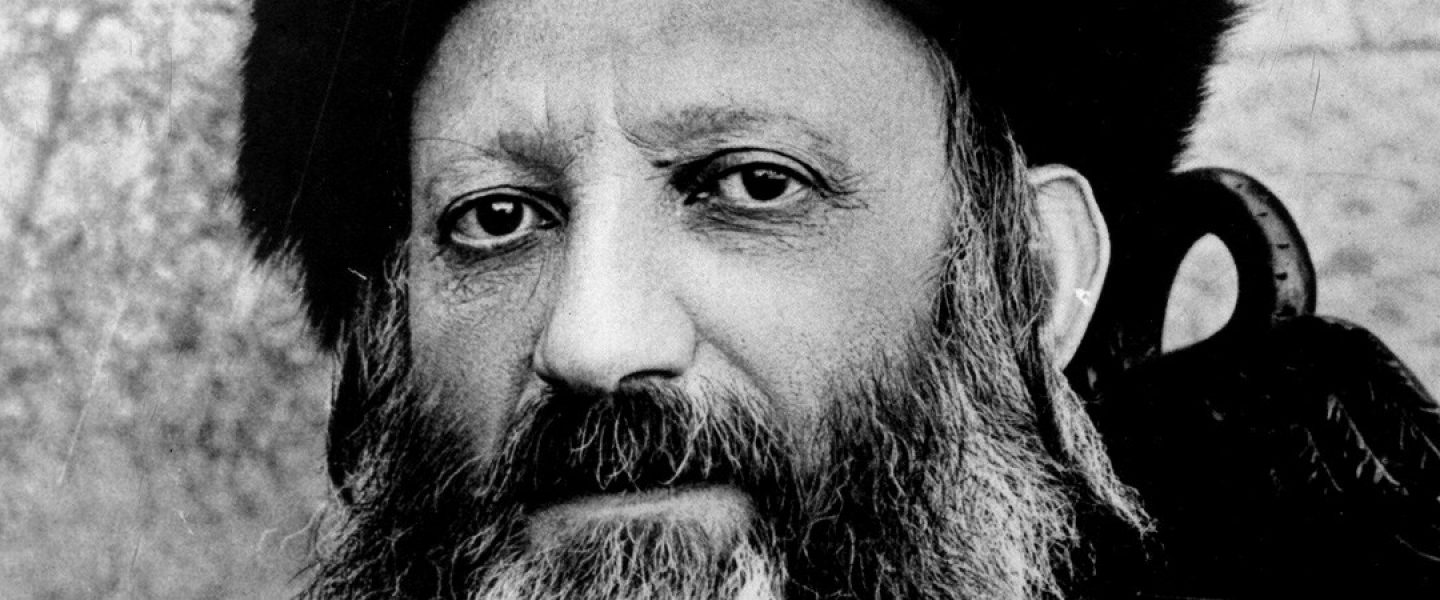
(Disclaimer: Not a picture of Pinchas) 


Printable PDF available here. Last year’s post on Parshat Pinchas is available here.

Rav Kook (Metziat Katan 146)

Pinchas the son of Eleazar, the son of Aaron the Kohen, has turned My anger away from the children of Israel by zealously avenging Me among them, so that I did not destroy the children of Israel because of My vengeance. Therefore, say, “I hereby give him My covenant of peace.”

On these verses, a puzzling midrash tells us that G-d declared “It is right (lit. בדין) that Pinchas claim his reward.” What exactly do our Sages mean to tell us? Why was there any question about Pinchas’ entitlement to reward for his actions?

To understand this midrash, let us turn to a famous question in Jewish philosophy – why were the Egyptians punished for enslaving the Jews if G-d decreed that Avraham’s descendants would be slaves? Many answers are offered to this question. Maimonides suggests that G-d only decreed that Egypt as a collective would enslave the Jewish people, but every single Egyptian maintained the freedom of choice. When that freedom of choice was misused, the Egyptians were deserving of punishment. However, this answer is counterintuitive and does not seem to resolve the problem. If G-d desired that the Jews be enslaved in Egypt, then every individual Egyptian who furthered that purpose was fulfilling the Divine will. What is the logic of distinguishing between G-d’s judgment of individual Egyptians and the collective as a whole?

Let us suggest an alternative solution, one that will also resolve our puzzling midrash regarding Pinchas. Most of the time, G-d commands us to perform actions that are intrinsically good and desirable. And although we are encouraged to fulfil His will for its own sake (lit. לשמה), it is difficult to rise to this lofty level. Thus, our tradition acknowledges the value of performing mitzvot with ulterior motives (lit. שלא לשמה), and in most instances does not censure us for doing so.

However, there are rare instances of actions that are fundamentally wicked, but which G-d permits because they are necessary for the unfolding of His plan for humanity, without which the world could not reach the highest level of perfection. Because these actions are intrinsically wrongful, they are only permitted if performed by one who is conscious that he is fulfilling a Divine mandate. Otherwise, his act remains lawless and contemptible.

One example of this dynamic is the mitzvah of yibbum. Ordinarily, having relations with one’s brother’s wife is a terrible prohibition, punishable by karet. However, when a brother dies without children, G-d’s wisdom pushes aside this prohibition and makes it into a mitzvah. However, the underlying prohibition is still latent, and so our Sages (Gemara Yevamot 39b) teach that if a man who performs yibbum with ulterior motives, it is “as if he encounters one of the arayot.”

The same dynamic was at work when G-d decreed that the Jews be enslaved in Egypt. To cause suffering to any human being, not least an entire nation, is fundamentally a terrible sin. G-d permitted it only as a special dispensation for Israel to be born and fulfill its world-historical mission. The Egyptians should have kept in mind that they were enslaving Israel only in fulfillment of the Divine decree, but the suffering they inflicted was motivated by hatred, not by consciousness of duty. And so in G-d’s eyes it ceased to be a mitzvah and reverted to a terrible sin, one deserving of the most severe punishment.

To come full circle, the same dynamic was also at play in Pinchas’ actions. According to halacha, his execution of Zimri was fundamentally an extra-judicial act of murder, permissible only to one who is a קנאי, a pure-hearted zealot pained by public desecration of G-d’s name. Given that “man sees what is visible to the eyes, while only the Lord sees into the heart” (Shmuel Aleph 16:7), we are thus justified in asking whether Pinchas’ motivations were sincere. In fact, our Sages teach that Pinchas’ contemporaries believed he did not deserve to be rewarded. They did not believe that someone whose ancestors were non-Jewish idol worshippers could muster the necessary purity of intention to be a true zealot. Thus, it was necessary for G-d to attest to Pinchas’ worthiness and declare “It is right (lit. בדין) that Pinchas claim his reward.”

Food for Thought

Nachum Rakover (המטרה המקדשת את האמעציים): One text that could serve as an important authorization to transgress when the motivation is fulfillment of a commandment, is the statement in Tractate Nazir (23b), “A transgression performed with good intention (lishmah) is better than a commandment performed not for its own sake”–with the word lishmah taken as Rashi does, to mean “for the purpose of fulfilling a commandment.” The statement is a bold one, which seems to cut across all categories in one fell stroke and base everything on the nature of one’s motivation. The case offered as proof of this principle is that of Yael, who, the Talmud tells us, had relations with the enemy general Sisera in order to slay him (see Judg. 4:17–22). Hence one cannot help but wonder if it is the Talmud’s position that normally forbidden relations are totally permitted when their purpose is the fulfillment of a commandment?…

In the literature that deals with the issue of transgression in order to fulfill a commandment, there is scarcely any mention at all of the principle, “A transgression performed with good intention is better than a precept performed not for its own sake.” What mention we do find, is exemplified by Rashba’s use of the principle in response to a query on the proper policy concerning punishment of offenders (Resp. Rashba V:238). In the case before him, Rashba recommends moderation and adds, “These matters are determined by the intention of the heart, as you know what is said in Nazir (23b), that ‘a transgression performed with good intention is better than a precept performed not for its own sake.’” Rashba’s responsum does not deal with punishment according to the prescribed law, but rather with punishment demanded by the exigencies of the hour. Such punishment is determined at the sole discretion of the judge. In such instances, then, the evaluation that must be made with regard to possible suspension of punishment has to take into account, among other considerations, the legal system’s view of the judge’s “transgression” performed with good intention….

Violation of the law in order to preserve it seems to receive a somewhat broader interpretation in Hassidic literature. So, for example, R. Ya’akov Yosef of Polanah writes, “We find that the main purpose of G-d’s commandments is that we cleave to His ways, and sometimes the value of a transgression with good intention is very great” (Toledot Ya’akov Yosef, Pareshat Ki Tetze 5). R. Tzadok haKohen of Lublin, in his Tzidkat haTzadik (25) mentions that sometimes love of G-d requires one to sacrifice his soul, as in the case of King David who sought to worship an idol, and the person who violated the Sabbath by gathering wood during Israel’s sojourn in the desert (mekoshesh). Both transgressed with good intention (leshem shamayyim). With regard to a transgression performed with good intention, R. Hayyim of Tzanz distinguishes between ordinary persons and one who transcends human nature, abandoning all regard for his own bodily pleasure (Divrei Hayyim, Pareshat Va’et’hanan, ad init.).

The opposite approach is found in the writings of R. Hayyim of Volozhin, the leading pupil of the Gaon of Vilna. In his work, Nefesh haHayyim (additional notes following Part III, chap. 7), R. Hayyim notes the problematic nature of the statement “gedola aveira lishmah,” which implies that it is permitted to transgress if one’s intention is proper, a statement with potential to undermine all existing order. Therefore, R. Hayyim posits that permission to transgress with good intention applied only prior to the Sinai revelation, but since Sinai, we are bound by the categories of the Torah, and thus the principle has no practical application in our time. In the post-Sinai era, then, even a person becomes convinced that the fulfillment of his legal obligation will cause damage, he is not permitted to abstain, since the reasons for the commandments were not revealed.

Elhanan Wasserman (Or Elhanan, Part II, p. 3) considered the issue of transgression with good intention when consulted about the possible use of force in the struggle for employment of Jewish workers (“avodah Ivrit”) in Eretz Yisrael. In his response, R. Elhanan writes that “it is clear that the authority to permit transgression with good intention was given only to the Sages and not to us… and that if such authority is granted to all who wish to use it, there will remain no room for our holy Torah. Indeed, the communist Bolsheviks also claim that their tactics are for the good of society. But the tactics of terror can only destroy; they can never build, as is written, ‘melekh bemishpat ya’amid eretz–The King by justice upholds the country…’ (Prov. 29:4). From here we learn that the world can be upheld only by justice, and that without justice, it is impossible to remain in the world. For if one side employs terror, the other side will certainly use this method as well.”…

The possibility of violating the law in order to preserve it is a matter of far-reaching and potentially dangerous implications. Due to its explosive nature, the principle has never become part of the mainstream of Jewish law, but has remained a relatively minor tributary.

A Mashal From the Brisker Rav: Rav Soloveitchik offered an analogy to explain an important aspect of the Torah’s attitude toward zealotry.  He told the story of a homeowner who was troubled by an infestation of mice in his home.  In order to combat the mice, he purchased a cat.  In short order, the cat rid the homeowner of the troublesome mice.  Rav Soloveitchik observed that both the homeowner and the cat shared the objective of eliminating the mice.  However, their underlying motives were very different.  The homeowner would have been even happier if he had never experienced the mice infestation.  However, the cat’s happiness stems from his engaging hunt and conquest.  The cat’s pleasure requires that there be an infestation! Rav Soloveitchik explained that unfortunately, some individuals delight in confrontation and conflict.  They masquerade as zealots for the honor of Torah but really enjoy confrontation and strife. The zealot who is acting on Torah principles wishes that his actions would not be required.  He responds to a disaster – a public desecration of the Torah’s values.  He would prefer that the desecration not occur and his response not be required.

Questions for Discussion

  1. Other than Pinchas, who else in Tanach has a reputation for zealotry?
  2. See the excerpt from Elhanan Wasserman above in “Food for Thought.” In light of his insights, does Rav Kook’s teaching have any relevance to the racial unrest currently convulsing cities across America?
  3. What else is relevant to whether the Torah approves or condemns an act of zealotry?
  4. Can there be zealotry that does not involve lashing out at or harming people one does not approve of?
  5. Rav Kook sees yibbum, the Egyptian enslavement and Pinchas lashing out at Zimri/Kozbi as expressions of the same principle. How are these cases similar? How are they different?
  6. What are some dangers of misplaced zealotry?

Of Tents and Torah – Parshat Chukat

shulem-rabbis-for-web-1465331228

Ein Ayah (Gemara Shabbat 83b):

Even at the moment of death, one should not refrain from going to the beit midrash or from engaging in Torah study, as it is stated: “This is the Torah: A person who dies in a tent” (Bamidbar 19:14).

This statement of our Sages is puzzling, to say the least. Can a person on the verge of death really be expected to present himself in the beit midrash, let alone have the clarity of mind to engage in Torah study? What are our Sages trying to teach us?

A proper understanding of this teaching requires us to understand that our Sages are making a broader point about the purpose of Torah. The basic goal of any moral code is the functioning of a stable society that advances human welfare. For this reason, the realm of morality is concerned with man’s this-worldly existence. As long as a person is alive in this world and a member of broader society, he must adhere to this basic level of morality.

The Torah shares the goal of advancing human welfare and creating a well-functioning society, albeit it in a more perfected and holy form than could emerge from any human mind. However, the Torah’s concerns are much broader and far-reaching. Every law and every detail of the Torah, even those that seem pragmatically oriented, transcends the narrow concerns of this world and roots man in the eternal world of pure spirit (lit. חיי עולם).

For this reason, even if a person is on the verge of death and is no longer concerned with mundane matters of worldly existence, he should not be any less connected to the Torah. The Torah’s laws and details root us in a realm of eternal and illuminated holiness, and are not only for this world.

This explains why our Sages did not suffice with asserting that a person on the verge of death should study Torah – they went out of their way to add that he should even “attend the beit midrash.” In other words, one might have thought that the beit midrash, where Jews gather for communal Torah study, is primarily a sociological institution. Instead of studying in private, Jews come there for companionship and the pleasure of intellectual engagement (lit. חידוד של בית המדש). Our Sages are alluding that the sociological and worldly is but one dimension of the beit midrash – and by extension, but one dimension of the holy Torah.

We see that this statement of our Sages is not meant as impractical advice about funerary planning. It is intended to guide all of us to a deeper appreciation of the uniqueness and sacred character of our precious Torah.

Food for Thought

Rabbi Shalom Carmy (“Is Contemporary Orthodox Judaism Racist?” in Tradition 50:4): When you ask about Orthodox Judaism and racism, speaking in your role as an educator of young Jews, at the root of your vexation are these insidious muttered imprecations amplified around dinner tables, in classrooms and shuls, often regurgitated by people who have suppressed or never knew the pain and betrayal whence they may have originated. Modern Orthodox identity, for many of your students, is more about these scenes of socialization than it is about religiously formed convictions and theological propositions. That socialization supposedly enables our young people to uphold the reality of a transcendent G-d, whose commands override human preferences, devotion to the singular destiny of a people separate from the nations of the world, and a way of life sharply at odds with secular values, and to resist the powerful attractions and pressures of that world. When our socialization indulges and even encourages racist utterances, the Orthodox community finds itself in the wrong on a clear-cut moral question, the one question that, in the eyes of liberal secular culture, takes precedence over all other moral questions.

Rav Soloveitchik (Divrei Hashkafa, pg. 254-255): I recoil from all talk that goes round and round a single topic: that the observance of mitzvot is beneficial for digestion, for sound sleep, for family harmony, and for social position… When man meets G-d, G-d demands self-sacrifice, which expresses itself in struggle with his primitive passions, in breaking his will, in accepting a transcendental “burden,” in giving up exaggerated carnal desire, in occasional withdrawal from the sweet and pleasant, in dedication to the strangely bitter, in clash with secular rule, and in his yearning for a paradoxical world that is incomprehensible to others. Offer your sacrifice! This is the fundamental command given to the man of religion.

Rav Yuval Cherlow (In His Image, pg. 166, 168): [T]he Bible does not contain any explicit mention of the World to Come. It is absent even in places where we would expect it to appear. It does not appear in the passages that discuss reward and punishment, all of which refer to material consequences in this world. The World to Come is not the answer given to the never-ending question of why bad things happen to good people — even though it is the primary response given by the Oral Torah. It is also not the answer given to the question posed by Ecclesiastes — “What profit has a man of all his labor wherein he labors under the sun?” (Eccl. 1:3) — even though it should be the natural response. The disparity must be addressed…. [One of many approaches in our tradition] is presented by Rabbi Yehuda HaLevi. He explains that the Torah’s silence in relation to the World to Come reveals how minimal its significance is in Man’s consciousness. The Torah wants Man to devote his attention to constantly striving to bring about G-d’s manifestation in this world. Man encounters G-d in the framework of life, not death. In the words of Rabbi Yehuda HaLevi, the two reasons serve as one: he stresses the remarkable purpose of the encounter with G-d precisely in the world of the living — “and I will walk among you” — as well as the consequences of this fact on the subsequent certainty that the World to Come exists: “The ultimate good is reserved for the [people of the chosen] nation, who are closest to G-d during their lifetimes. After death the degree of a person’s closeness to G-d is assessed according to his level before death.”

Rav Samson Raphael Hirsch (Collected Writings Vol. 1, pg. 202): For those who have achieved this inner harmony, this blessed peace of mind, there is no longer any contrast and disharmony, any conflict or chasm between heaven and earth, between time and eternity, between temple and home, altar and table. For heaven and eternity, bliss and supreme happiness have entered the daily, temporal concerns of such people. Their psycho-physical existence, their material and spiritual being has been changed into something heavenly and eternal. They are able to assemble their families around the table of G-d. And, in the presence of G-d, together with wife and children they can enjoy these eternal values which transform every moment of our fleeting existence on earth into a taste of eternity.

Rav Samson Raphael Hirsch (Collected Writings Vol. 2, pg. 185): [T]he element of eternity… is inherent even in the transient, fast-fading present. For this reason… and in spite of the fleeting character of our earthly existence, our Sages refer to our human world as עולם, though this term is usually reserved for the concept of eternity. Is the present not indeed a segment of eternity? Is not every drop of water in the sea a part of the ocean that ebbs and flows forever so that even this tiny drop has a portion in the ocean’s infinity? Is not even the most fleeting moment of the present a permanent part of eternity? And if this eternity has one King, the One G-d, and even the present, the temporal world with all its cares and griefs, despite all its errors and frailties, is subject to the command of this King – is not the present, too, a part of the Kingdom of this One Ruler? Does not, then, even the most ephemeral, most sorrowful moment of the present, if it is spent beneath His sovereignty and in His loyal service, offer and assure us all the joys that can mature only beneath the sunshine of His eternity? Must we seek eternity only in the world to come? Does not our eternity already begin here within ourselves? Are we not already in the midst of this realm of eternity, beneath the banner of מלך העולם.

Rambam (Hilchot Meilah, 8:8): It is appropriate for a person to meditate on the laws of the holy Torah and know their ultimate purpose according to his capacity. If he cannot find a reason or a motivating rationale for a practice, he should not regard it lightly. Nor should he break through to ascend to G-d, lest G-d burst forth against him. One’s thoughts concerning them should not be like his thoughts concerning other ordinary matters… The mishpatim are those mitzvot whose motivating rationale is openly revealed and the benefit of their observance in this world is known, e.g., the prohibitions against robbery and bloodshed and honoring one’s father and mother. The chukim are the mitzvot whose motivating rationales are not known. Our Sages said: “I chukim and you have no license to question them.” A person’s yetzer ha’ara confronts him concerning these laws and the nations of the world challenge them, e.g., the prohibition of the meat of a pig, milk and meat, the calf whose neck is broken, the red heifer, and the goat sent to Azazel… Through the performance of the chukim and the mishpatim the righteous merit the life in the World to Come. And between the two of them, the Torah lists the chukim first, as it states (Vayikra 18:5) “And you shall heed My decrees and judgments which a person will perform and live through them.”

Questions for Discussion

  1. In observance of a certain law or mitzvah, is it possible for there to be a conflict between the Torah’s “this-wordly” concerns and its concerns for Olam ha’Ba? If so, how would we reconcile or resolve such a conflict?
  2. Why does the Torah have laws to further the stability/welfare of society? Why not just leave that up to human wisdom and legislation?
  3. How does observing laws of the Torah earn us Olam ha’Ba?
  4. What is Olam ha’Ba?
  5. What happens if a person’s religious observance is too focused on the benefits of Torah in this world? What if it is too focused on Olam ha’Ba?

Separation and Integration – Parshat Korach

aP-WQsh26lYTb3VGLim94g-Wanderer+thumb+800

Printable PDF available here. Last year’s post on Parshat Korach, which deals with similar themes but from an entirely different angle (re. Rav Kook’s take on Christianity) can be found here. See also this piece regarding withdrawal and isolation, written at the height of the COVID pandemic.

Rav Kook (Orot ha’Kodesh, 2:28)

The theme of separation is pervasive in Parshat Korach. Korach claims that Moshe and Aharon have no basis to rule over the people, as “the entire congregation are all holy.” The separation of the tribe of Levi also appears to have a role in the controversy. Both the death of Korach/his assembly and the miracle with Aharon’s staff all reinforce the distinct roles of Moshe, Aharon, and the tribe of Levi, roles which are reaffirmed by the laws at the end of the parshah as well.

Separation (lit. הבדלה) is one of two spiritual channels by which each individual and the collective must conduct their affairs. The second channel is that of integration (lit. הכללה).

Separation is more than just physical partition. It expresses itself any time that a person withdraws from the broader world due to an inner longing to perfect his world of spirit, thought, emotion, instinct or action. A sensitive soul understands that he must occasionally withdraw from the noisy superficiality of the world when it seeks to deprive him of the supernal treasure of an elevated life and a pure and joyful consciousness. He must be apart in order to rescue himself from the pale, constricted imitation of life that others regard as “the real world.”

On a broader level, separation expresses itself whenever any group is set aside for a distinct mission. At the outset of Israel’s development, the tribe of Levi was separated from the rest of the nation, and from the tribe of Levi, the Kohanim, descendants of Aharon, were further separated as well. Later in our history, the halacha developed distinctions between pious members of the community and amei ha’aretz, who were unreliable when it came to certain matters of ritualimpurity and tithes. But there are more fundamental expression of havdalah that provide the basic architecture for existence itself – the separation between Israel and the nations of the world; and prior to that, the separation between humanity and the rest of the animal kingdom, through man being endowed with a unique spiritual sensitivity and ethical awareness, which undergird his inner world and enable him to strive heavenward.

But within the very depths of separation is concealed an orientation and a potential for integration. By their very nature, spiritual talents and proclivities are scattered throughout the world. But when a group is Divinely set aside, those sparks can be nurtured into a flame of holiness and reach their most essential and consummate expression. The perfected aspirations of the group do not remain locked within it, but spread an inner illumination well beyond its boundaries, uplifting all of existence.

A few examples will serve to illustrate the truth of this principle. Humanity was separated from the rest of the natural world and raised up as the crown of G-d’s creation. However, mankind’s spiritual stature is not meant for its own aggrandizement. Our spiritual potential was conferred so that we would uplift of all of G-d’s creation and guide the entire world to its perfection.

The unique nation of Israel, the סגולה מכל העמים, fiercely guards its inner uniqueness and separates itself from the ways of other nations, not as an expression of chauvinism, but so that it can retain the ability to serve as a light to the nations and bring salvation to the rest of humanity.

The tribe of Levi is set apart of the rest of Israel. However, its unique path serves to distill a purity and spiritual intensity by which the rest of the nation is blessed. The same thing is true of the Kohanim, whose kedushah is not something foreign to Israel, but rather draws down the supernal revelation of ruach ha’kodesh for the benefit and refinement of the entire collective.

The separation of chaveirim from amei ha’aretz was not an expression of hatred or contempt for less educated members of the community. By living in accordance with unique spiritual aspirations, above and beyond what is expected from the masses, the chaveirim were able to cultivate an intensity of spiritual talents and aptitudes, which uplifted everyone they came into contact with.

All of this is the opposite of the shallow and superficial integration preached by the broader world (lit. ההכללה הגסה), which seeks to erase all differences and combine everything under one amalgamated banner, and thereby plows under every repository of spiritual splendor and refinement. Ultimately, life and clarity of consciousness become coarsened and dark. The unrefined “universal love of humanity” becomes polluted and corrupt. The great unity of shallow universalism disintegrates into resentment, hatred, and even bloodshed. As the holy Zohar teaches, “The forces of evil and negativity (lit. סטרא אחרא) begin in unity and end in separation. The forces of holiness (lit. סטרא דקדושה) begin in separation and end in unity.”

In summary, behind every act of separation lies a more profound goal – that life’s deeper and more sublime dimensions be preserved in their truest form, not to remain permanently constricted and withdrawn, but for the ultimate enrichment of and integration with everything outside of its borders. This is the path of G-d in all matters of holiness – separation for the purpose of ultimate integration.

Food for Thought

The above piece from Rav Kook deals with the profound spiritual relationship between separation and integration. If his insights seem esoteric or hard to relate to, consider the following excerpts from Rav Samson Raphael Hirsch:

Commentary on the Torah (Bereishit 28:22): The sanctity of [Jewish] homes is the necessary condition for the sanctity of the House of G-d, which is not mikdash because it is the place to which kedushah is relegated, but, because from there holiness is to flow out and penetrate all human conditions and places, it is to be their center point. “Let them make a Sanctuary unto Me” it says later on to the descendants of Jacob who are to build out the foundation of this stone into a system of private and national life, “that I may dwell,” not in it, but בתוכם, “amongst them”… and the goal of the development beginning with this stone is as stated in Zechariah’s description of the messianic era, “Every saucepan in Jerusalem and Judah shall be holy unto G-d.” (Zechariah, 14:21)

Collected Writings (Vol. 2, pg. 154): Thus our holy periods [in time, i.e. moadim] are not simply an oasis in a desert but are comparable to blessed wellstreams which flow in all directions… over all bordering time spans to spread holiness over all of life.

Commentary on the Siddur: The holy is set apart from the profane only to show that it is from the holy that the spirit of sanctity and sanctification should go out to permeate all the other phases of human life. That which is shut off from the light is so separated only that, under the cover of darkness, it may gather new strength in order then, suffused with light, to be awakened to new life and vigor. Yisrael, too, is set apart from the other nations only so that, through Yisrael, the rest of the nations may be won over to an ever-increasing extent to the truths it has revealed.

Horeb (Pg. 106): From the duty to ponder over the concept of the Sabbath when the Sabbath commences and to affirm that concept when the Sabbath departs [i.e. tosefet Shabbat] there follows this corollary: It is above all your duty not to limit the influence of the Sabbath to the short period of its duration but to let its holiness overflow into the week.

Consider also the following excerpt from the Rambam, particularly the bolded portion.

Maimonides (Mishnah Torah, Hilchot Melachim 12:1): Let no one think that in the days of the Messiah any of the laws of nature will be set aside, or any innovation be introduced into creation. The world will follow its normal course. The words of Isaiah: “And the wolf shall dwell with the lamb, and the leopard shall lie down with the kid” are to be understood figuratively, meaning that Israel will live securely among the wicked of the heathens who are likened to wolves and leopards, as it is written: “A wolf of the deserts does spoil them, a leopard watches over their cities.” They will all accept true religion [lit. dat ha-emet], and will neither plunder nor destroy, and together with Israel, peacefully eat that which is permissible, as it is written: “And the lion shall eat straw like the ox.”

I believe the following quote, from an excellent work of political theory by a non-Jewish author, illustrates Rav Kook’s point about the “shallow and superficial integration preached by the broader world.”

Professor Patrick Deneen (Why Liberalism Failed, pg. 79-80, 82): Liberalism valorizes placelessness. Its “state of nature” posits a view from nowhere: abstract individuals in equally abstract places. Not only does liberalism rest on the anthropological assumption that humans are from no one… but that we are from nowhere. The place where one happens to be born and raised is as arbitrary as one’s parents, one’s religion, or one’s customs. One should consider oneself primarily a free chooser, of place as of all relationships, institutions, and beliefs…This placeless default is one of the preeminent ways that liberalism subtly, unobtrusively, and pervasively undermines all cultures and liberates individuals into the irresponsibility of anti-culture…Larger units than the locality or the region can flourish in the proper sense only when their constitutive parts flourish. Modern liberalism, by contrast, insists on the priority of the largest unit over the smallest, and seeks to impose a homogenous standard on a world of particularity and diversity.

Questions for Discussion

  1. Was Korach wrong when he said “the entire congregation are all holy, and the Lord is in their midst?”
  2. What are the possible meanings of “true religion” in the excerpt from Maimonides above? What are the implications of each possible interpretation? And which do you think Rav Kook would agree with?
  3. Think of some Torah laws that differentiate between different groups of people. Are they more intuitive in light of Rav Kook’s insights? Why or why not?
  4. How would Rav Kook react to someone invoking the chosenness of Israel to support racist beliefs or comments?
  5. Can you think of any concrete examples of the process described by Rav Kook, where a shallow “universal love of humanity” degrades into resentment, hatred, and even bloodshed?
  6. What are healthy ways of withdrawing from “the noisy superficiality of the world?” What are unhealthy ways?