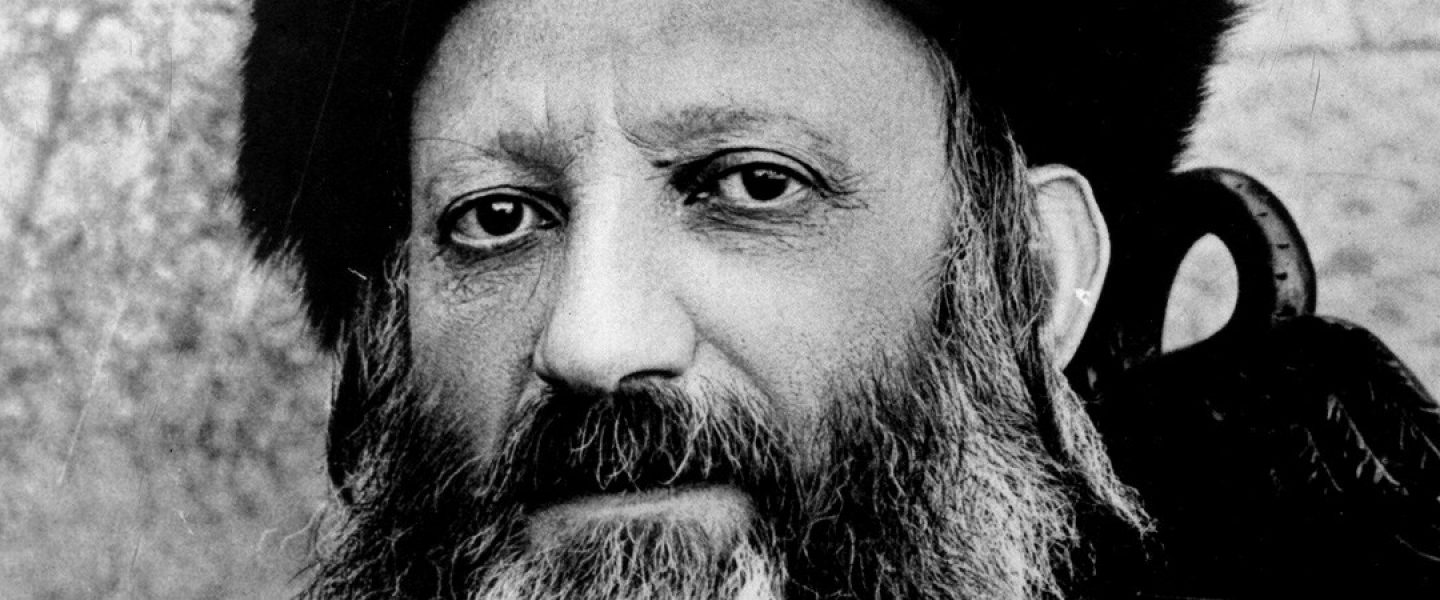

Rav Kook (Olat Rei’ah)
“And you shall take for yourselves on the first day [the product of hadar trees, branches of palm trees, boughs of leafy trees, and willows of the brook, and you shall rejoice before the Lord your G-d seven days.]” (Vayikra 23:40) But is it the first day? Is it not the fifteenth day [of Tishrei]? So how is it the first? Rather, it is the first for the reckoning of sins (lit. ראשון לחשבון עוונות). (Midrash Tanchum, Parshat Emor)
Between Yom Kippur and Succos, from the perspective of supernal wisdom, this world and the world-to-come are integrated as one. Whatever strengthens the world-to-come strengthens this world; and whatever strengthens this world strengthens the world-to-come. In accordance with that illuminated [awareness], there is no room for severities at all, but only absolute, full and fragrant kindnesses.
However, from the perspective of the image of the spiritual world, which is in the process of being perfected by “Supernal Understanding, [a plane that] provides the initial parameters of levels of reality, this world and the world-to-come each acquires its own boundary. And clearly, since there is a dividing line, this world has no place at all wherever the world-to-come shines in the might of [its] fullness. That is the foundation of teshuvah that comes from an illumination of the world-to-come in all the fullness of its beauty.
With [our] ascent on Yom Kippur, we are very much removed from this world, and we need to be guarded from all stumbling blocks when we confront matters of this world. The days between Yom Kippur and Succos were given to train [us to] return to matters of this world in a properly holy manner.
That is an accounting that is completed on the first day of Succos with the mitzvos of succah and lulav, when this-worldly matters gain a foundation and grasp on holiness. And therefore Succos is “the first day of the accounting of sins.”
It may be that the extremist inclination of Yom Kippur has caused the subtlest inclination toward the aspect of this world on those four days when the scale has not yet been properly balanced. But the holiness of Yom Kippur [then] covers everything.
Certainly, whoever senses the inner quality of Yom Kippur and the manifestation of the world-to-come within it and [then] the ferment within the days between Yom Kippur and Succos caused by the search to restore the role of this world to its position of power is literally far from all sin.
However, even the refined character of the scale is to be considered within the realm of transgression and sin when it is inexact. Therefore, only the first day of the holiday [of Succos] is properly “the first day of the accounting,” for then the scale returns to [its] balance, and it becomes possible to provide a measurement for the [sake of] building and guiding the world in the proper measure.
Rav Moshe Weinberger (Song of Teshuva, Vol. 2, Pg. 299)
The Torah calls Succos rishon – the first [day].” Yet Succos is the fifteenth day of the month and of the new year. Our Sages explain the word rishon to mean that Succos is the first day of the accounting of sins following the atonement gained on Yom Kippur (lit. ראשון לחשבון עוונות). We must look more deeply into what that means. It certainly does not mean that there is a time off from personal accountability.
From the perspective of truth on the highest level, there is no separation between this world and the next. Everything is one. From the perspective of supernal, unified perfection, anything that strengthens the world-to-come strengthens this world, and vice versa. From that ideal perspective, there is no separation.
However, from our point of view, a person who wants to earn entrance to the world-to-come must guard himself from the dangers of this world. We must indeed be careful, because we exist in a diminished state. On our level of apprehending reality, there is this world and the next, and we are afraid that our dealings with this world will prevent us from attaining the next. We see this world as an impediment in the way of the world-to-come.
It appears to us that these are two separate kingdoms – the kingdom of holiness and the kingdom of darkness – that have nothing to do with each other. But that is not true, Heaven forbid. From the perspective of higher wisdom, the perspective of tzaddikim, there is no conflict between above and below, between the world-to-come and this world. Therefore, any progress made in strengthening the world to-come strengthens this world. And any work that strengthens this world strengthens the world-to-come as well.
With this illuminated awareness, there is no room for any suffering. There exist only complete and total kindnesses – which tzaddikim are able to perceive even in every point of suffering.
The tzaddik who lives with the awareness that both worlds are one sees even a dysfunctional element in this world as part of a greater movement of both worlds progressing simultaneously – a movement that is entirely good and filled with kindnesses.
G-d wanted a universe in which people would be able to serve Him with free will and teshuvah. To that end, He created a reality in which we perceive boundaries that separate the world above from this world. G-d willed that there should be levels and separations, that there should be one o’clock and two o’clock, that there should be Yerushalayim and New York. From that perspective, the world-to-come and this world have each acquired its own boundary and realm, and there is such a vast distance between the two that they have no connection.
But on the innermost level, from the perspective of supernal wisdom, there is no difference. From that perspective, space and time do not exist. There is no separation between levels of holiness. It is all one.
With the exception of the exalted tzaddikim, we live in a reality in which a border separates this world from the next. From our perspective, this world has no relevance to the world-to-come shining in all of its splendor. Imagine a person in the middle of Neilah at the Kosel interrupted by someone who asks him, “Are you looking forward to going to Kosher Delight in New York?” If that person possesses the perspective of lower, diminished reality in which borders exist, he will be shocked. Because he is at present filled with the reality of the world-to-come, for him there is no room for New York and hamburgers. There is a dividing line between them. They are two separate worlds. But that is because he is not in a place of absolute oneness. If he were in such a place, he might generate a profusion of kabbalistic insights on how New York and the Kosel are one.
We are shocked even to hear such a thought. But that is only because we have experienced great descents. And that is not our fault, for G-d has created that line of demarcation. That line makes it possible for a Jew for whom the most important thing is Kosher Delight to attain a supernal taste of the Kosel during Neilah so that he can make the choice to do teshuvah. Even as a person stands in New York on a weekday, he can experience a taste of the Kosel during Neilah.
On Yom Kippur, a Jew enters the realm of the world-to-come, where “tzaddikim sit with their crowns on their heads and delight in G-d’s Presence” (Berachos 17a). There is no eating, no drinking, and no marital relations. He wears a kittel which is a garment of the next world.
Because G-d has placed us in a world of borders and separate realities so that we may have free choice, after our great ascent on Yom Kippur we are far from this mundane world, and from our perspective there are no compromises. A person is religious or secular, spiritual or brutish. Sometimes when a person in such a state of consciousness returns to this physical world, when he realizes that he is no longer solely a spiritual being, he goes to the other extreme and indulges in the coarsest sins. A person must therefore descend gently, in a proper and holy manner. And the time for that gentle descent is provided by the four days between Yom Kippur and Succos.
Succos is the “time of our joy” (Siddur) – our joy in this world. We shift from inhabiting the world-to-come to immersing ourselves in this world. Succos comprises our most this-worldly festival. On Succos, holiness is expressed with taking the products of the earth: waving the lulav and esrog and dwelling in the succah. If a person were to go straight from Yom Kippur to Succos, he might not stop with enjoying the succah and lulav and esrog, but connect to physical pleasures in an unbridled way. Thus, he descends slowly during the four days between Yom Kippur and Succos. That period concludes with the first day of Succos, when we dwell in the succah, wave the lulav and esrog and celebrate with Simchas Beis HaShoevah, strengthening our connection to this world by lifting it up to holiness.
That is not to say that there is a time when sins are not taken account of. There are no days off from Yiddishkeit…[But Sukkot] is the first day that a person is properly balanced so that he can exercise his free choice by functioning as a world-to-come person in this world…
During these four days between Yom Kippur and Succos, the proper balance between the world-to-come and this world has not yet been established. But during that time, the holiness of Yom Kippur still hovers above everything. There is an effervescent excitement during these four days, as this world once again asks to be properly and fully recognized.
As a person went through Yom Kippur, he rejected this world. Now, during the days between Yom Kippur and Succos, the world is saying, “Come back. G-d wants you to be here. He wants you to perfect this world and make proper choices in it.” Anyone could be on a Yom Kippur level. Even non-religious Jews fast on Yom Kippur. But the ultimate goal is to eat in holiness. That is represented by Succos. The purpose is not to be celibate but to be married and holy. The purpose is not to sit crying under a tallis but to dance and rejoice with one’s friends under a tallis.
Because a person is no longer in the world-to-come, because he has left Yom Kippur and has returned to this world, some distortion can take place. It is only on the first day of Succos that he is restored to a healthy, proper understanding and balance in this world.
