
Printable PDF available here.
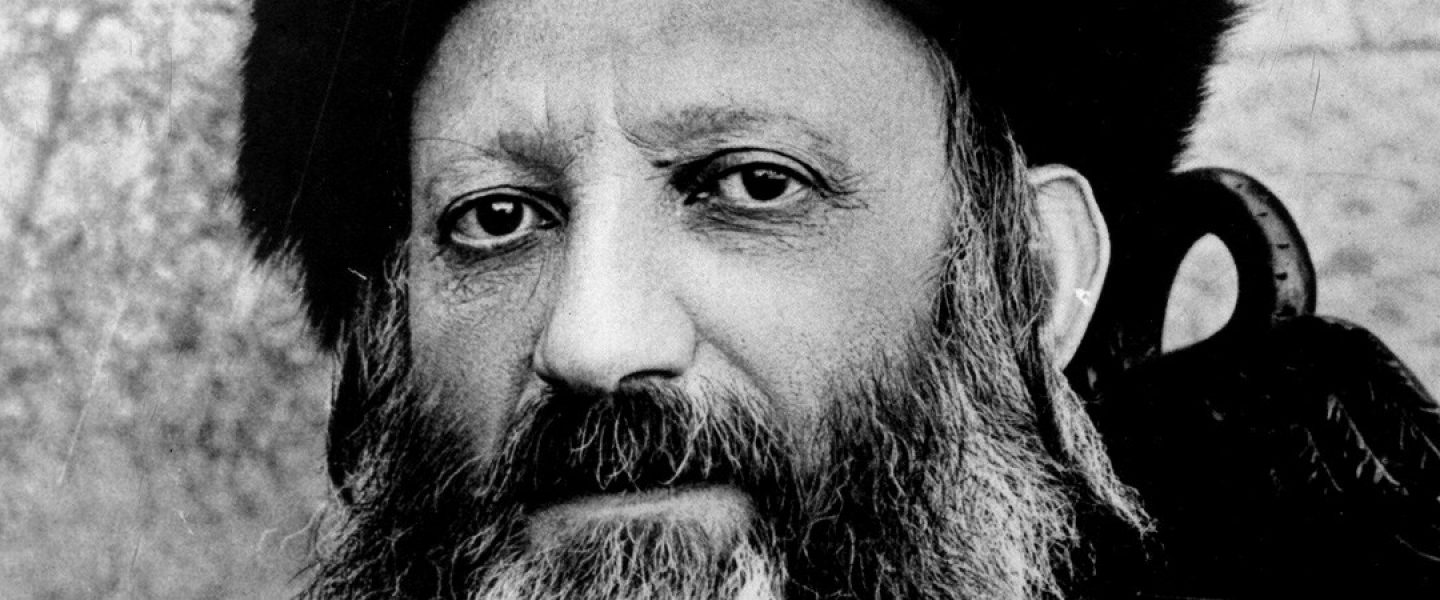
Rav Kook (Me’orot haRe’iah 1:206)
Rabbi Yitzchak said: The Torah should have begun with “This month will be to you the first of the months” (Shemot 12:2). Now for what reason did He commence with “In the beginning G-d created”? Because of [the idea expressed in] the verse] “The strength of His works He related to His people, to give them the inheritance of the nations” כח מעשיו הגיד לעמו לתת להם נחלת גוים. (Tehillim 111:6)
Many of us are familiar with this midrash, which Rashi puts at the very beginning of his commentary on the Torah.[1]The midrash’s question seems strange. Why shouldn’t the Torah start with Bereishit?[2]How can we imagine a Torah without the creation narrative, without Adam and Chavah, without the Avot and Imahot?[3]And how exactly does the verse from Tehillim answer the midrash’s question? None of these issues are addressed in the midrash itself, but Rashi deals with them in his commentary.
According to Rashi, the Torah should have started with sanctifying the new month because that is the first mitzvah that Israel received. The unspoken premise seems to be that the Torah is primarily a collection of laws, and the place of narrative – even one as important as Ma’aseh Bereishit– is secondary. The answer, provided by the verse in Tehillim, means as follows: “If the nations of the world say to Israel, ‘You are robbers, for you conquered the land of Cana’an by force,’ Israel can answer that ‘The entire earth belongs to the Holy One, blessed be He; He created it [i.e. as we learn from the Creation narrative] and gave it to whomever He deemed proper. He gave it to them, and when He wished, He took it away from them and gave it to us.’” Thus, according to Rashi, the Jewish people’s claim to Eretz Yisrael is a central message[4]of Bereishit. Before man has been created, before the universe even exists, the Torah directs our focus to Eretz Yisrael.
However, as we noted before, this is all Rashi’s interpretation. It doesn’t appear in the text of the midrash itself.[5]That leaves the door open to other ways of understanding the midrash and the concept of כח מעשיו הגיד לעמו לתת להם נחלת גוים. We can suggest as follows. The dividing line between “This month will be to you the first of the months” and “In the beginning G-d created” is not about law vs. narrative. It is about two completely different ways that G-d interacts with the world, two completely different ways of building a relationship with the Creator.
The first stage began with Creation and proceeded until the generations of the Avot. During this period, humanity’s development unfolded in a structured and gradual manner. Miracles occurred, but they were rare and performed only for individuals.[6]People sought G-d as individuals, not in the framework of a community or group.[7]Furthermore, humanity was not yet privy to any transcendent revelation of G-d’s will. Humanity had to grow into morality and discover holy living through man’s Divinely created nature. This was the pre-Israelite period of history, or נחלת גויים, the “inheritance of the nations” as Tehillim puts it. That phrase refers not to Eretz Yisrael, like Rashi understands, but to derekh eretz – i.e. the universal dictates of ethical, upright conduct and morality.
Many generations later, with G-d’s declaration of “This month will be to you the first of the months,” a new world began. G-d now revealed a new framework of spiritual development. No longer would all humanity seek G-d through a natural process of cautious and measured development. The light of the Shechinah, which illuminated the pagan darkness of Egypt and later shone in full splendor at Mount Sinai, would teach man how to “skip over the mountains and jump over the hills”(Shir haShirim 2:8).
But once this higher revelation was given, how would Israel relate to the earlier world of נחלת גוים, the “inheritance of the nations”? We would’ve expected those matters to beyond the scope of the Torah’s concern. Not because they are unimportant, but because Israel can develop its humanity and universal morality without the Torah’s guidance. After all, that is what humanity did for generations and it’s what Noachides are still expected to do. Or, as the midrash puts it, the Torah didn’t need to start with Ma’aseh Bereishit. It could have started with “This month will be to you the first of the months” and its transcendent spiritual reality.
But the Torah did start with“In the beginning G-d created.” The spiritual framework of נחלת גוים, embodied in Bereishit, is incorporated in and is subsumed within the Torah’s higher spiritual reality. Formulated differently, Israel aspires to universal morality and human virtue, but filtered through and imbued with the light of the Torah. Even the most human aspects of Israel, those it ostensibly shares with the rest of the world, are received from G-d’s hand, are truly distinctive and bear the mark of our Israelite character.
This is what the midrash means when it says that the Torah starts with Ma’aseh Bereishit, so that G-d could give us “the inheritance of the nations.” The midrash is teaching a lesson not about the centrality of Eretz Israel, but the uniqueness of the Jewish People and the concept of ‘Israelite humanity.’
[1]The midrash appears in Bereishit Rabbah and the Buber edition of Midrash Tanchumah (a.k.a. Tanchumah haYashan).
[2]Some scholars think that Rashi quotes this Midrash as a polemical response against the conquest of Jerusalem by the Crusaders. But even if that is true, the midrash still has to be internally coherent.
[3]See Ramban al-haTorah, who addresses this problem. According to some commentators (i.e. Sifsei Chaim), Rashi does not mean that Bereishit would be entirely omitted from the Torah, just moved to after the section on mitzvot. I don’t think this is the simple reading of Rashi or the midrash, and it is not how Ramban interpreted Rashi.
[4]Presumably Rashi would agree that it is not the central message of Bereishit, although some contemporary sources in the Religious Zionist community do make such an argument.
[5]This happens all the time. Rashi’s commentary is not just a collection of midrashim, but an interpretation of them as well.
[6]See Ramban on Bereishit 46:27, addressing why the Torah doesn’t highlight that Yocheved gave birth to Moshe at an advanced age.
[7]The parshiot of Bereishit and Noach go through over twenty generations, and recount barely even one person in each generation.
Food for Thought
Rav Shimson Raphael Hirsch (cited in Horeb, pg. 270): It is, therefore, the Jewish task, as symbolized by the Sanctuary, to lift up the human element in man on to the plane of the Divine law; but the Jewish task and the Jewish consciousness are not something which should be separated from the human task and from human consciousness. The Jewish task must not be conceived as something alien to and divorced from the human task. Never must we think that the Jewish element in us could exist without the human element or vice versa. The Jewish element in us presupposes the human element; it builds on it, ennobles it and brings it to perfection. The Jew cannot fulfill his calling in isolation, but only within human society. The highest perfection of the Jew is nothing but the highest perfection of his task as a human being…Pure Judaism always returns to pure humanism.
Rav Shimson Raphael Hirsch (Judaism and Progress, Collected Writings, Vol. III pg. 123): The more we understand that Judaism reckons with all of man’s endeavors, and the more its declared mission includes the salvation of all mankind, the less can its views be confined to the four cubits of one room or one dwelling. The more the Jew is a Jew, the more universalist will be his views and aspirations, the less alien will he be to anything that is noble and good, true and upright in the arts and sciences, in civilization and culture. The more the Jew is a Jew, the more joyously will he hail everything that will shape human life so as to promote truth, right, peace and refinement among mankind, the more happily will he himself embrace every opportunity to prove his mission as a Jew on new, still untrodden grounds. The more the Jew is a Jew, the more gladly will he give himself to all that is true progress in civilization and culture-provided that in this new circumstance he will not only maintain his Judaism but will be able to bring it to ever more glorious fulfillment.
Rav Aharon Lichtenstein (To Cultivate and to Guard: The Universal Duties of Mankind”): A berit (covenant) is something special and unique; by definition, it delineates a particular relationship between God and a specific community. What then happens to more universal elements? Do these fall away because of the exclusivity of the new relationship? Or do we regard the new relationship as being superimposed upon the old, but not at odds with it?
Even according to the latter approach, at times there may be a conflict between a universal value and a specific one. Fundamentally, however, this approach regards the specific covenant as complementing and building on top of the universal covenant, rather than replacing it and rendering it obsolete. According to this approach, we do not believe that what existed until now was merely scaffolding which was needed until the building was complete, but now that the building is finished, everything else is insignificant. Instead, we assume that whatever commitments, demands and obligations devolve upon a person simply as a member of the universal community, will also apply to him within his unique context as well; but in addition, there are also new demands.
Questions for Discussion
- Do you agree with Rav Kook’s understanding of the relationship between Judaism and humanism? Why or why not?
- See Rav Hirsch above in Food For Thought. Is he saying the same thing as Rav Kook or not?
- Can you think of a practical example where the Torah’s standard of ethical conduct is higher or different than what’s demanded of Noachides?
- According to Rav Kook, the book of Bereishit provides guidance for man’s moral and ethical development. Can you think of any particular stories that prove this point?
- Many people claim that they don’t need to keep Torah and mitzvot because it’s sufficient to be a ‘good person.’ Why does Torah Judaism maintain that that’s incorrect? What would Rav Kook say?
- What do you think we can learn from the book of Bereishit?


 .
.