A printable PDF is available here.
Translation (Orot haTorah, 3:3-4 and 4:3-4):
It is essential that a person’s heart and mind cling to the all-encompassing, expansive dimension of Torah, through recognizing its underlying unity and fundamental principles. Through this, a comprehensive commitment to Torah will spill over to meticulous adherence of every individual mitzvah and halachic detail. This is similar to the way the heart provides life force to every one of the body’s organs and cells. When the heart is healthy and full of vigor, it pumps blood to even distant arteries and capillaries. Similarly, someone with a unitary perspective on Torah perceives how even mundane details express higher dimensions of ethics and holiness. He sees the light and the life within every aspect of Torah, which he regards as a splendorous treasure worthy of honor.
Without this all-encompassing state of consciousness, every part of Torah stands on its own and its vitality withers away. A person experiences Torah in a limited and fragmented way, and is thus unable to serve God with passion and complete resolve. This is what Isaiah described when he lamented “And [God’s word] became for them a commandment here and a commandment there, a line here and a line there.” [1]
To acquire a broader perspective, we must remind ourselves that every component of the Torah flows from a greater Divine totality. Granted, halacha acknowledges that not all laws and obligations share the same stature, since every part of the Torah system manifests the Divine light in its own specific and unique way. However, every particular of Torah living and learning – whether it be written or Oral Torah, a mitzvah, a halakhic detail or proper midot– contains a latent totality of light and life, holiness and supernal spirituality. Someone who acquires this perspective sees to the inner essence of every halachic detail, and perceives therein a world of splendor that fills the entire universe. Out of every detail he can compose an entire song, [2] a song that overflows until every aspect of the Torah, from the most mundane to the most sublime, resonates with a pleasing and refined melody.
Commentary
Consider the following insights from R. Moshe Weinberger about the need to perceive the Torah as a single, interconnected system:
(1) Throughout history, Jews were generally satisfied with their place in Hashem’s world. They accepted the disparate details that comprise Yiddishkeit without requiring an explanation of how they fit into the larger picture of their lives and into the puzzles of history, philosophy and so on. They even believed that they had no business making such inquiries. After all, how dare a little person expect to understand the big picture?
When the Mashiach comes, the bigger picture will be revealed. All Jews will experience Divine inspiration, and prophecy will return. So, as the spirit of that era begins to make itself felt, people are no longer satisfied with fragments. They expect to understand the relationship of the parts to the whole. And since the world is at a point where Jews are demanding how all the details are related to the bigger picture, telling them to focus on particulars will not satisfy their hearts and minds. A detail that remains unrelated to a person’s understanding of why he is a Jew will not bring him clarity or tranquility. [3]
(2) When a person lives a life of disconnected particulars, he only thinks of what he must do to get by, and when he looks over his life, he wearily asks, “What is the point?”… Without an awareness of the bigger picture, a person starts to feel that he is suffocating. Yiddishkeit itself can feel stultifying when it seems to be solely about unrelated details – about what a person may and may not do. [4]
(3) In order for a person to realize expansive, noble ideals in his day-to-day life, he must adhere to halachah… There are no shortcuts. Only through keeping every such detail can the power of a person’s dreams and hopes be unleashed. Otherwise, a person can talk about that idealism, sing about it, roll his eyes, and sway to guitar music after learning the Mei HaShiloach – but practically speaking his life will not change. [5]
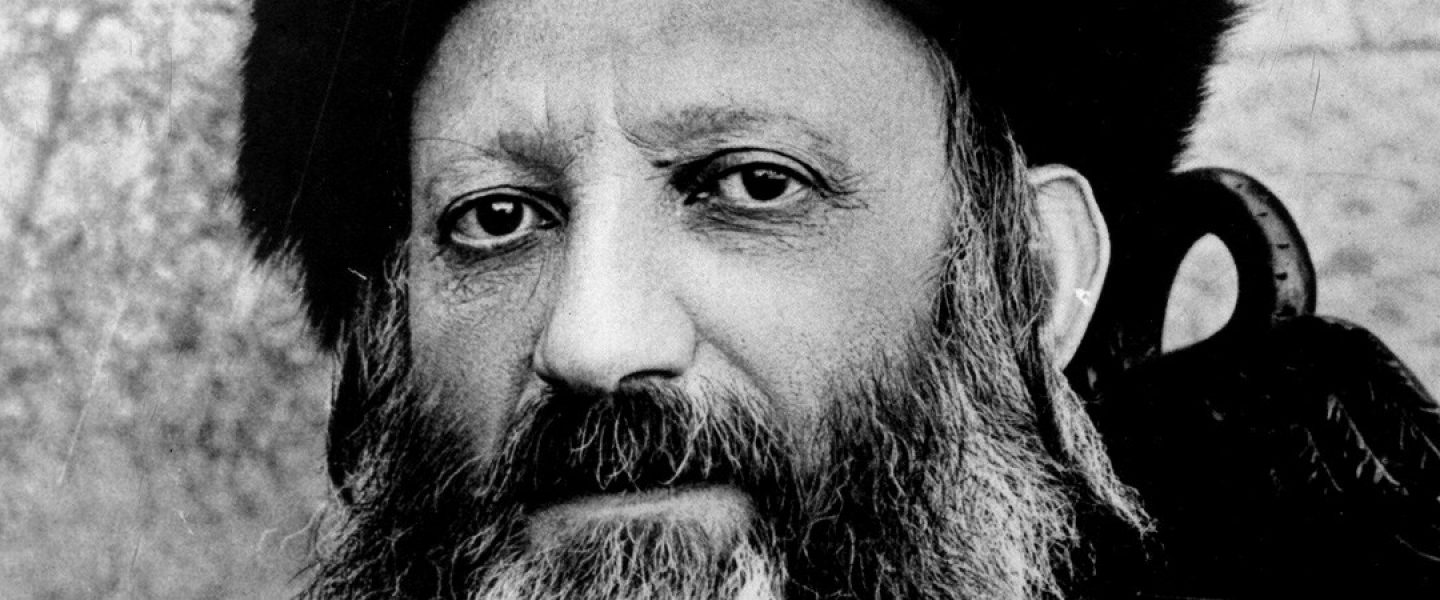
It seems like the above teaching from Orot haTorah is partly autobiographical, in the sense that Rav Kook was a towering spiritual personality who saw great light in every detail of Torah. Consider the following incident from one of his Purim seudot:
When the festivities reached their height, the Rav stood at the head of the table and began a lengthy Purim discourse. He examined every mitzvah in the Torah, interpreting each one as a source for the obligation to drink on Purim. With a wonderful blend of erudition and ingenuity, he derived from every mitzvah a metaphorical, homiletic, mystical, or even literal proof that one is obligated to drink “until one is unable to distinguish between cursed Haman and blessed Mordechai.” [6]
Questions for Reflection and Discussion
- Would Rav Kook would claim that minhagim also emanate from the same all-encompassing, unitary dimension of the Torah? Or do those have a different status?
- Have you ever had an experience where you perceived the significance of what had seemed like a mundane aspect of halacha or Jewish practice?
- According to some, much of the ‘off the derech’ phenomenon can be attributed to an approach to Judaism where the ‘big picture’ is lacking. Do you agree?[7]
- How can we educate ourselves and our children to perceive the underlying unity of the entire Torah system? Is it even something that can be taught, or does a person have to attain it on their own? Does it require familiarity or training in Jewish mysticism?
- Are there any particular sectors of the Orthodox community that you think excel at seeing “the light and the life within every aspect of Torah,” like Rav Kook idealizes? If so, what do they do to foster that kind of perspective?
About this Piece
Orot haTorah contains insights from Rav Kook regarding various aspects of the experience and value of Torah learning. Rav Kook’s son, Rav Tzvi Yehuda Kook, compiled it from various writings of his father. It was first published in the 1960s. Multiple commentaries have been published in Hebrew, but the work has never been translated or adapted in English. An extensive series of English shiurim on Orot haTorah from R. Moshe Weinberger is available here.
[1] Isaiah 28:10.
[2] Consider the statement attributed to Rav Kook that “Just as there are rules to song, so too there is a song in the rules.” Lit. כשם שיש חוקים בשירה כך יש שירה בחוקים. (Quoted in שיחות הרצי”ה, פרשת האזינו.)
[3] Song of Teshuva, Vol. 1 pg. 157-158.
[4] Song of Teshuva, Vol. 3, pg. 195-196.
[5] Song of Teshuva, Vol. 3 pg. 180.
[6] Mo’adei HaRe’iyah pg. 264.
[7] Rav Kook certainty would. See Orot haTeshuva, 4:10, which the first excerpt from R. Moshe Weinberger above is commenting on.