
Printable PDF available here. Previous pieces on Parshat Pinchas are available here and here.
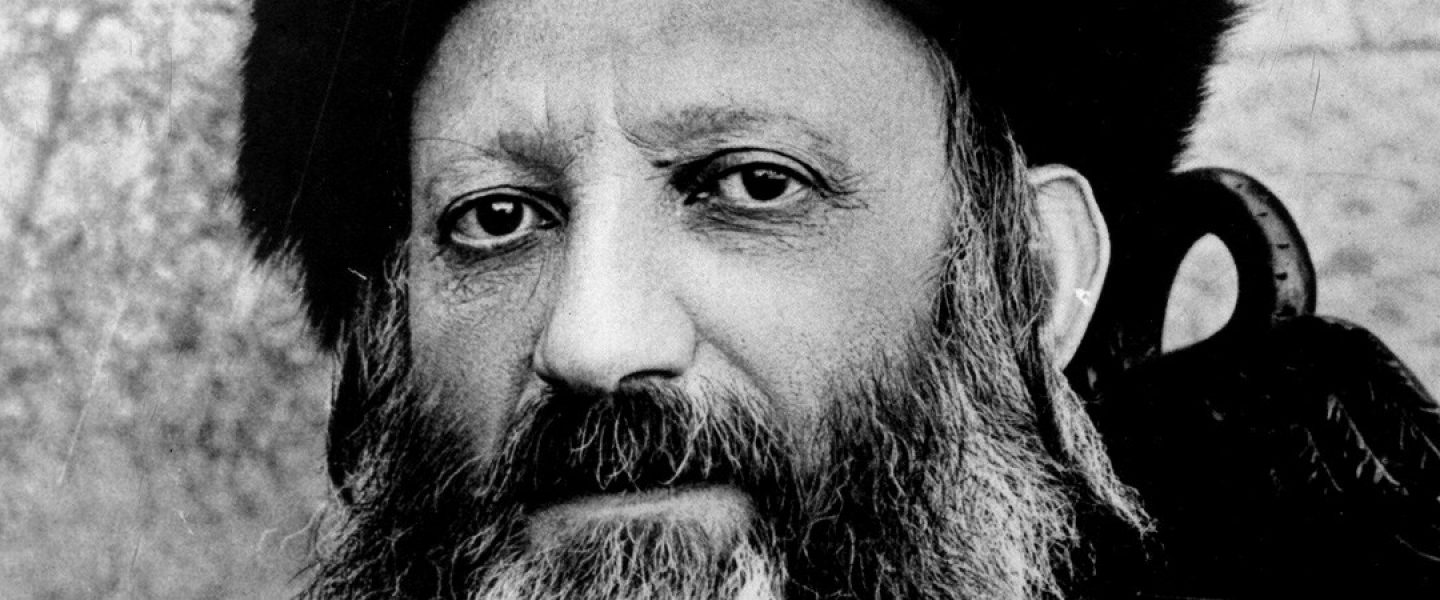
Rav Kook (Mishpat Kohen 124)
From Rosh Chodesh Nisan until the eighth of the month, the correct law regarding of the daily offering was established. Therefore it was decreed not to eulogize these dates. For the Sadducees maintained that an individual may donate and bring the daily offering. They based this on the verse “The one lamb shall you offer [lit. ta’aseh, in the singular] in the morning…” (Bamidbar 28:4).
To refute the argument of the Sadducees [and prove the accepted tradition that communal offerings must be brought from communal funds] the Sages invoked the verse “Command the children of Israel, and say to them: My food that is presented to Me for offerings made by fire, of a pleasing aroma unto Me, you shall observe [lit. tishmeru, in the plural] to offer to Me in its proper time” (Bamidbar 28:2).
The Talmud records a dispute between the Sadducees and our Sages regarding the daily tamid offering in the Temple. The former maintained that the tamid may be donated by an individual, or purchased with funds donated by an individual. The Sages strongly disagreed and insisted that the tamid must be purchased by the Temple treasury using communal funds. We know of many halachic disputes between the Sages and the Sadducees (among other sectarian groups), but our tradition seems to impute particular significance to this one. Why else would the Sages have established a week-long period of quasi-celebration to commemorate prevailing in this argument? But what exactly is the significance of this machloket? As long as the tamid is offered, why does it matter who pays the bill? It must be that this seemingly technical dispute is really rooted in something much more fundamental.
The Sadducees denied that any sort of special sanctity inheres in the people of Israel as a collective. For them, Israel is merely an amalgamation of independent individuals. From this perspective, the nation of Israel has no independent standing and exists only to serve the interests of its individual members. The Sadducees regarded the community and its endeavors (such as the tamidoffering) as little more than a business partnership, into which one invests in order to receive a ‘return’ on their investment. This is why they maintained that the tamid can be donated by an individual. It seemed nonsensical to them to insist on having the Temple treasury pay for the tamid. After all, they maintained, isn’t the Temple treasury just a large pool of funds donated by different individuals?
But our Sages, from whose waters we drink, knew that this was false. Perhaps for other peoples, there is no metaphysical standing to the concept of nationhood, but Israel is different. The nation of Israel is an eternal entity with its own standing, its own spiritual potentialities, and its own relationship with G-d, one that transcends and exceeds the sum of its individual parts.[1] Collective Israel is a meta-historic entity with its own intrinsic powers, spiritual charisma and covenant with G-d. Thus, our Sages maintained that the tamid offering – like all matters of communal sanctity – must be done in the name of the community itself. No matter how magnificent it is, no individual ‘partner’ can present his or her contribution to G-d in the community’s name.
And for the same reason that the Sadducees could not conceive of the tamid offering as a communal obligation, they also rejected Torah sheba’al peh. Unlike the written Torah, which is fixed in the static reality of parchment and ink, the Oral Torah is written on the hearts and minds of the Jewish people. Transcending generations, it expresses the unique spiritual persona of collective Israel and its distinctive capacity for holiness. Thus, it should not surprise us when our Sages (Gemara Avoda Zara 35a) make the bold claim that rabbinic laws are more beloved by G-d than the Torah itself.[2] For no matter how brightly any individual Jew shines, he is merely a spark in the great flame of Israel’s collective holiness, a holiness that transcends time, history and the constraints of physical reality.
[1] Rav Kook cites a gemara in Bava Metzia (118a) that even if an individual donates materials for communal offerings to the Temple treasury, we do not use them, because “perhaps he will not give it over to the community wholeheartedly.” As Rav Kook explains, we are not concerned about the donor being stingy or having second thoughts. We are concerned that he won’t understand the depth of what it means to give something over to the possession of the metaphysical community of Israel.
[2] In support, Rav Kook references a gemara in Avoda Zara that rabbinic laws are not valid unless they are accepted by the nation as a whole.
Food for Thought
Rav Samson Raphael Hirsch (Collected Writings, Vol. II, pg. 302): The community exists solely for the sake of its individual members, to provide a channel for concerted effort through which every individual can aspire to human perfection in the purest, fullest measure. The flowering of individual life is the sole basis and criterion for the life of the community. Only the individual can endow his community with a firm foundation and true meaning.
Talmud (Temurah 15a): “Tzibbur aino meis” – the community of Klal Yisroel never dies. If an individual designates a korban and then dies, under certain circumstances the korban can no longer be brought. If the tzibbur designates a korban and all of them die, their descendants are still considered the original tzibbur.
Rav Hirsch (Commentary on the Torah, Shemot 3:17): [I]n each single one of them, the whole nation is represented, each single one of them has the courage and the mission to stand alone against the whole world, and to represent and carry on the nation by himself. In the mouths of the Prophets, other nations habitually are described by the picture of an animal, Israel is pictured preferably as a tree. An animal can be killed with a single pressure of the trigger-finger, or a single stab of the dagger. But a tree reproduces with every part, the possibility of the continuance of life of the whole. Even if the root is severed, a branch, a twig, a bud, a germ, is often sufficient to reinstate the destroyed plant, and to save its continued existence)… Our People does not let itself be destroyed. In each single individual is reproduced the spirit, the courage, the decision of the whole.
Rav Soloveitchik (The Community, Tradition 1978): The very instant we pronounce the word “community” we recall, by sheer association, the ancient controversy between collectivism and individualism. Willy nily the old problem of who and what comes first (metaphysically, not chronologically) arises. Is the individual an independent free entity, who gives up basic aspects of his sovereignty in order to live within a communal framework; or is the reverse true: the individual is born into the. community which, in turn, invests him with certain rights? This perennial controversy is still unresolved. Today the controversy transcends the limits of theoretical debate. People try to resolve it, not by propounding theories or by participating in philosophical symposia in the halls of academia, but by resorting to violence and bloodshed…. The political confrontation between the West and the East [i.e. capitalism and communism] is, ipso facto, a philosophical encounter between one-sided collectivism and one-sided individualism.
Let us ask a simple question: what does Judaism say about this conflict? And let us give a simple answer: Judaism rejects both alternatives: neither theory, per se, is true. Both experiences, that of aloneness, as well as that of togetherness, are inseparable basic elements of the I-awareness. In fact, the greatness of man manifests itself in his inner contradiction, in his dialectical nature, in his being single and unrelated to anyone, as well as in his being thou-related and belonging to a community structure…
The community in Judaism is not a functional-utiltarian, but an ontological one. The community is not just an assembly of people who work together for their mutual benefit, but a metaphysical entity, an individuality; I might say, a living whole. In particular, Judaism has stressed the wholeness and the unity of Knesset Israel, the Jewish community. The latter is not a conglomerate. It is an autonomous entity, endowed with a life of its own. We, for instance, lay claim to Eretz Israel. G-d granted the land to us as a gift. To whom did He pledge the land? Neither to an individual, nor to a partnership consisting of millons of people. He gave it to the Knesset Israel, to the community as an independent unity, as a distinct juridic metaphysical person. He did not promise the land to me, to you, to them; nor did He promise the land to all of us together. Abraham did not receive the land as an individual, but as the father of a future nation. The Owner of the Promised Land is the Knesset Israel, which is a community persona.
Rav Hirsch (Commentary on the Torah, Vayikra 1 pg. 217): A community does not die, the Nation knows no death, and the individual too, in as far as he dedicates the efficacy of his earthly life to the community, rescues the fruit of his life here below over and beyond death, already here below he partakes of immortality. Naturally such a point of view does not look on the idea of a Community as being a union of so and so many persons of so and so much material power. Then the community, the Nation and its efforts would lie, even as the individual does, under the power of death and transitoriness. It looks on the Nation as being the eternal bearer of the eternal moral spiritual Truths of Mankind, as representing the never-dying moral spiritual immortality of Mankind.
Questions for Discussion
- What does it mean that the Jewish community is a “metaphysical entity”? And what is the scope of this concept? Does it apply only to the entire nation, or even to a local community or a shul?
- In what sense is the Jewish sense of community different in Israel than outside of Israel?
- Can someone be a good Jew if they are not a member of a community? Why or why not?
- Rav Kook claims that unlike the written Torah, the Oral Law “expresses the unique spiritual persona of collective Israel.” What do you think this means?
- See the excerpts from Rav Hirsch above in “Food for Thought.” Where does he agree with Rav Kook and where does he differ?

