
Printable PDF available here. Last year’s piece on Ki Teitzei is available here.
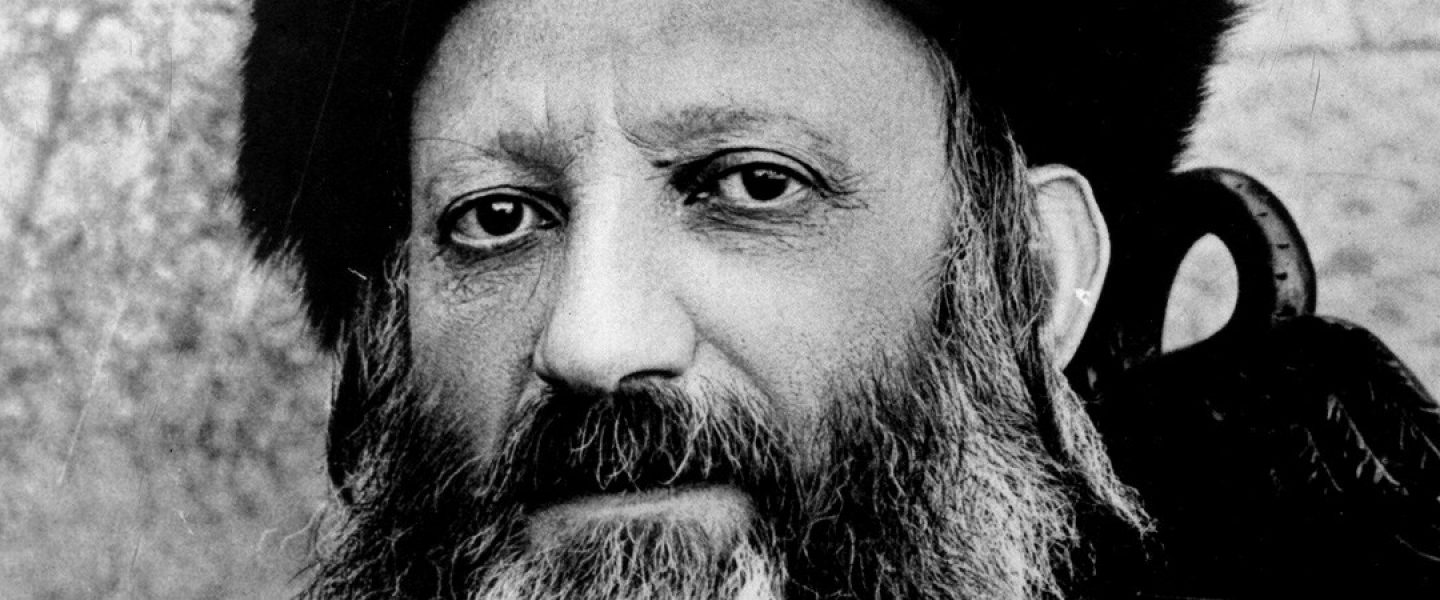
Rav Kook (Based on Pinkesei haRe’iah, 1:34)
If you go out to war against your enemies, and the Lord, your G-d, will deliver them into your hands, and you take captives, and you see among the captives a beautiful woman and you desire her, you may take [her] for yourself as a wife. (Devarim 21:10-11)
According to our tradition, the entire law of the non-Jewish captive wife (lit. yefat to’ar) is a concession to the yetzer ha’ra. In the heat of battle, the Torah allowed soldiers to indulge their desires and provided a legal framework for doing so. It suspended the normal prohibition against relations with non-Jewish women, because G-d deemed it impossible to uphold the normal standards of sexual morality in this context.
The entire law of the yefat to’ar is strange, and has bothered many great Jewish thinkers. Suppressing and channeling one’s physical desires is central to Torah life, and the Torah is not in the habit of granting indulgences. Why does the Torah make an exception here?
The answer is that we have to understand the parshah of the yefat to’ar in its broader context. The midrash, cited by Rashi, declares that there is no dispensation to have relations with a yefat to’ar in a milchemet mitzvah – i.e. a war conducted for the purpose of conquering Eretz Yisrael, for self-defense, or certain other ‘principled’ reasons. The law of yefat to’ar applies only applies in a milchemet ha’reshut – that is, a discretionary war undertaken to conquer land for political or economic reasons.
The very existence of milchemet ha’reshut indicates that humanity [1] has not yet reached the highest level of ethical development and moral clarity. Ultimately, humanity is supposed to realize that spilling blood for political ends is wicked and shameful. But until that time, G-d demands that we deal with reality as it is, and not as we yearn for it to be. G-d does not demand of Israel that it adopt a pacifist stance in the face of other nations who still hold firm to the sword, who amass bombs and tanks and other tools of bloodshed. Israel is thus permitted to engage in warfare for political ends, and thus deal with other nations ‘on their level.’
However, G-d demands that we understand this reality as a concession, and never as an ideal. Even while involved in the world of warfare, we must retain our yearning for the day when all nations “will beat their swords into plowshares and their spears into pruning hooks, when nation shall not lift the sword against nation, neither shall they learn war anymore” (Isaiah 2:4).
The law of yefat to’ar is the Torah’s way of cultivating sensitivity to the ideal in a less than ideal world. It does not take great sensitivity to realize that the matter of the yefat to’ar is a shameful concession to the yetzer ha’ra. Even in a world that hasn’t yet attained clarity about the immorality of warfare for political ends, this should be clear. By embedding the law of the yefat to’ar in a parshah about warfare, the Torah is telling us as follows – “Just as it is obvious that you need to rise above the dispensation of the yefat to’ar, it is equally incumbent on you to rise above the shamefulness of warfare and its bloodshed.”
[1] The parshah of yefat to’ar is directed at the Jewish people – so how does Rav Kook see it as reflecting on the moral stature of all humanity? The answer seems to be that Rav Kook has an unspoken premise here, one that he articulates explicitly in many other places. He believes that Israel’s ethical sensitivity outshines that of all other nations. It cannot be that humanity has reached a level of clarity where it realizes the shamefulness of milchemet ha’reshut, but Israel has not.
Food for Thought
R. Nissim b. Adahan (Morocco, 1846-1926): The matter of yefat to’ar is commonly explained as a dispensation to the yetzer ha’ra. G-d knew that Israel would not be able to uphold the highest standards of sexual morality in warfare, and so he permitted the yefat to’ar. However, it seems that the opposite is true. Much of the desire for prohibited things comes from the very fact that they are prohibited. As Mishlei teaches, “Stolen waters are sweet.” Permitting the yefat to’ar is actually the Torah’s means of taking away the yetzer ha’ra for the yefat to’ar. [Note – various Chasidic thinkers (the Toldos Ya’akov Yosef, the Kotzker, and Chiddushei haRim all make the same point in slightly different way.]
Daniel Greenfield (Contemporary): In our modern age… the truly moral army never fights a war. When it must fight a war, then it fights it as proportionately as possible, slowing down when it’s winning so that the enemy has a chance to catch up and inflict a completely proportional number of casualties on them. Forget charging up a hill. Armies charge up the slippery slope of the moral high ground and they don’t try to capture it from the enemy, because that would be the surest way to lose the moral high ground, instead they claim the moral high ground by refusing to try and capture it, to establish their moral claim to the moral high ground…
Sadly, the only way to win the moral high ground is by losing. Just look at the massive Arab armies who repeatedly invaded Israel, did their best to overwhelm it with the best Soviet iron that the frozen factories of the Ural could turn out, and lost the bid to drive the Jews into the sea, but won the moral high ground. Then their terrorist catspaws spent decades winning the moral high ground by hijacking airplanes full of civilians, murdering Olympic athletes and pushing old men in wheelchairs from the decks of cruise ships. All these killing sprees accomplished absolutely nothing useful… but that failure won the terrorist catspaws the moral high ground. Their failure to win a war by hijacking buses full of women and taking the children of a school hostage conclusively established their moral superiority and nobility of spirit….
But the moral high ground proved notoriously elusive for the Jewish State. There was a brief lull [with the Oslo accords]… but then the terrorists started killing Israelis again and the Israelis insisted on fighting back. In no time at all the moral high ground was roped off with a special reserved section for terrorists and a sign reading, “No Israelis Will Be Admitted Unless They Renounce Their Government, Zionism and the Right of Self-Defense”…
Israel’s solution has been to fight limited wars while remaining absolutely committed to peace. No sooner does a war begin, then it is pressed to accept a ceasefire. To show its commitment to peace, Israel is expected to accept the ceasefire. At which point Hamas will begin shooting rockets again and the whole dance will begin all over again. But Israel has trouble refusing a ceasefire because its leaders still believe that they can get at the moral high ground by showing that they are more committed to peace than the other side. The peace is however unwinnable. It’s not even survivable in the long term. Peace either exists as a given condition or it is maintained by strong armies and ready deterrence. Peace cannot be found on the moral high ground, only the mountains of the graves of the dead.
The father of an Israeli soldier told his son after he was called up for duty that he would rather visit him in prison than visit him in the cemetery. “If you are fired on, fire back.” That is good advice not just for that young man, but for his entire country, and for the civilized world. It is better to fire than be fired upon. It is better to be thought a criminal, than mourned in Holocaust museums. It is better to leave the moral high ground to those who worship the romance of endless bloodshed and defeat. It is better to lose the peace and win the war.
Rav Kook (Orot haMilchamah, 3): We left world politics by force of circumstance that (nevertheless) contains an inner volition, until a fortunate time will come, when it will be possible to conduct a nation without wickedness and barbarism – this is the time we hope for. It is understood that in order to achieve this, we must awaken with all of our powers to use all the media that time makes available – all is conducted by the hand of G-d, Creator of all worlds. However, the delay is a necessary one; we were repulsed by the awful sins of conducting a nation in an evil time. Behold, the time is approaching, the world will be invigorated and we can already prepare ourselves, for it will already be possible for us to conduct our nation by principles of good, wisdom, rectitude, and clear divine enlightenment…. “Let my master pass before his servant.” It is not worthwhile for Jacob to engage in statecraft when it must be full of blood, when it requires an ability for wickedness. We received but the foundation, enough to found a people, but once the trunk was established, we were deposed, strewn among the nations, planted in the depths of the earth, until the time of song arrives and the voice of the turtledove will be heard in our land.
Shelah (Parshat Ki Teizeit, דרך חיים תוכחת מוסר): The notion of a dispensation to the yetzer ha’ra is not limited to the yefat to’ar. There are many things that the Torah permits which are less than ideal, and it is incumbent upon a spiritual person to be discerning and sanctify himself even in matters that are permitted.
Questions for Discussion/Food for Thought
- What distinguishes an unjust or immoral war from one that is just and moral?
- Is there anything good about war? Or is it entirely bad?
- See Daniel Greenfield, excerpted above in “Food for Thought.” Do you think Rav Kook would agree with him, or is he going farther than Rav Kook would? Also, do you think that Mr. Greenfield’s views are consistent with Torah Judaism? Why or why not?
- According to Rav Kook, the mere fact that the Torah gives someone the right to do something doesn’t make it right. Can you think of any other Torah laws that might illustrate this principle?
- Is there a ‘slippery slope’ behind distinguishing between what the Torah permits and what it considers an ideal?
- How can we cultivate sensitivity to our ideals in situations where it is not possible to fully implement them in practice?