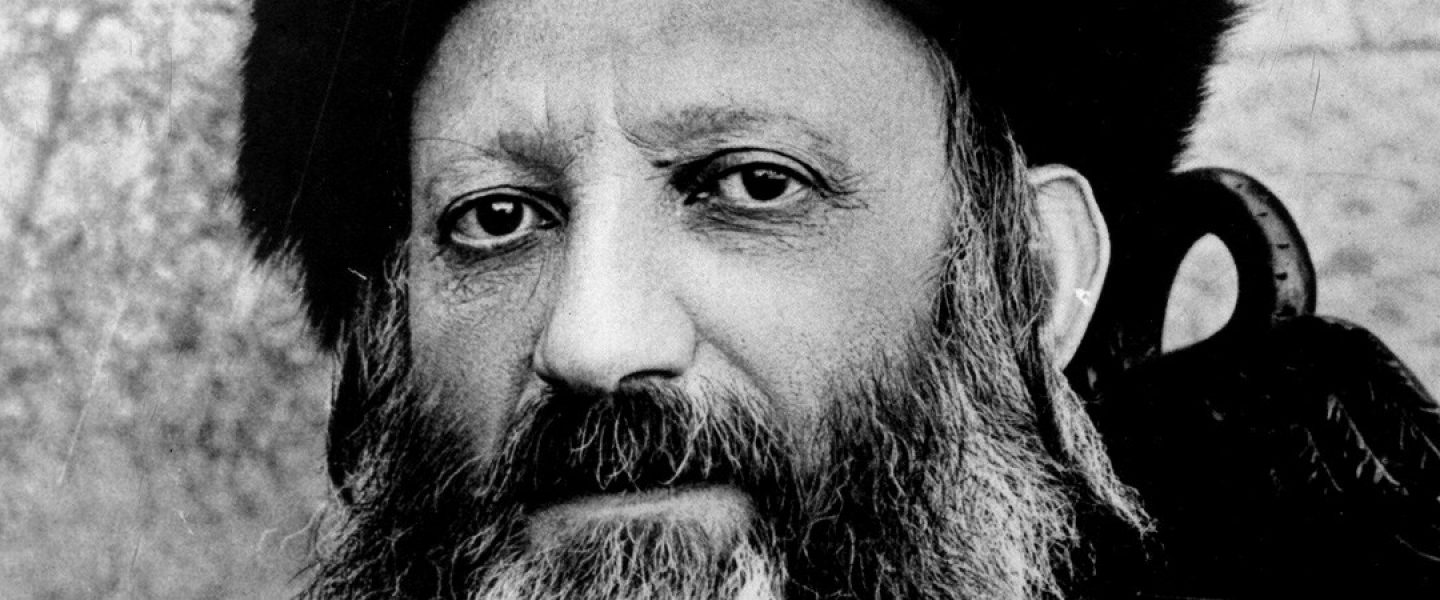
Translation (Ein Ayah, Berachot 9b):
When Eliyahu challenged the prophets of Ba’al to a showdown on Mount Carmel, he beseeched “Answer me, God, answer me!”(Melachim Aleph, 18:37). This was a two-fold request, as if to say, “Answer me by bringing down fire upon my offering,” and“Answer me that the people not say it was done through sorcery.” (Gemara Berachot 9b)
True emunah affects a person’s essence and becomes part of their very being. A person can only reach this level through actively engaging their intellect, [1] in contemplating that the soul reaches the highest level of perfection through yirat Hashem [2] and spiritual refinement of one’s personality. The natural result of this sort of emunah is good deeds and refined character traits.
From this, we derive a striking conclusion about the spiritual impact of open, revealed miracles. Such miracles actually present a certain danger to emunah. The incontestability of God’s existence or power overwhelms a person’s consciousness, depriving them of the opportunity to actively reflect on what the miracle is supposed to demonstrate. In our relationship with God, open miracles make us into passive bystanders instead of active participants. This leads to an emunah that is nothing more than dry, intellectual assent to theological propositions.
For this reason, God rarely performs open miracles that bear absolute, mathematically incontrovertible signs of His authorship. The miraculous always comes intermixed with some element of nature (lit. טבע), so that we can credibly attribute it to sorcery [3] or some other manipulation of natural forces. God does this so that we consciously engage our powers of discernment in recognizing the miracle and contemplating its true message.
This is what our Sages are getting at in the above teaching from Gemara Berachot. Eliyahu could have performed a miracle that demolished the people’s doubts and left no room for questioning God’s power. But he deliberately chose a miracle that could be attributed to sorcery. This way, the people, guided by their inner voice of goodness and nobility, would be coaxed into consciously acknowledging the emptiness and evil of idolatry. They would not be cowed into this awareness, but would acquire it as active participants, thus attaining true emunah in the process.
Commentary
We are used to thinking of revealed miracles as an unqualified blessing, as experiences that would wipe away all our doubts and cement our religious commitment if we experienced them. Rav Kook teaches that this is not entirely accurate. Miracles only generate emunah when accompanied by engagement and conscious involvement. Because emunah is something that a person must actively acquire, an excess of the overtly miraculous would actually stunt our spiritual growth.
Although Rav Kook does not make the connection, it seems obvious [4] that his insight explains the role of Pharaoh’s sorcerers (lit. chartumim) in the parshiot of the Exodus. God could easily have sent Moshe to perform plagues that the Egyptian sorcerers could not recreate, or deprived them of their power. But he did not so, inasmuch as the plagues were not just punitive, but also an educational tool for the Egyptians and their pagan world. As Moshe declares to Pharaoh before each set of plagues, “Through this you shall know that I am Hashem”; “You will know that I am Hashem in the midst of the land”; “You shall know that there is none like Me in the world.” [5]
Rav Kook also reminds us there is rarely mathematical certainty in matters of faith. Even a revealed miracle can be misinterpreted or credibly explained away as an act of sorcery – or, as is more likely for our generation, it could be attributed to random chance, science [6] or historical coincidence. A miracle is not only witnessed, it must be interpreted, and the act of interpretation – if done properly – is what builds our emunah and strengthens our relationship with God.
[1] Rav Kook references Chovot haLevavot, a classic work of Jewish ethical literature from the 11th century, which emphasizes this point as one of its main themes.
[2] I am deliberately leaving this term untranslated. Neither “fear of God” or “awe of God” do justice to what this term means for Rav Kook, a notion I hope to explore in a future issue of Mareh Kohen.
[3] Rav Kook assumes (following the mainstream interpretation of Talmudic and rabbinic literature) that sorcery involves real powers and is part of God’s design of the universe. In contrast, Rambam maintained that sorcery is fraudulent and foolish, and that the Torah prohibits it for that reason. See Ramban’s commentary on the Torah (Devarim 9:13) and Rambam’s Mishnah Torah (Hilchot Avodat Kokhavim 11:15).
[4] I have to give credit to Chumash ha’Re’iah, for including this piece from Ein Ayah in Parshat Va’eira.
[5] Shemot 7:17, 8:18 and 9:14.
[6] Many years ago, I read a piece from Rebbe Nachman of Breslov that science has taken over the role of the chartumim from the Exodus story. I have unfortunately forgotten the mareh makom.
Questions for Reflection and Discussion
- Reread the beginning of Perek 3 of Parshat Shemot(particularly verse 3), in light of this piece from Rav Kook. Do you now have a greater appreciation of why Moshe was chosen to redeem the Jewish people? (R. David Fohrman has a beautiful video on this point – see here, around the 15 and 26 minute marks.)
- Many have observed that Jewish schools and yeshivot do not put enough emphasis on teaching about emunah. What kind of approaches would Rav Kook would encourage (or rule out) to address this problem? Do you think he would approve of initiatives like http://animaamin.org?
- Can you think of a time in your life where God’s involvement was not obvious and you had to exert yourself to find it? What about a similar time in the history of the Jewish people?
- The generation of the Exodus witnessed more revealed miracles than any other in history. However, the rest of the Torah is full of their backsliding, spiritual failures and complaints. Based on Rav Kook’s insights, is it plausible to argue that their emunah was stunted by a surfeit of miracles? Or was something else responsible?
Further Research and Food for Thought
- See the eighth derasha of Drashot haRan(availablehere) for a very different explanation of why God rarely performs incontestable miracles. See also Ramban’s commentary on the Torah to Bereishit 6:19, regarding the size of Noah’s ark.
- Below is a quote from On Trails, a non-fictional work in which Robert Moor, an atheist journalist, recounts a hike through Louisiana field with a nomadic traveler. I think it illustrates Rav Kook’s point beautifully:
He [Eberhardt, the nomadic traveler] waved his hand at the land around us. “If you stand here and look out here across these fields, you can see that there is an order. You say that’s all just chaos, but it isn’t. There is an order. And that didn’t come from Darwin… When Eberhart looked out at those fields, he saw a divine creation, infused with purpose, perfectly designed and lovingly tended. Whereas when I looked at the same field, I saw the miracle of evolution – an infinitely complex constellation of particles, cells, bodies and systems competing and cooperating, reproducing and dying off, self-perpetuating and yet always in flux. I tried hard to imagine the field from his perspective, and then again from mine.
About this Piece
Ein Ayah is a commentary on the aggadic portions of the Talmud, specifically Berachot, Shabbat and Seder Zeraim. Rav Kook began writing Ein Ayah when he was a young rav in Lithuania, and continued adding material until the end of his life. Ein Ayahseeks to extract profound and fundamental principles of Torah hashkafa from the world of Aggadah. It is an excellent introduction to Rav Kook’s thought, inasmuch as the pieces tend to be shorter, self-contained and less esoteric than many of Rav Kook’s other worlds. While Ein Ayah has never been translated in its entirety into English, selected excerpts have been published by Betzalel Naor in Of Societies Perfect and Imperfect. An online course covering Ein Ayah on Masechet Shabbat is available from WebYeshiva.
