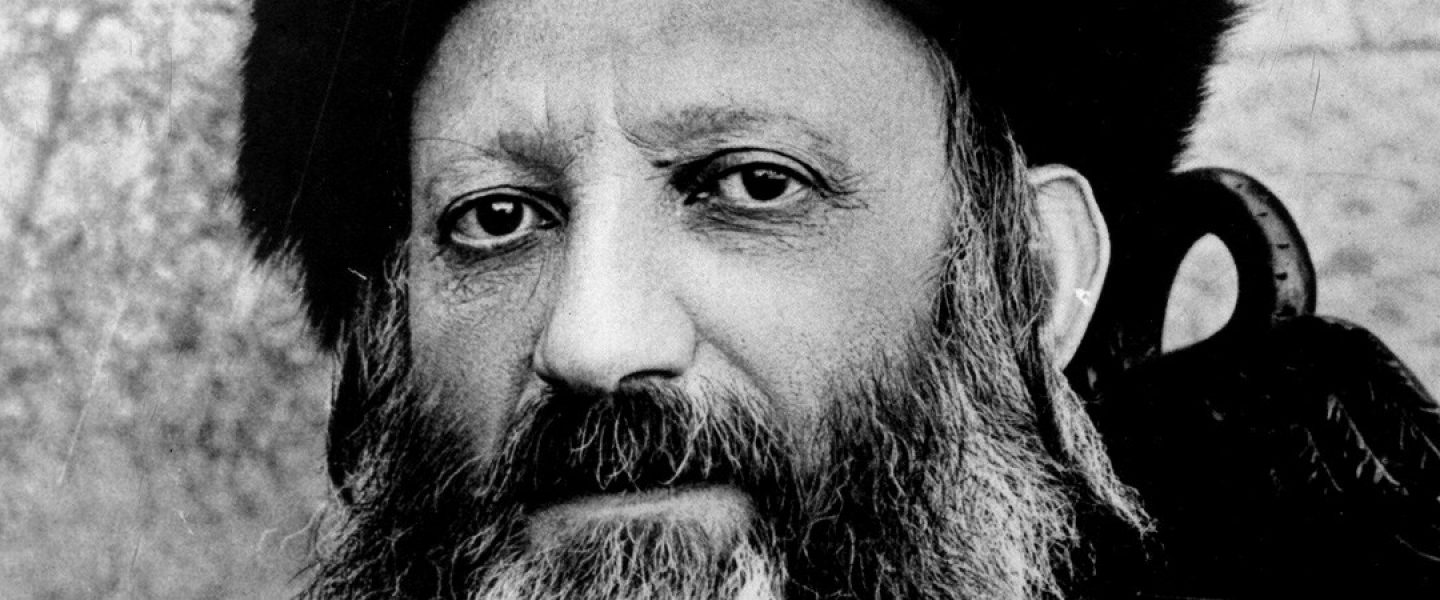

Printable PDF available here.
Ein Ayah (Gemara Shabbat 97a):
When G-d first recruited Moshe to take Israel out of Egypt, he objected “But they will not believe in me.” G-d responded “They are believers and the descendants of believers (lit. מאמינים בני מאמינים). But you – you are the one who will lack emunah in the future!” This is as the Torah states regarding the incident of Mei Merivah– “Because you failed to have faith in me (lit. האמנתם בי), to sanctify me in the eyes of the Israelites… (Gemara Shabbat 97a)
G-dly emunah[1] is supernal, and cannot be compared to any form of worldly knowledge or comprehension. After all, emunah is not a part of life, but its very foundation, what gives life its light and splendor. True emunah expresses itself in an inward awareness that defies all superficial labels and modes of categorization. This inner form of emunah is an Israelite treasure possessed by every Jew, but not on account of anyone’s individual merit or spiritual accomplishments. No, as Jews, emunah is part ofour immutable spiritual DNA we have inherited from the Avot, the rock from which we have been hewn.[2]
The inner dimension of emunah means that it survives intact even in the heart of the greatest sinner. It exists on a level where neither will nor conscious awareness can reach. Even when all externals suggest that the fire of emunah has been smothered, the coals still smolder within the heart, waiting to be coaxed into a roaring flame.
But we lose sight of this when we search too intently for external expressions of emunah. Viewed through those lenses, many of the Jewish People come across as failures, as faithless and spiritually compromised. Even the greatest of spiritual personages – those who have trained themselves to look beyond the artifice of worldly reality – can misjudge the faithfulness of Am Yisrael to the extent they look for external manifestations of emunah’s light.
This was Moshe’s mistake prior to the Exodus, when he claimed that the people would not believe in him. The people were indeed mired in the depths of paganism, on the lowest possible level of impurity. Logically, Moshe’s argument was justified. But Jewish emunah transcends logic. And according to our Sages, the sin of Mei Merivah was G-d’s response to Moshe’s claim. If you measure faith only by what is observable, then even the greatest of individuals – even spiritual giants like Moses – can stumble and fail to act upon their inner faith.
Commentary
In this piece, Rav Kook discusses a concept elaborated on at length in Kabbalistic and Chasidic sources. Every Jew, no matter how sinful or distant from holiness they may seem, contains an immutable spark of G-dliness and yearning for holiness. That spark can be covered up or ignored, but it can never be extinguished. (This is sometimes referred to as ‘Pintele Yid.’)
Rav Kook lived by this idea, and didn’t merely write about it. His profound and elevated gaze beheld sparks of holiness in individuals and movements that most other rabbinic leaders dismissed as sinful and empty.[3] He supported non-religious Zionism, partly out of a belief that its adherents were motivated by an inner fealty to the Jewish People and the Holy Land – and not, as all appearances suggested, a desire to create a new type of Jew and reject the Torah. He also formed relationships with non-religious artists and authors, encouraging them to use their profound spiritual potential for the benefit of the Jewish People and their renascence in their land.
But Rav Kook’s insights are relevant not only on a grand scale, for how we look at certain movements or entire groups. They are just as relevant for how we view ourselves. We all have moments where we fail religiously or do not live up to the standards that G-d’s Torah expects of us. Often, the natural reaction to such failure is despondency, dejection and depression. We feel about ourselves just like Moshe felt about the Jewish people in Shemot – ‘They are faithless, they lack emunah, they will not believe in me!’ But we would react differently if we tried to live – even just a bit – with the awareness that emunah is not something we need to acquire, but rather something we already have within us. We just have to draw it out. As Shlomo haMelech put it in Shir haShirim – מַיִם רַבִּים לֹא יוּכְלוּ לְכַבּוֹת אֶת הָאַהֲבָה וּנְהָרוֹת לֹא יִשְׁטְפוּהָ .
Food for Thought
Rav Yehuda Amital (Commitment and Complexity, pg. 88): It is a mistake to think that in our generation everything is black. Thirty years ago everything was holy, and now suddenly nothing is holy? Suddenly everything is treif, everything is disqualified? Based on the teachings of Rav Kook, in the past people were able to find an element of sanctity even in the ardently secular Ha-Shomer ha-Tza’ir movement; is there truly nothing left today? There is room to re-think this and to evaluate the situation differently.
Tanya (Chapter 18): It should be recognized with certainty that even the person whose understanding in the knowledge of G‑d is limited, and who has no heart to comprehend the greatness of the blessed En Sof, to generate awe and love [of G‑d] even in his mind and understanding alone— however it is a “very close thing” for him to observe and practice all the commandments of the Torah… from the depths of his heart, in true sincerity, with fear and love; namely, the hidden love in the heart of all Jews which is an inheritance to us from the Avot… Hence all Jews, even… the illiterate, believe in G‑d, since faith is beyond understanding and comprehension… Therefore even the most worthless of worthless and the transgressors of the Israelites, in the majority of cases sacrifice their lives for the sanctity of G‑d’s Name and suffer harsh torture rather than deny the one G‑d, although they be boors and illiterate and ignorant of G‑d’s greatness. [For] whatever little knowledge they do possess, they do not delve therein at all, [and so] they do not give up their lives by reason of any knowledge and contemplation of G‑d. Rather [do they suffer martyrdom] without any knowledge and reflection, but as if it were absolutely impossible to renounce the one G‑d; and without any reason or hesitation whatever.
Rabbi Eliezer Berkovits (G-d, Man and History, pg. 43): Logically speaking, a caring G-d ought to care always. But we generally do not recognize his care and concern; most of the time Gd is silent, as if absent. Transcendental divine indifference seems to replace the short and extremely rare moments of the relationship in the encounter. It is here that faith has its place. Faith turns the theoretical consequences of the encounter into living reality. Through faith we know that even though G-d seems to be absent, he is present all the time; even though he is far, he is close at hand; even though he transcends all life, still we confront him every moment of our existence. Through the power of faith we know, as if by actual experience, that his gaze is always upon us, that no matter where we may turn, we are forever in his presence.
Rabbi Jonathan Sacks (Vayeishev, 5775): Emunah, the Hebrew word normally translated as faith, does not mean what it is taken to mean in English: a body of dogma, a set of principles, or a cluster of beliefs often held on non-rational grounds. Emunahmeans faithfulness, loyalty, fidelity, honouring your commitments, doing what you said you would do and acting in such a way as to inspire trust. It has to do with relationships, first and foremost with marriage.
Rav Elchanan Wasserman (Kovetz Ma’amarim): The fundamentals of faith in and of themselves are simple and compelling for any person who is not a fool, it being impossible to doubt their truth. This is true, provided that a person not be bribed, that is, that he be free of this-worldly lusts and desires. Thus, heresy is not rooted in a breakdown of reason in and of itself, but in a person’s desire to satisfy his lusts, which distort and blind his reason. We may now understand the Torah’s admonition (Bamidbar 15:39): “And you shall not stray after your own heart” – this refers to heresy (Berakhot 12b). That is to say, a person is admonished to suppress and subject his desires in order that his reason be free from the distortions they cause so that he may recognize the truth… Heresy has no place in man’s reason, but rather in his desires and lusts.
Rav Yehuda Amital (Jewish Values in a Changing World, pg. 277): I believe that Rabbi Wasserman’s explanations do not suffice. Many people come to a secular outlook not in order to satisfy their desires, but rather because of their dedication to ideals that may, at times, even demand great sacrifice. It is difficult to pin all disbelief on following after one’s desires.
Questions for Discussion
- Why are we usually inclined to measure a person’s emunahby outward appearances?
- As we approach the period of Three Weeks, how could Rav Kook’s insights into emunah help us cut back on sinat chinam? On lashon ha’ra?
- In light of his comments above, how do you think Rav Kook would feel about classes or seminars about emunah?
- Compared to earlier generations, do you think we have a harder or easier time acquiring emunah? Why?
- As discussed above, Rav Kook’s approach to emunah is certainly very encouraging. But are there any dangers or potential problems with the idea that every Jew is a ma’amin, no matter regardless of what their behavior indicates?
- See Rabbi Berkovits and Rav Elchanan Wasserman in “Food for Thought” above. How does Rav Kook’s understanding on emunah differfrom each of them?
[1] I have not to translate emunahas ‘belief.’ The continuation of the piece is clear that ‘belief’ fails to do justice to Rav Kook’s concept of emunah. See also Rabbi Sacks in “Food for Thought” below, who notes that ‘belief’ is likely anincorrect translation in any case.
[2] This is an allusion to Yeshaya 51:1-2 – “Look to the rock from whence you were hewn and to the hole of the pit whence you were dug… Look at Abraham your father and at Sarah who bore you, for when he was but one I called him, and I blessed him and made him many.” הַבִּ֙יטוּ֙ אֶל־צ֣וּר חֻצַּבְתֶּ֔ם וְאֶל־מַקֶּ֥בֶת בּ֖וֹר נֻקַּרְתֶּֽם. הַבִּ֙יטוּ֙ אֶל־אַבְרָהָ֣ם אֲבִיכֶ֔ם וְאֶל ־שָׂרָ֖ה תְּחֽוֹלֶלְכֶ֑ם כִּֽי־אֶחָ֣ד קְרָאתִ֔יו וַֽאֲבָֽרְכֵ֖הוּ וְאַרְבֵּֽהו
[3] As Bezalel Naor notes, while Rav Kook lived “he was on occasion ridiculed by his rabbinic contemporaries for being overly optimistic. The Ashkenazic Rabbi of Tiberias, Moshe Kliers, quipped: ‘Dots appear to him as lights.’ (The reference was to the title of Rav Kook’s seminal work, Orot, or Lights, his messianic vision of the renascence of Israel.)”
