
Printable PDF available here.
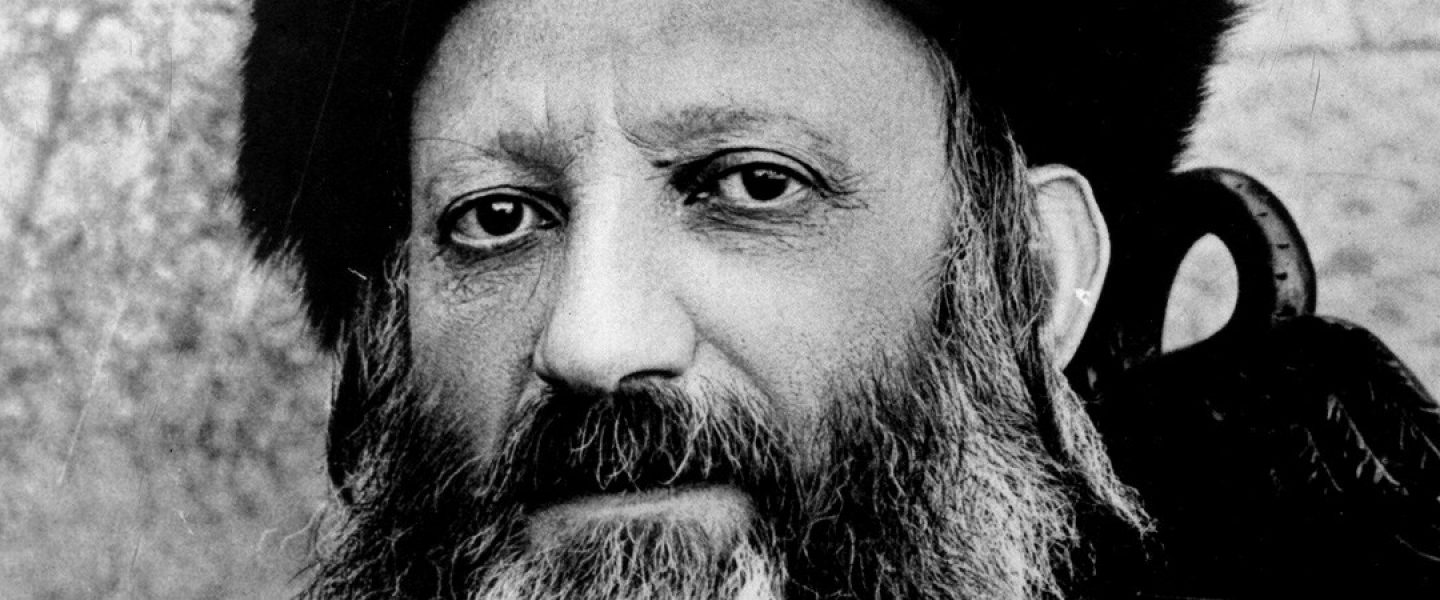
Rav Kook (Olat Re’iah)
“And Avraham rose up early in the morning.” (Bereishit 22:3).
Evidently, Avraham slept soundly the night before the Akeidah. The peace of mind of this holy soul, of the holy father, the mighty native, did not cease. His sleep was not gone from him, because of the clear knowledge, which came to him through the word of G-d, and no feeling of darkness, negligence, or depression became intermixed in the longings of his purified heart. He passed the night in the restful and gaily holy sleep of the upright, and the time of rising arrived as usual. And the strength of G-d which turns his legs into hinds, to run as a stag and be mighty as a lion, to do the will of G-d, blessed be He, supported him, for he rose early in the morning…
This holy old man went off to this amazing task, the opposite of all the natural ways of the human soul, neither stooped nor with failed strength, but rather fully erect and girded in might. His entire journey was powered by the fullness of supremely elevated love.
Food for Thought
Rav Soloveitchik (Divrei Hashkafa, pg. 254-255): I recoil from all talk that goes round and round a single topic: that the observance of mitzvot is beneficial for digestion, for sound sleep, for family harmony, and for social position.
The religious act is fundamentally an experience of suffering. When man meets G-d, G-d demands self-sacrifice, which expresses itself in struggle with his primitive passions, in breaking his will, in accepting a transcendental “burden,” in giving up exaggerated carnal desire, in occasional withdrawal from the sweet and pleasant, in dedication to the strangely bitter, in clash with secular rule, and in his yearning for a paradoxical world that is incomprehensible to others. Offer your sacrifice! This is the fundamental command given to the man of religion. The chosen of the nation, from the moment that they revealed G-d, occupied themselves in a continual act of sacrifice.
G-d says to Avraham: “Take now your son, your only one, whom you love, Isaac, etc.” That is to say, I demand of you the greatest sacrifice. I want your son who is your only son, and also the one whom you love. Do not fool yourself to think that after you obey Me and bring your son up for a burnt-offering, I will give you another son in place of Yitzchak. When Yitzchak will be slaughtered on the altar – you will remain alone and childless. You will not have another child. You will live your life in incomparable solitude. I want your only son who is irreplaceable. Neither should you think that you will succeed to forget Yitzchak and remove him from your mind. All your life you will think about him. I am interested in your son whom you love and whom you will love forever. You will spend your nights awake, picking at your emotional wounds. Out of your sleep you will call for Yitzchak, and when you wake up you will find your tent desolate and forsaken. Your life will turn into a long chain of emotional suffering. And nevertheless, I demand this sacrifice.
Clearly the experience, which was rooted in dread and suffering, ended in ceaseless joy. When Avraham removed his son from the altar at the angel’s command, his suffering turned into everlasting gladness, his dread into perpetual happiness. The religious act begins with the sacrifice of one’s self, and ends with the finding of that self. But man cannot find himself without sacrificing himself prior to the finding.
Rav Chaim Navon (Genesis In Jewish Thought, Chapter 22]): According to the thinkers thus far mentioned, the message of the Akeida emphasizes the worship of G-d through fear and acceptance of His yoke. This is also what follows from the plain sense of Scripture, which, following the Akeida, designates Avraham as “one who fears G-d.” Those thinkers who advocate other approaches can argue, of course, that the Akeida gives expression to only one element of religious experience. Indeed, Rabbi Avraham Yitzchak Kook, whose approach to serving G-d emphasizes loving G-d and identifying with Him, refused to accept this interpretation, even partially, and even with respect to the act of the Akeida itself…
How different are Rabbi Kook’s words from those of Rabbi Soloveitchik! In contrast to the sleeplessness described by Rabbi Soloveitchik, Rabbi Kook speaks of “the restful and gaily holy sleep of the upright.” As opposed to the sacrifice emphasized by Rabbi Soloveitchik, Rabbi Kook speaks of “supremely elevated love.”
As we stated earlier, one may adopt Rabbi Kook’s theological approach without forcing this idea onto the Akeida. It would suffice to argue that whereas Avraham’s initial feeling may have been one of sacrifice, what is most important from our perspective is what happened at the end: Yitzchak’s ultimate rescue, which is the dominant element that has become impressed in the hearts of believers. It would appear that Rabbi Kook wished to go a step further, emphasizing the love that was in Avraham’s heart the entire length of the Akeida saga.
Prof. Chaim Charles Cohen (contemporary): We who want to build a Jewish State in the Land of Israel frequently are called upon to respond to crisis. We are engaged in frequent crises because we are still in a ‘revolutionary’ stage of building our homeland and state, and hastening the redemption. Rav Soloveitchik and Rav Kook describe ways of heroically coping with crisis. Sometimes, like Rav Soloveitchik’s Abraham, we cognitively and emotionally debate- within ourselves and with others-the anxieties, demands, and dilemmas of the crisis, and then we make a heroic leap of faith and commitment, and engage the crisis with all of our powers.
Or, like Rav Kook’s Abraham, we respond to the crisis by instinctively and ‘explosively’ identifying and feeling one with our People of Israel (Klal Yisrael), our G-d, and our Torah. We then heroically rush into action, like an attacking soldier in an elite fighting unit. As the adage says, for true believers there are no questions, only a plethora of answers. Total identification with our People and our G-d brings us to spiritual heights we could not achieve simply relying on our own sense of selfhood.
In my own life, I understand and identify with Rav Soloveitchik’s description of Abraham’s self-sacrifice/transformation. I was only able to make the leap of faith and become an observant Jew through a very incremental, lonely six-year internal debate of ‘trial and error’ doing of mitzvoth.
In contrast, most of my children and sons/daughters in law more spontaneously and dramatically throw themselves in spiritual self-transformation.
I did my spiritual searching in America. They did their spiritual ‘leaping to heights’ in Israel, growing up in embattled Judea and Samaria. G-d seems happy to accept both types of self-transformation and self-sacrifice. Both types of Jewish heroism are necessary.
Questions for Discussion
- How does one express or develop ahavat Hashem?
- What does the Torah tell us about Avraham that makes him a model of ahavat Hashem?
- Which is more disconcerting – Rav Kook’s position that Avraham enthusiastically embraced the command to sacrifice Yitzchak or Rav Soloveitchik’s position that “the religious act is fundamentally an experience of suffering”? Why?
- Why is ahavat Hashem important to a Jew’s spiritual life?
- Rav Kook says that Avraham’s love of G-d gave him the capacity to sacrifice his son. How does this fit with what the angel says to Avraham after the Akeidah, that “Now I know that you are a fearer of G-d”?
- Do you agree with Rav Kook that Avraham slept soundly the night before the Akeidah?
