 .
.
Printable PDF available here.
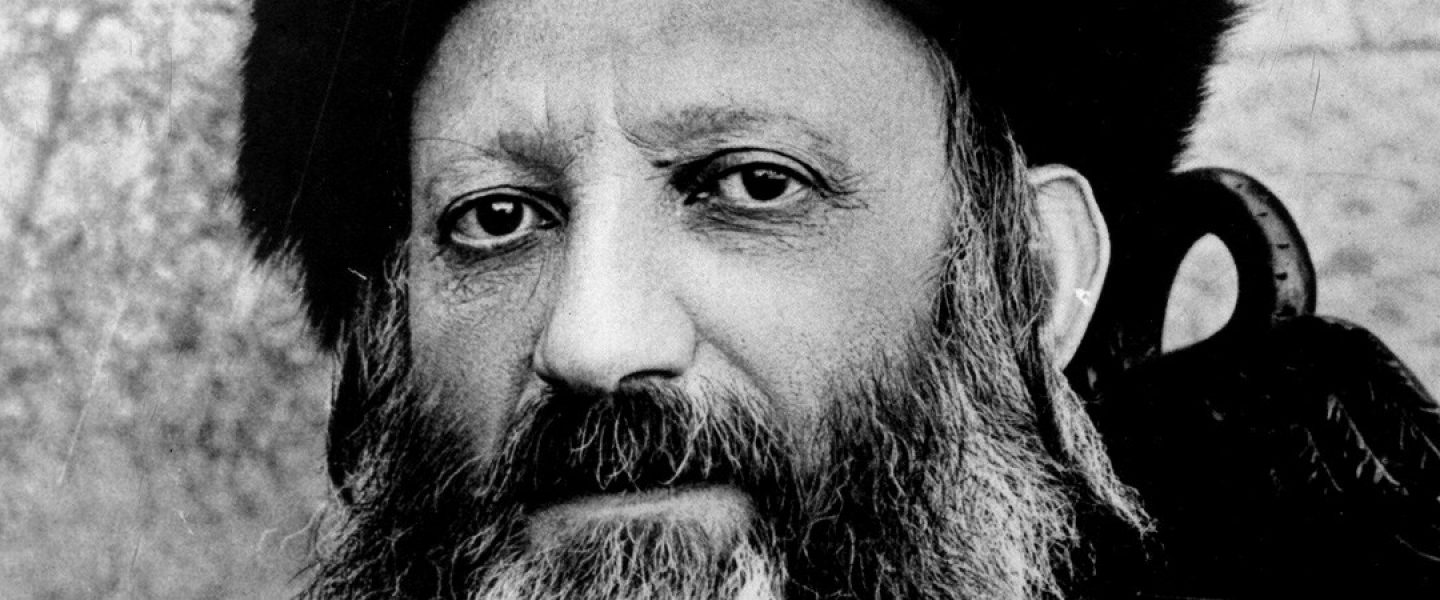
Rav Kook (Midbar Shur)
And the youths grew up, and Esav was a man who understood hunting, a man of the field, while Ya’akov was a wholesome man, dwelling in tents. (Bereishit 25:27)
Yitzchak’s spiritual power related to two areas of Divine service. One was his ability to join with the broader world and advance their welfare. The other was his posture of retreat and holding himself separate, in order to protect his innate sanctity and preserve its potency for the future.
Both of these are essential to the Torah’s ideal conception of spiritual life. And each individual must work diligently at being both engaged with the world and withdrawn from it. However, there is always a question of how to integrate these two tendencies. To a large measure, the balance a person strikes depends on his specific nature. We see this clearly with Yitzchak’s two children, each of whom was drawn to emphasize a different aspect of their father’s spiritual personality.
Esav was a hunter and a “man of the field,” while Ya’akov “dwelled in tents.” This is not simply a description of their hobbies or where they spent their time. It encapsulates the respective essence of Yitzchak’s two sons. Esav was involved in the broader world in a vigorous and active manner. In contrast, Ya’akov kept apart from the broader world and remained in his tent. It was not that Ya’akov did not care about sharing Avraham’s spiritual vision with the rest of humanity. Rather, he hoped that by turning inward and focusing on actualizing his own completeness, the rest of the world would be uplifted.
Esav could have been a part of the spiritual mission of the Avot. Except for his immediate family, the rest of humanity was mired in paganism. Esav had an awesome potential to illuminate this darkness by bringing the light of Avraham to the broader world. However, Esav squandered his potential. He became overly involved with the broader world and unmoored from the values of the “tent” where his brother tarried. As a result, he adopted values and aspirations that were incompatible with those of Yitzchak and Avraham, whose world he became estranged from.[1]
Yitzchak did not realize Esav’s true nature. However, he did know that Esav was powerful and charismatic, engaged with his contemporaries and involved in worldly activity. This is why Yitzchak loved him. After all, Yitzchak’s mission in life was to spread Avraham’s message to the broadest possible audience.[2]Esav’s power to influence his contemporaries in the ‘field’ was tremendous, and Yitzchak assumed that his influence would be a positive one.
Ya’akov, however, did realize this. He saw that Esav had squandered his kedushah, and adopted the values of the ‘field’ instead of transforming the field into a G-dly ‘tent.’ If Esav was not going to further the Divine vision in his interactions with the broader world, Ya’akov would have to assume that responsibility. He could no longer content himself with being a dweller of tents. Now, it would fell upon to advance the spiritual wellbeing of humanity. And so he insisted that Esav sell the bechorah – not because Ya’akov thought it was a good business deal or because he wanted the bechorah, but because the continuity of Avraham’s vision demanded it.
Granted, the world was not ready for Ya’akov to contend in the ‘field.’ There was much purification that had not yet been completed, and even in our day, much still remains. Like Ya’akov, we must still remain set apart, living with the broader world but not of it. Only in this way can we preserve our spiritual mission and our kedushah, and avoid losing them like Esav did. Ya’akov purchased the bechorah from Esav because he knew the right time would eventually come, and like him, we are still waiting. It has been many generations, but with every generation, we draw closer to the moment when the tent and the field will unite, when Israel and the nations will form one united body to serve G-d in purity and truth.
[1]Yishmael was expelled from Avraham’s house against his will, while Esav left willingly. Perhaps this is why the gemara in Kiddushin refers to Esav as a ישראל מומר, literally an ‘apostate.’
[2]Rav Kook’s characterization of Yitzchak is interesting, and perhaps counterintuitive. It seems like Yitzchak was the most withdrawn of the Avot, the one least interested in spreading Avraham’s message to a broader audience. וצריך עיון.
Food for Thought
Rabbi Jonathan Sacks (Covenant and Conversation, 5777): On the phrase “knew how to trap”, Rashi comments “He knew how to trap and deceive his father with his mouth. He would ask him, “Father, how should one tithe salt and straw?” Consequently his father believed him to be strict in observing the commands.” Esau knew full well that salt and straw do not require tithes, but he asked so as to give the impression that he was strictly religious. And here it is Rashi’s comment on the phrase that Isaac loved him “because entrapment was in his mouth”: “there was entrapment in the mouth of Esau, who trapped his father and deceived him by his words”… So the classic answer is that Isaac loved Esau because he simply did not know who or what Esau was. But there is another possible answer: that Isaac loved Esau precisely because he did know what Esau was.
In the early twentieth century someone brought to the great Rabbi Avraham Yitzhak Kook… the following dilemma. He had given his son a good Jewish education. He had always kept the commands at home. Now however the son had drifted far from Judaism. He no longer kept the commandments. He did not even identify as a Jew. What should the father do? “Did you love him when he was religious?” asked Rav Kook. “Of course,” replied the father. “Well then,” Rav Kook replied, “Now love him even more.”
Sometimes love can do what rebuke cannot. It may be that the Torah is telling us that Isaac was anything but blind as to his elder son’s true nature. But if you have two children, one well behaved, the other liable to turn out badly, to whom should you devote greater attention? With whom should you spend more time? It may be that Isaac loved Esau not blindly but with open eyes, knowing that there would be times when his elder son would give him grief, but knowing too that the moral responsibility of parenthood demands that we do not despair of, or disown, a wayward son.
Rav Shimshon Raphael Hirsch (Commentary on the Torah): That Isaac’s sympathies were more inclined towards Esau, Rebecca’s to Jacob, can moreover easily be explained by the attraction of opposites. We see Isaac, risen up again from death on the altar, preferring to withdraw from the bustle of the world and to live quietly in the proximity of the desert, living at the well of Be’er l’Chai Ro’i away from the busy traffic of men. That Esau’s… active nature appealed to him, and that he perhaps saw in him a force which he had lost could be a support to the home, would be quite possible. Rebecca, on the other hand saw in Jacob’s whole being a picture of a life unfolding of which in her father’s house she had never had the remotest idea…
Rabbi Jonathan Sacks (Covenant and Conversation, 5776): [Isaac] knew that Abraham had sent his son Ishmael away. He may have known how much that pained Abraham and injured Ishmael. There is a remarkable series of midrashim that suggest that Abraham visited Ishmael even after he sent him away, and others that say it was Isaac who effected the reconciliation. He was determined not to inflict the same fate on Esau.
Likewise, he knew to the very depths of his being the psychological cost on both his father and himself of the trial of the akeidah. At the beginning of the chapter of Jacob, Esau and the blessing the Torah tells us that Isaac was blind. There is a midrash that suggests that it was tears shed by the angels as they watched Abraham bind his son and lift the knife that fell into Isaac’s eyes, causing him to go blind in his old age. The trial was surely necessary, otherwise God would not have commanded it. But it left wounds, psychological scars, and it left Isaac determined not to have to sacrifice Esau, his own child. In some way, then, Isaac’s unconditional love of Esau was a tikkun for the rupture in the father-son relationship brought about by the akeidah.
Questions for Discussion
- Which other figure in the book of Bereishit seems like they had potential to be an heir of Avraham, but squandered their opportunity?[*]
- How do we strike being involved with/concerned for the broader non-Jewish world, without losing our distinctiveness and adopting foreign and un-Jewish values?
- Rav Kook claims that Esav could have participated in the spiritual mission of the Avot, but became too involved in the ‘field’ and כאילו went off the derech. Do you find his explanation convincing? Why or why not? What are some other possible theories for why Esav was excluded?
- The midrash, quoted by Rashi, says that Ya’akov “dwelling in tents” refers to tents of Torah study. How does this fit with Rav Kook’s explanation that the “tent” represents turning inward and focusing on actualizing one’s own spiritual completeness.
- See Rav Shimshon Raphael Hirsch’s explanation above in “Food for Thought.” How does it differ from Rav Kook’s explanation? How is it similar?
- What challenges from the world of Esav and the ‘field’ does the Jewish world have to contend with today? How can we meet them successfully?
[*]If you need a hint, his name starts with a lammed.
