
Printable PDF available here. Last year’s piece on Va’etchanan is available here.
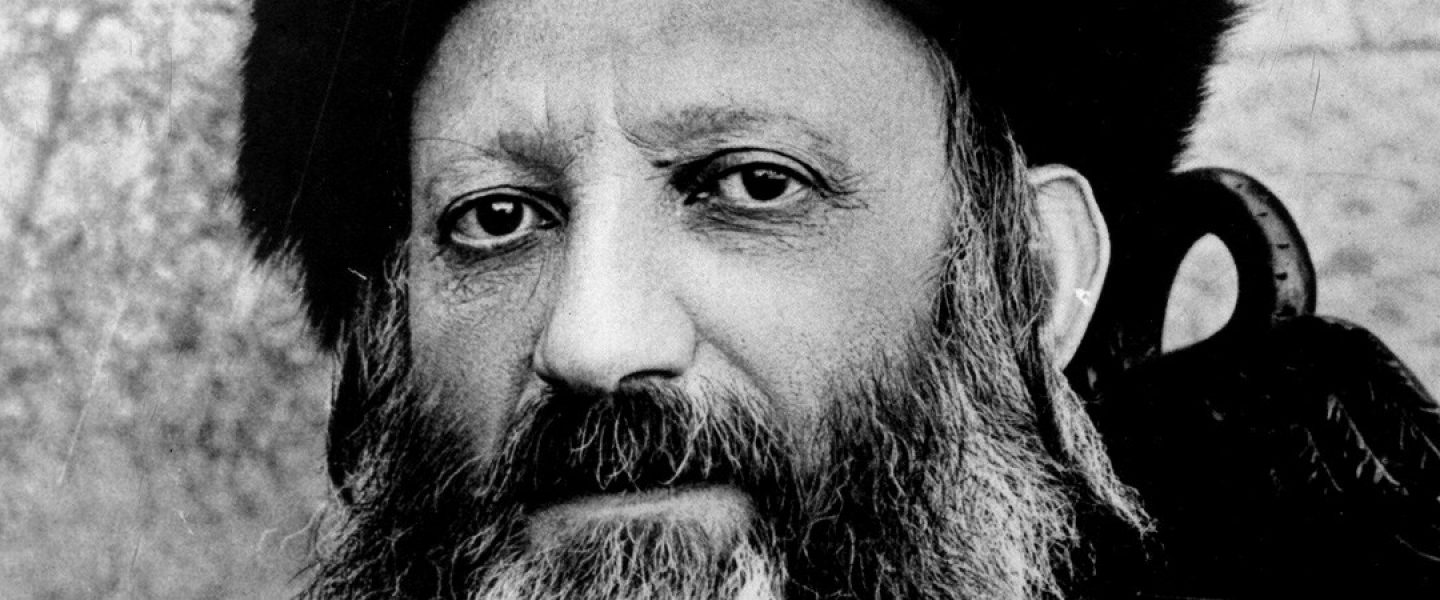
Rav Kook (Pinkasei ha’Reiyah, 1:45)
Your eyes have seen what the Lord did at Ba’al Pe’or, for every man who went after Ba’al Pe’or, the Lord your G-d has exterminated from your midst. (Devarim 4:3)
There was once a gentile woman who was very ill. She vowed: ‘If I recover from my illness, I will go and worship every idol in the world.’ She recovered, and proceeded to worship every idol in the world. When she came to Pe’or, she asked its priests, ‘How is this one worshipped?’ They told her, ‘One eats greens and drinks strong drink, and then defecates before the idol.’ The woman responded, ‘I’d rather become ill again than worship an idol in such a [revolting] manner.’ (Gemara Sanhedrin 64a)
The root .פ.ע.ר means to ‘open up’ or ‘bare.’ According to the Talmud, worshippers would bare their backsides and defecate in presence of the idol. This seemingly bizarre manner of worship demands an explanation. And is there anything about the Torah’s condemnation of Pe’or that is relevant to our own lives?
To answer these questions, we must understand that Pe’or is not simply another idol in the panoply of pagan deities. It represents the highest form of vileness and the utter corruption of man’s righteous and ethical character. The ideology behind Pe’or takes its guidance from man’s physical nature. In the physical world, when someone’s body is in a state of sickness, the body restores itself to equilibrium by expelling the waste or source of sickness. Pe’or worshippers maintained that the same is true in the spiritual realm. If a person is tempted by desires – no matter how how debased or unrefined – they can only find healing by giving their yearnings outward expression.
In this light, Pe’or worship is far from a matter of historical curiosity or merely a bizarre practice that died out in the ancient world. Even if our modern era, we can discern echoes of Pe’or worship if we listen closely. How often are we told that every human thought and desire is legitimate, that suppressing them can only result in sickness and suffering, and that a truly healthy society allows people to give expression to their desires?
As Torah Jews, we know that the exact opposite is true. It is true that our physical health requires the body to expel waste and sources of sickness. But when it comes to the spiritual realm, our guiding principle is as taught in Pirkei Avot (4:1) – “Who is mighty? He who conquers his desires.” The filth of a person’s dark and impure yearnings should not be given outward expression, but conquered and illuminated with the light of Torah.
Food for Thought
Rav Samson Raphael Hirsch (Bamidbar 25:3): And there was also Baal Peor, a god of shamelessness, who was worshiped by giving brazen prominence to the most bestial aspects of human life. Hence, Hoshea says: “They came to Baal Peor and dedicated [va’yinazru – from the same root as “nazir”] themselves to shamefulness” (Hoshea 9:10) – i.e., they sanctified/designated themselves for shamefulness. The cult of Pe’or is an illustration of the type of Darwinism that glories in man’s descent to the level of the beast, where, stripping himself of his Divinely-given nobility, he comes to regard himself as merely a highly-developed animal.
The Appeal of Baal Peor (and Darwin) (KolhaSeridim.com): Ever since the sin of Adam and Chava, the human psyche has been forced to operate under the ever-present surveillance of the conscience. The fear, shame, and guilt that are generated by the conscience are virtually inescapable. Although the conscience was given to us for our benefit, as a counter-force to keep man’s instinctual nature in check to help mitigate the consequences of the cheit, it has also given rise to a number of difficulties – some of which are objective (e.g. shoulds and religious guilt), and others of which are subjective.
One of these subjective difficulties is the fact that it is impossible for us to simply enjoy pleasure, like an animal does. Instead, we are compelled to justify our pursuit of pleasure within the parameters of value systems to which we subscribe. When we partake of a pleasure in a manner that runs contrary to our value systems, we experience cognitive dissonance – usually in the form of fear, shame, or guilt. The easiest way to get out of this state of conflict is through rationalization. Rather than confronting the causes and effects of our “moral failings” it is much easier to hastily explain away our misdeeds by coming up with excuses. If such moral lapses become habit, we tend to alter our value systems in order to legitimize our new pattern of behavior. Ultimately, morality yields to habit and desire…
Baal Peor – “the god of shamelessness” – was so attractive is that it granted license for the unbridled indulgence in physical pleasure by sanctifying the rejection of the conscience. In other words, the appeal was two-fold: (1) Baal Peor worshipers were granted the freedom to gratify all of their basest animalistic desires, and (2) their rebellious flaunting of shamelessness – epitomized in the hallowed ritual of public defecation – was imbued with religious value, thereby allowing them to bypass the cognitive dissonance that they ordinarily would have experienced.
This dual-allure of Baal Peor worship carries tremendous power. Imagine informing a lazy student that neglecting his homework and tearing up his tests will earn him an “A” in his least favorite class, or telling an alcoholic that nightly binge-drinking will win him free booze the next day. Similarly, if a priest of Baal Peor tells people that there is a god who wants them to abandon themselves to their hedonistic tendencies, and that the path to freeing oneself from shame is to revel in shamelessness, then he is bound to attract a multitude of followers….
We can now understand why the worship of “the god of Shamelessness” was accompanied by the sexual corruption which is emphasized by the Torah as the leading cause of Bnei Yisrael’s downfall. On the surface it would seem that there is no relationship between fecal rites and sexual promiscuity, but in light of Rav Hirsch’s explanation, the connection is clear: the licentiousness of the daughters of Moav was sanctioned by the religion of shamelessness. Their unrestrained sexual depravity was fueled by their worship of Baal Peor, who – in their minds – found favor in acts of wanton debauchery…
The take-away… [is] as follows: beware the seductiveness of a belief-system which caters to the desire to live like an animal, unsaddled by the yoke of conscience and unbound by confines of objective morality. These doctrines will appear to be legitimate, due to their authoritative veneer – whether it be the religious appeal to the spiritual mind, or the rational appeal to the scientific mind – but know the terrible cost of hearkening to their siren song…
Thus, the account of Baal Peor isn’t merely a historical record of a sin committed by our ancestors. It stands as a contemporary warning about the ever-present threat of moral degeneracy masquerading as an elite ideology…
Rod Dreher (a contemporary Christian intellectual): A friend of mine describes America today like this (and he’s talking about right wingers as well as left wingers):
(1) I am my desires
(2) Justice is the fulfilling of my desires, injustice is the impeding of my desires
(3) You are either the ally or the enemy of my desires
(4) If you are the ally, I will tolerate you; if you are the enemy, I will seek to destroy you.
Based on The Lubavitcher Rebbe (Chabad.com): For forty years, the people of Israel had enjoyed a wholly spiritual existence. They were fed, clothed and sheltered by daily miracles, leaving them free to pursue the divine wisdom of Torah without the distractions of the material state. Most telling of their state was the fact that the manna, the “bread from heaven” on which they lived, was wholly absorbed by their bodies, engendering no waste. They inhabited a spiritual idyll, in which the waste of creation was unknown.
But now they stood at the threshold of a new era: they were to settle the land, till its soil, engage in commerce and politics—i.e., to live a physical life sustained by physical means. For the first time in their history as a nation, they were to be in direct contact with the nether levels of the chain of evolution—with that part of the cosmic digestive tract which separates the waste from the body of creation. For the first time, they were called upon to differentiate between vital matter (matter that nourishes a spiritual end) and dead matter (matter as an end in itself).
Not all were equal to the challenge. There was an outbreak of Peor worship in the Israelite camp, as many were enticed by the pseudo-pleasures to be found in the undesirable byproducts of creation….
Questions for Discussion
- Can you think of any contemporary applications of Rav Kook’s analysis, where Torah Judaism differs from modern society on what thoughts/desires are legitimate to give expression to?
- At the end of the piece above, Rav Kook talks about “conquering desires” but also about “illuminating them with the light of Torah.” Are these the same thing? If they are different, how are they different?
- See the above excerpts in “Food for Thought.” Are they saying the same as Rav Kook?
- Would Rav Kook agree with Rav Samson Raphael Hirsch that Pe’or worship is connected to Darwinism?
- Rav Kook claims that the physical and spiritual worlds do not always operate on the same principles. What are some areas where they function the same way?
- Is the ideology of Pe’or a total aberration as far as idolatry is concerned? Or is it just an extreme formulation of ideas that are common to all idolatry?
