
Printable PDF available here. Previous piece on Shemini available here.
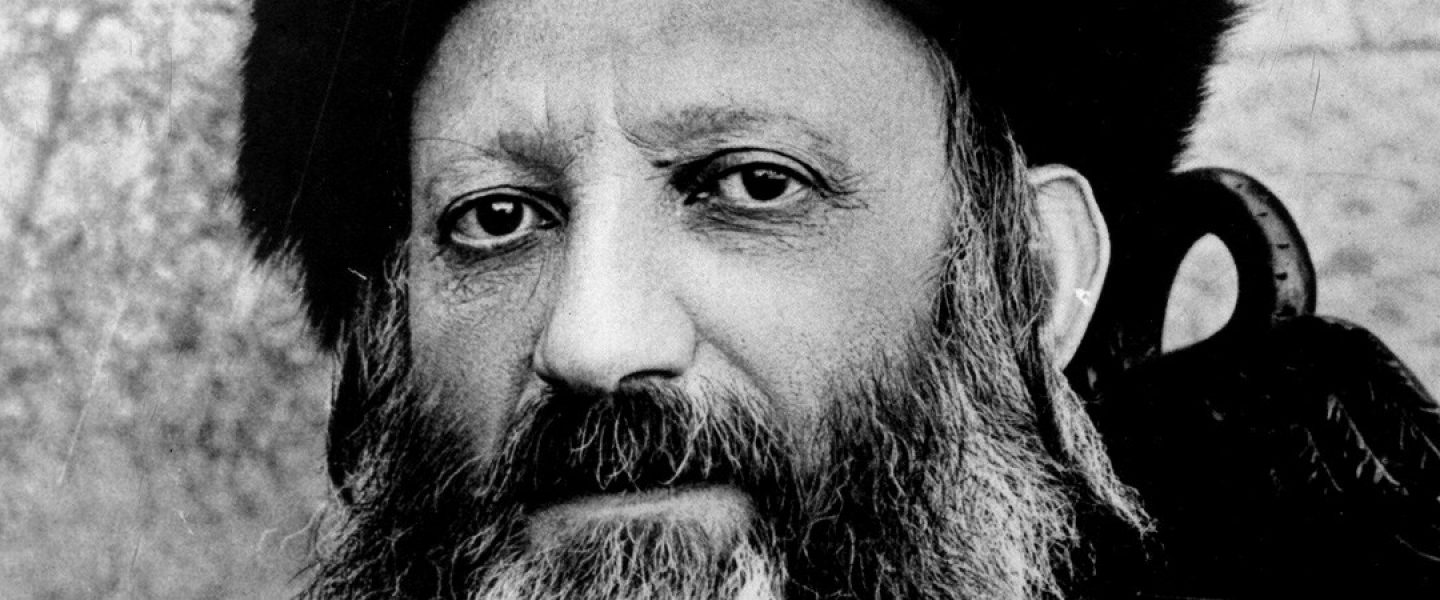
Rav Kook (Based on Ein Ayah, Gemara Berachot 32a)
Do not drink intoxicating wine, neither you nor your sons with you, when you go into the Tent of Meeting, so that you shall not die. [This is] an eternal statute for your generations, to distinguish between holy and profane and between unclean and clean… (Vayikra 10:8-10)
Now Hannah was praying in her heart; only her lips moved, but her voice could not be heard. So Eli thought she was drunk. Eli said to her, “How long will you make a drunken spectacle of yourself? Sober up!” And Hannah replied, “Oh no, my lord! I am a very unhappy woman. I have drunk no wine or other strong drink, but I have been pouring out my heart to the Lord. Do not take your maidservant for a wicked woman (lit. בת בליעל); I have only been speaking all this time out of my great anguish and distress.” (Shmuel Aleph, 1:13-16)
[Hannah told Eli that she was not a wicked woman (lit. בת בליעל). Rabbi Elazar said we derive from here that when a drunk person prays, it is as if he engaged in idol worship. For the word בליעל also appears with regard to a city that has been instigated to engage in idol worship: “Benei beliya’al have gone out from your midst and have lured the inhabitants of their city, saying let us go and serve other gods which we have not known” (Deuteronomy 13:14). Just like that context deals with idolatry, so too Hanna referring to one who prays drunk as a בליעל indicates idol worship. (Gemara Berachot 31b)
All forms of idolatry share two essential characteristics. The first is an emphasis on man’s emotional and imaginative faculties, untethered from the intellect. Indeed, the idolatrous impulse is based on a superficial, unthinking perspective on reality. Idolatry deifies the powerful and inescapable forces of nature, but fails to see their underlying Divine unity.
Intoxication also enfeebles one’s intellect and ability to perceive clearly. This is what our Sages had in mind when they compared one who prays while drunk to an idolater, based on a verse in Sefer Shmuel. This is more than just exaggeration or a homiletical flight of fancy. Our Sages are identifying the very essence of idolatry, and teaching us that intoxicated prayer shares the same essential characteristic.
This is not to imply that moderate drinking has no role to play in religious life. Indeed, there are times when we are allowed (or perhaps even encouraged) to transcend the world of rationality and tread in the realm of holy emotion and sentiment. But prayer is not such a time. Jewish prayer demands a clear mind, and a razor-sharp focus on the Divine ideals expressed in the world of tefilah. And thus intoxication and prayer are a contemptible combination, barred by the inner truth of aggadah and the world of halacha as well.
A second – and related – characteristic of idolatry is a fissure between the realms of action and thought/ideals. Paganism sees the world as fragmented and divided among warring gods. Some of these gods are (or can be bribed into being) favorably disposed to humanity, and others are full of wrath and vengeance. There is no underlying Divine unity to all of reality. Idolatry’s fragmented perspective on reality results in a similarly fragmented religious personality. There is no need to harmonize what one believes with how one behaves. Paganism’s religious ideas provide no guidance to the individual on how to act, and no guidance to the collective on how to construct a just society. On the contrary, the world of action is abandoned to the stormy and unreliable influence of imagination and raw emotion – which, as we have seen, are the dominant characteristics of idolatry. For this reason, idolatry always results in degenerate and horrible ethical failures – such as child sacrifice, ritual murder, and sexual deviance.
This is what our Sages have in mind when they associate idolatry with the world beliya’al, which has a connotation of ‘bli ol’, without a yoke. Idolatry is untethered from the ‘yoke’ of true ideals and clear thinking. This yoke can only be found in the perfected and holy Divine Torah, which teaches us how to harmonize the world of action with the highest G-dly ideals.
Food For Thought
Rav Samson Raphael Hirsch (Chorev, pg. 7-8): Nor is this idolatry merely an error, a mistaking of falsehood for truth. In that case, it would be simply an intellectual mistake, a delusion, deplorable indeed, but, even at the worst, not the worst that might happen. For there would still be left human dignity and the purity and uprightness of human action. But this is not the case. As soon as you set anything else beside G-d as G-d, and still more as your G-d, forthwith human dignity, purity and uprightness fall to the ground, the fabric of your life goes to pieces.
If a man follows after any being as G-d except G-d, he necessarily sinks to a lower level. As soon as a man thinks of any being as independent and as belonging only to itself, it must appear to him as tyrannical, intent only on self-aggrandizement and producing only for self gratification. Hence the man who reveres such beings as gods must of necessity regard unbridled violence and self-indulgence not as something bestial and so beneath man but as something Divine and so above man, and pursue them as such. Nay, more; when the law of Unity has vanished from his conception of the world and the universe breaks apart for him into isolated deities which serve only themselves, he will soon count himself among the gods, and, recognizing no law in his own life either, he will break out into all kinds of excesses and abandon himself to arrogance and dissoluteness.
Dr. Hylton I. Lightman (Ou.org): Judaism has a not uncomplicated relationship with alcohol. We Jews start drinking young, real young. There is the wine at the Bris when the baby is only eight days old. Then there is wine at the Pidyon HaBen. The two sips at the Chuppah. The focal point of our week is the Friday night Shabbos meal when typically Abba or another post-Bar Mitzvah male will sanctify the wine. Havdallah. Yom Tov Kiddush. The famous Four Cups at the Seder. Is there a Jewish simcha that is without the raising a glass of schnapps and proclaiming, “L’Chaim”?
No shul or yeshiva would want its members or students to become alcoholics. But let’s be honest. Many shuls and others create a social life around alcohol and to be cool and in (are those words current?), you have to partake. Think Kiddush Club when men, typically at some point during the layning and definitely before the rabbi’s speech, exit the sanctuary and call to order their own private gathering of booze and food.
Our Torah is filled with references to wine so clearly wine is important and plays a major role in Judaism. Sefer Shoftim describes wine as “bringing joy to G-d and man.” Every sacrifice brought to the Mikdash was accompanied by a wine libation. Likewise, there are times in our Torah when wine has been mishandled – actually, let’s call it accurately – abused. Our Torah does not sanitize those times and their consequences. Noach was disgraced by excessive wine consumption. Ahron’s sons’ faux pas stemmed in part from intoxication. And these are only two examples. Then there’s Purim. This day suffers such a bad name because of the drinking. Let’s not forget Simchas Torah. A nurse on staff in an area emergency room once told me that she and her colleagues call it “The Other Jewish Halloween.”
Like anything else in life, balance is a good thing. Alcohol, when imbibed appropriately, can enhance our Ruchniyus. By the same token, when treated inappropriately, it can make for a Chillul HaShem, G-d forbid. Kohanim were not allowed to serve in the Beis HaMikdash while drunk. We are forbidden to daven while drunk. A kohen is not allowed to “duchen” after having even a single glass of wine. The Tree of Knowledge in Gan Eden, according to one opinion, is both “good and bad.” When utilized properly, its potential for good is infinite. By the same token, if not used for good, the negative consequences are of equal proportion. It is up to each of us to choose how it should be used. Hopefully, we will choose to choose to make a Kiddush HaShem.
Rav Samson Raphael Hirsch: (Collected Writings Vol. II, pg. 143-144): Not “belief’’ but “knowledge,” not “sentiment” but “determination and accomplishment;” these are the energies through which the “Jewish religion” becomes manifest. And for that very reason Judaism is not a “religion.” It has no part with any of the facets that other “religions” emphasize as the “essence of religion.” He who would drag Judaism down to the level of “belief’’ divorced from knowledge, who would place also at the head of the “Jewish faith” all the nebulous subjectivism which indulges in “devout impulses” and have these notions constitute the basic requirements of the Jewish “religion,” cannot be one of the “priests of the Lord.” He is in reality one of the priestlings of paganism who exploit vague sentiment and sensibilities for the worship of their own delusions, whose harvest, therefore, has mostly been grief and mourning, misery and distress…. This is probably the reason why [non-Jewish clergy] are called כמרים, “hierophants of sentimentalism” or, more accurately, “fishermen of sentimentalism” (In Tanach, the root כמר denotes both stirrings of sentiment and the fisherman’s net.) They prey upon the “feelings” of the people and catch their fish in the muddied waters of sentimentalism. By contrast, G-d requires of His priests that “the lips of the priest shall preserve knowledge and they should seek instruction from his mouth, for he is the messenger of G-d” (Malachi 2:7). And similarly, “Our G-d did not speak from amidst mystical murkiness, “not in the darkness of night. I did not say to the sons of Jacob: Seek Me in the waste places. I am G-d, speaking of right; proclaiming that which is straightforward and clear” (Isaiah 45:19).
Questions for Discussion
- Rav Kook writes that idolatry inevitably results in ethical failures because it severs the world of action from the intellect. Do you agree? Could there be other explanations for the ethical failures of paganism?
- What distinguishes an appropriate level of drinking from the kind of intoxication that Torah Judaism dispproves of or prohibits?
- See the excerpts from Rav Hirsch above in “Food for Thought.” Is he saying the same thing as Rav Kook? If not, how is his analysis of idolatry different?
- What are some events on the Jewish calendar or life-cycle events where alcohol plays a role? Why is it given a role?
- Were Nadav and Avihu drunk when they brought their offering to the Mishkan?
- Why do people leave davening to go to kiddush club?
