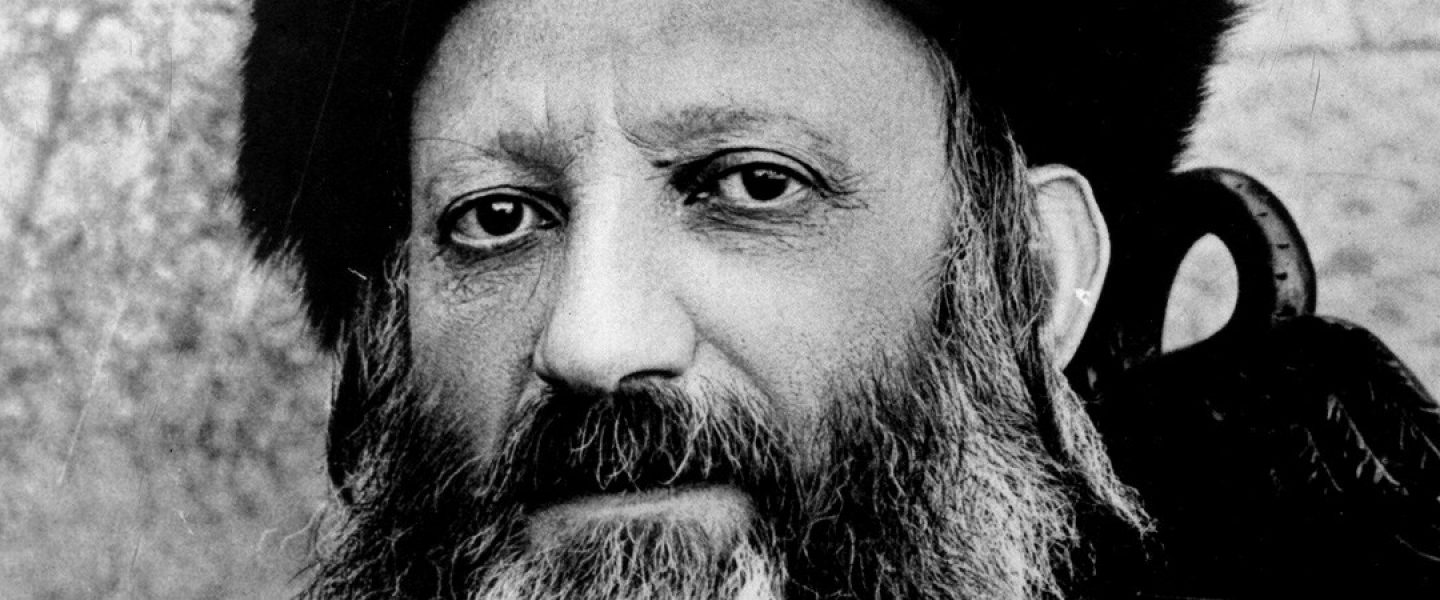
Rav Kook (Based on Ein Ayah, Gemara Shabbat 22a)
And if any Israelite or any stranger who resides among them hunts down a wild animal or a bird that may be eaten, he shall pour out its blood and cover it with earth. (Vayikra 17:13)
“He shall spill its blood and cover it with dust”. This means that with what one spills, he shall cover. [Just as a person spills the blood of a slaughtered animal with his hand, so too, he is obligated to cover the blood with this hand and not cover it with his foot.] The reason is so that mitzvot will not be contemptible to him. (Gemara Shabbat 22a)
There is a mitzvah to cover the blood of a shechted bird or non-domesticated animal. Various explanations have been offered for this mitzvah, known as kisui ha’dam. Some explain that the mitzvah is intended to distance us from the prohibited consumption of blood. Others explain it as a protective measure against ancient pagan practices involving blood.
But these explanations seem simplistic. Can it be that this G-dly mitzvah is nothing more than a guardrail against lowly paganism or consumption of blood, both practices that most of humanity has evolved beyond? These kind of flimsy, contingent explanations cannot possibly exhaust the depths of this – or any – G-dly mitzvah. The mitzvah must be relevant to every stage of humanity’s development.
We should note that although humanity has made great strides in its ethical and moral development, there are still many rungs to climb. We still have not reached the highest levels of holiness and elevation that are our destiny. Granted, we cannot speak in detail about the moral code or ideals that will govern at the end of history, in the Messianic era and subsequent to the revival of the dead (lit. תחיית המתים). These matters are simply beyond our ability to comprehend. But we can point to aspects of humanity’s current state of being – things that we take for granted as normal – and identify them as flawed practices that will be discarded when humanity eventually rises to a perfected state. The spilling of animal blood is one such practice. It cannot possibly be reconciled with man’s ultimate state of ethical and spiritual perfection. It is not a mere coincidence that according to the Torah, humanity was originally prohibited to consume meat and only the vegetable world was permitted.
Although we will eventually return to this lofty state, it is improper for humanity to leap impulsively to levels of extreme piety and forgo the consumption of meat. That would be neither suitable nor sustainable for our current state of being. Such inappropriate piety would breach the boundaries of what the Torah permits, and its end will be catastrophic failure. Much work remains to be done in the interpersonal and social domains of existence before man can rightfully extend a loving hand to the denizens of the animal world. How can we, in good conscience, divert our spiritual energies and resources to the animal kingdom as long as our fellow human beings are afflicted with poverty, disease, war, persecution and suffering?
This places humanity’s moral development into a difficult paradox. On one hand, consumption of meat is permitted to us in our current state, and it is both rash and impudent for us to leap to Messianic levels of piety by forgoing meat. But on the other hand, we cannot become so habituated to our imperfect state that we become struck in it, that we forget that there are more rungs to climb, that we stop becoming and content ourselves with being.
The mitzvah of kisui ha’dam is G-d’s divinely legislated means of navigating this paradox. The animal world is permitted to man for his needs, and he is allowed to spill animal blood. But G-d demands that this be done with hesitation, with a certain sense of shame. Man may spill blood, but he must cover it up. He thus reminds himself that in the light of the ultimate and most perfect truth, spilling animal blood is cause for contrition and a measure of shame.
This also explains why the mitzvah of kisui ha’dam is limited to birds and non-domesticated animals, a question that has bothered many commentators. Based on our analysis, we can explain that slaughtering birds and wild animals is particularly shameful because they are generally self-sufficient and do not rely on people to provide their needs. By contrast, humans provide for and take care of domesticated animals, and their slaughter thus has a semblance of a fair exchange. In this way, the Divine lawgiver ensures a proper balance between humanity’s current moral state and the ultimate heights to which it is destined to ascend.
For this reason, our Sages teach that kisui ha’dam should not be performed with one’s feet as it would be disrespectful to the mitzvah (lit. ביזוי מצוה). The feet are the lowest part of the body, and using them for this mitzvah would express that it is oriented towards the lowest stages of humanity’s moral development (like weaning us from consuming blood or paganism). For this mitzvah is Divinely engineered to bring about nothing less than the highest and brightest future, and it should thus be performed with the hands. The hands can be raised higher than any part of the body, higher than even the head, which is the seat of the intellect. The message is that kisui ha’dam connects us to a level of spiritual reality that is beyond our current comprehension, to levels of holiness that await us at the end of history.
In this regard, kisui ha’dam serves as a paradigm for all of the Torah’s mitzvot. No mitzvah is consigned to a distant past or to the inferior stages of humanity’s development. Every mitzvah advances humanity and history to its ultimate conclusion, to the light of G-d and His splendor, to the day when G-d will pour out his spirit upon all flesh and remove the spirit of impurity for the earth. On that day, animals will become human-like in their spiritual capabilities and humanity will attain levels that we cannot even comprehend. Humanity will revert to its Edenic diet and animal slaughter for food will be a vestige of the past.
