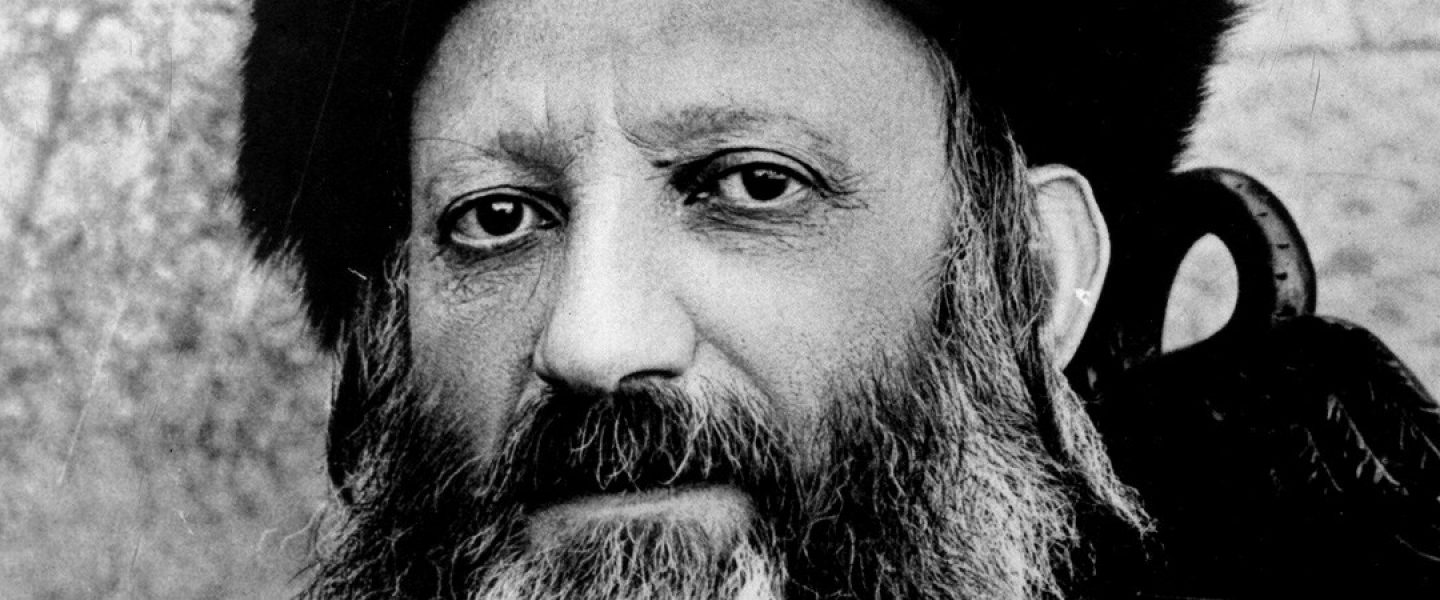

Printable PDF available here. Previous pieces on Parshat Korach can be found here and here.
The Lord spoke further to Aaron: I hereby give you charge of My gifts, all the sacred donations of the Israelites; I grant them to you and to your sons as an eternal portion…. The choice of the oil and the choice of the wine and grain, the first of which they give to the Lord, to you I have given them. (Bamidbar 18)
Rav Kook (Based on Ein Ayah, Shabbat 32b)
Tremendous goodness comes to Israel through the influence of the Kohanim, from the incorporation of such exalted individuals into collective Israel. Alas, the blessing that flows from the institution of the priesthood is not manifest at this stage in history, for this institution is currently but a shadow of its true essence. The G-dly directives that bind the Kohanim to the people and the people the Kohanim – commandments like tithes – [apply only in Israel and] are either ignored, or fulfilled begrudgingly out of a sense of obligation, a desire to fulfill the barest letter of the law.
This is regrettable, but also understandable. Our generation does not comprehend the purpose of life in its full true and eternal character. It cannot see that the honor and dignity owed to the institution of priesthood is not on account of its present stature. Like all spiritual matters, the kehuna is cherished due to its future greatness, from the storehouse of spiritual goodness that accumulates over generations of contributions in past, present, and future. It is part of a Divine edifice built by Torah and mitzvot, whose bricks are laid over many lifetimes.
But we fail to perceive this. We relate to priesthood as little more than a vestigial quirk of yichus (lineage), to Kohanic entitlements (such as tithes) as a tax and a burden to be discharged. With such a limited outlook, life will offer little satisfaction and the soul will find no contentedness from any of its accomplishments. What good is material success when life’s inner content is empty and misunderstood, when humanity’s refined feelings and higher consciousness are incapable of being nourished and have no soil to grow in? This state of mind cannot serve as a vessel for receiving Divine blessing.
We must broaden our outlook and strive to perceive reality from the highest peaks. Our gaze must encompass and embrace all generations and the fulness of all existence. Only with such an outlook can the nation be ready to receive a profusion of blessings, both spiritual and material. It is with regard to this attitude toward tithing that the prophet Malachi (3:10) declared, “Bring all the tithes to the storehouse, so that there is food in My house. Test Me in this, says the Lord of hosts, if I will not open for you the windows of Heaven, and pour out to you blessing until there is more than enough” (lit. עד בלי די).
The prophet does not mean to assert that tithes are a currency in some sort of Divine gumball machine, that if we pay our taxes to the Kohanim [and Leviim], G-d will reward us. Divine reward does not operate in such arbitrary, transactional ways. Malachi is teaching us that when we appreciate and cherish the priesthood – which, as we have already said, requires being rooted in and appreciating the past, present, and (especially) the future – it is then that we have created a vessel for G-d’s unlimited blessings. It is only in such a state that we will find contentedness and inner peace, that we will find our souls permeated with Divine goodness and sense the essential goodness of life, from its heights to its depths. For when life is not limited to or constricted by the flaws of the present, nothing is lacking.(1)
(1) Rav Kook concludes by citing the Sages’ homiletical interpretation (Gemara Shabbat 32b) of the phase עד בלי די in Malachi -“Until one’s lips are worn out from declaring ‘Enough!’”
Rav Kook (Orot ha’Techiah 5); translated by Bezalel Naor
Great is our past and even greater is our future, which is clarified when we desire the righteous ideals hidden in our souls. With this great power all the moments of the present live and exist in our midst with a full spirit of life, and all the memories by their might fill a multitude of deeds with vitality; infuse mitzvot, customs, and orders with a special power of insight, a distinctive creative ability, an outstanding world-outlook. These are all full of meaning and romance, love and ecstasy, and drenched with the dew of life, of courage and majesty, from our ecstasy, from our courage, from our singular majesty.
The quintessential form of all the arrangements of the life of the society according to the divine formula that corresponds to life – broadening life, purifying and uplifting it to freedom and to the concentration of all the media that make freedom a truly good gift – is hidden [among other places] in the system of the mitzvot dependent on the Land… The future does not desist from demanding of the present its role, and the present becomes interesting to the degree that it knows the future is in need of it. Thus the present is not inconsequential vis-à-vis the future but rather fills up thereby with all its character and essence, and its inclusion in the aspiration of the future and its exalted height adds to it pleasure and living strength.
Therefore, full of life are the memories stored in the commemorations we perform… The things look to us now shriveled, their outer appearance is meager, but inside they are full of life and content. We circumvent the observance of shemitah (the sabbatical year) by selling the lands to a non-Jew; we observe the giving of tithes to the Kohen and to the Levite by a device that inflicts no great loss on the giver, nor brings great profit to the receiver; we bless and tithe, and redeem ma‘aser sheni (the second tithe) worthy of being eaten in sanctity in the central city, holy and living, the site chosen by the Lord, the heart of the nation with all the streams of its life…
But in these minute grains great potential for growth is contained, for all that they long, from all that has grown in the past, and all that they will eventually produce. All this is contained in them in a typical way, and they silently influence the observant soul, constantly fanning a holy fire of love of the land – through these shares of holiness, through the divine, religious, national and ethical superiority of these actions. They educate the people in its days of lowliness to its spirit of greatness. Knesset Israel, its sons and builders, understood this and did not cease from actualizing these memoirs, as much as was possible in the lands of its wanderings, but especially upon its return in any form to its place, its inheritance.
The majesty and beauty, and the special glory that there is in the mitzvot dependent on the Land – when observed now in the Land of Israel by us, by that pioneering force building the ancestral land and preparing a more certain, clearer prospect for the coming generation – is revealed to us from the strength of our inner desire that pounds within our soul, to assert the character of our nation in our ancestral land with its full countenance, with all the contours and lines that make up its character, which stress that this is our nation with its original, lofty value, with its body, spirit, and soul. For this, we aspire to renew upon us early days, as in the days of old, and as in former years. Behold, we slept a national slumber during a long and very difficult galut (exile). Our national energies remained absorbed within our midst. Outside all becomes atrophied and aged, but inside the dew of life continuously streams.
Just as the practical mitzvot in general, in their fullness, went with us in exile and preserved for us in exile our vitality and our inner, essential spirit, bringing us to these days, the beginning of the period of the resurrection of the desire of national renascence in our land, so the mitzvot dependent on the Land will bring us to the upliftment of life, as they [i.e., those mitzvot] were determined by life’s full dimension. The more we contemplate the essence of all the mitzvot dependent on the Land, seeing how far they are from us, how much healthier and stronger our lives must be in order for these mitzvot to be observed by us, so will the ardor grow in us to observe with love and honor that portion that we can observe as a commemoration, a holy commemoration, a remembrance of whole life that will come to us when complete salvation will come to our people on our soil, an eternal salvation. When we observe those mitzvot now, we enrich the soul of our nation with that holy fire that will become a holy flame full of life at the time of rebirth. When we fulfill now the mitzvah of tithes, even though we do not have all the concrete foundations upon which these mitzvot are constructed, “neither a kohen at his service nor a Levite at his song” – behold this vision appears before us and we are filled with a spirit of song exalted as the flight of eagles, in view of the light of the happy days that await our nation on our blessed soil: Here is the Temple on its foundation, a pride and honor for all the nations and kingdoms, and here we carry with joy sheaves of our Land of Delight.
We come with a spirit full of true freedom and pure trust to the silo and winery, full of grain and wine, and our heart is gladdened by the abundance of a Land of Delight. There appear before us priests, holy men, servants of the Temple of the Lord, G-d of Israel. Their hearts are full of love and kindness, the holy spirit floods their faces, and we recall the crescendo of holy feelings that filled us at the time we saw their faces, when we went up on pilgrimage; when we saw them standing to serve within our Temple pride of our strength and delight of our eyes. How handsome and pleasant they are to us, and now here is our silo full of the blessing of the Lord from this Land of Delight that we inherited from our fathers, and the portions of these men, men of spirit, are with us. We are happy to give to them their tithes; we find within our midst an exalted feeling and rise together with the tithe to the spiritual plane where these holy men ascend.
Our soul is drenched with the bounty of heaven. And behold the Levites, these delicate ones who captivated our hearts with their harmonious music in the holy place during the festival, when we went up to see the glorious Temple of G-d in Jerusalem, to behold the face of the Master, the Lord, G-d of Israel. Their joyous, delicate faces remind us of their holy music; we float in streams of spiritual joy and give them with a happy heart their portion, the tithe. Soon we will once again meet on the Mountain of the Lord at the next festival. How proud we will be to see these kohanim (priests) and Levites of the Lord at their holy work and music! Happy the people who has this; happy the people whose G-d is the Lord.
Questions for Discussion/Further Thought
- What role are the Kohanim meant to serve?
- Why did the Kohanim need to be supported by the people?
- Rav Kook encourages us to move from a narrow perspective focused on the present to one that “encompasses and embraces all generations and the fulness of all existence.” That sounds like a lofty goal. How do we achieve it?
- Why are the priestly entitlements reiterated in Parshat Korach?
- Are the two pieces above from Rav Kook saying the same thing, or is there a slightly different emphasis in each?
- Rav Kook writes that “Behold, we slept a national slumber during a long and very difficult galut (exile). Our national energies remained absorbed within our midst. Outside all becomes atrophied and aged, but inside the dew of life continuously streams.” What do you think he means?
- What problems does contemporary culture/society face as a result of being excessively focused on the present?
