
Printable PDF available here. A previous piece on Parshat Balak is available here.
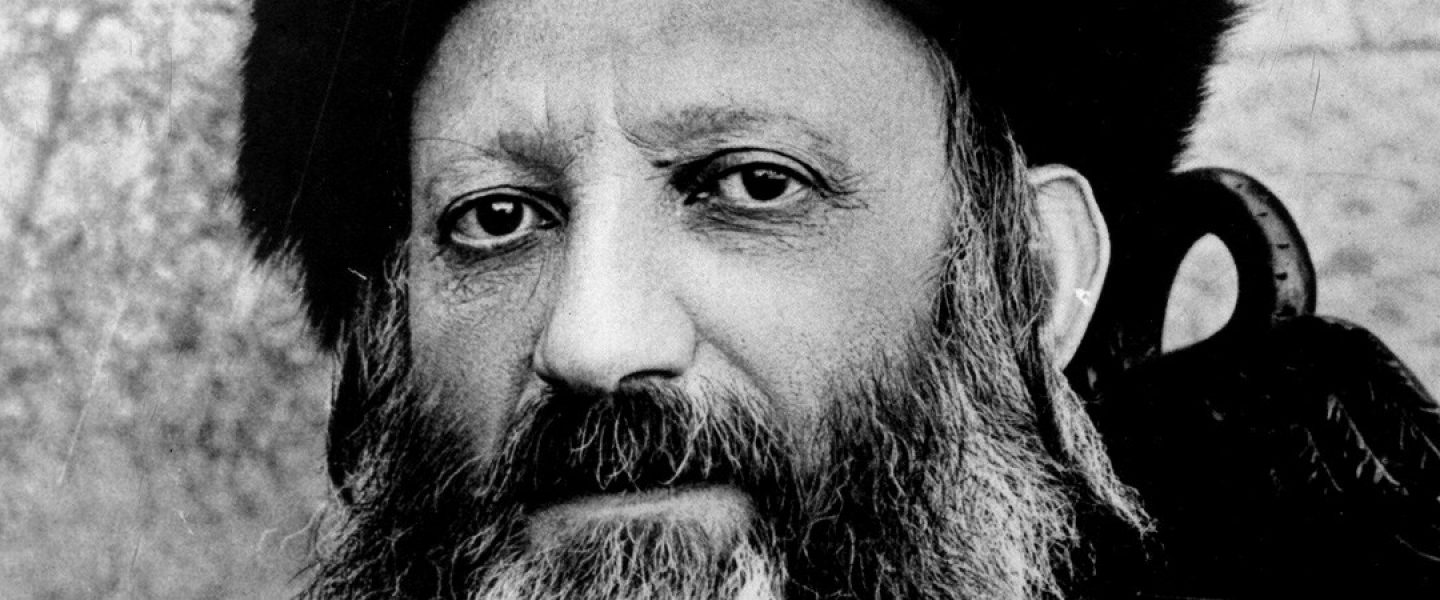
Rav Kook (Olat Re’iah)
How goodly are your tents (lit. אהליך), O Jacob, Your dwellings (lit. משכנותיך), O Israel! (Bamidbar 24:5)
The lifelong process of striving for spiritual completion consists essentially of two different movements, both of which serve as the foundation for all worthy things in life.
The first movement, which is the elevated crown of every attainment, is to be constantly striving for higher levels of spirituality. One must always be yearning for more wisdom and more holiness, to be illuminated by the pure light that comes from G-dly knowledge, from refining one’s emotions and thoughts. One must allow the noble foundation of his or her soul to intensify and be built up in an ever-increasing process of ascent. This process is stormy, dynamic, and does not allow for any rest.
But there must also be a different modality of spiritual work. You cannot be climbing upward at every moment. You must also hold fast to what you have accomplished, and fortify your spiritual gains against the dangers that threaten to wash them away. There is also a risk that one will leap upward toward levels that are not appropriate, or that unchecked and unhealthy spiritual ambition will breach the bounds of morality or Torah. Thus, this second modality is what consolidates the accomplishments of the first, what enables one’s spiritual attainments to last and endure. And unlike its counterpart, this is a process of rest and repose, of being rooted in one’s spiritual ‘place’ instead of seeking to transcend it.
These two forms of spiritual work are symbolized by two different types of structures. The ceaseless process of spiritual ascent is represented by the tent, which is an intrinsically temporary dwelling that is moved from place to place. The other, more poised mode of consolidating and holding fast to one’s spiritual gains is embodied by the Mishkan. Although the Mishkan was always ready to be relocated to another encampment in the desert, it only functioned when the people were no longer traveling, when they had ceased to move and were summoned to stand still. But as we have seen, the very act of ‘standing still’ is itself an important mode of Divine service.
All of this is encapsulated by Bilaam’s pithy declaration “How goodly are your tents, O Jacob, Your dwellings, O Israel!”
Perhaps this is why Jewish custom is to begin the morning prayer service with this very verse. As we prepare to pour out our souls in prayer to our Creator, we invoke the imagery of the “tent,” thus decisively rejecting spiritual complacency. We acknowledge our desire to rise, ascent after ascent, to the highest possible levels of holiness. And at the same time, this vision must be bound up with its counterpart. While taking care to climb higher and higher, we must take care not to slip and fall on our way up. There must be moments to rest, to integrate what one has attained and become, to stay in a “dwelling” and not only a “tent” on the steep cliff of the mountainside.
Only through the unification of these two modalities will we attain the ultimate goodness in all of its vigor and splendor.
Food for Thought
Gemara Sanhedrin (105b): From the blessing of that wicked person, Balaam, you can ascertain what was in his heart. G-d transformed the curses that he planned into blessings. He sought to say that they should not have synagogues and study halls, and he said instead: ”How goodly are your tents, Jacob” (Numbers 24:5), a blessing on their synagogues. He sought to say that the Divine Presence will not rest upon them, and he said instead: ”And your dwellings Israel.”
Seder Rav Amram Gaon (9th Century, Babylonia): One who enters a synagogue says: “How goodly are thy tents, O Jacob, Thy dwellings, O Israel!” (Numbers 24:5). “But as for me, in the abundance of Thy lovingkindness will I come into Thy house; I will bow down toward Thy holy temple in the fear of Thee.” (Psalms 5:8)
Responsa of Maharshal, 64 (1500s, Poland): When I come to synagogue I begin with the verse “But as for me, in the abundance of Thy lovingkindness…” (Psalms 5:8) and skip the first verse “How goodly are thy tents” (Numbers 24:5) because Balaam said it [first] and he said it as a curse as we find in Sanhedrin 105b, and this is not its proper place.
Rabbi Elliot Kaplowitz (moderntoraleadership.com): If, indeed, Bilam was evil, why are his words among the first that we teach our children? Why are they included in the siddur? I suggest an answer to this question based on Yosef Albo’s explanation of prayer in his Sefer Ikarim. Albo wrestles with the philosophical difficulty of how petitional prayer can ever be effective if G-d is all-knowing? Hashem has already declared what the end result will be, and G-d’s will does not change. Logically, then, our prayers should have no impact on the outcome. R. Albo explains that G-d’s will does not change. However, the future outcome is determined for each individual as they are at that moment in time. The act of prayer has the power to transform the individual into a new person – about whom a different decree is possible. Because prayer is transformative, there is no more philosophical difficulty.
The structure and content of the siddur helps us to go through a transformation described by Albo. Throughout the siddur we utter the words of others – beginning with Bilam’s words of Mah Tovu, the words of Tehilim composed by David haMelech that comprise the majority of pesukei de-zimra, the words of Moshe and B’nei Yisrael during Shirat haYam, etc. In one sense, we begin tefilah as a rasha (wicked person) deserving of punishment. If we internalize this sentiment, then our prayers will be more sincere and more passionate. The discomfort of beginning with the word of Bilam further helps us to be open to the transformative power of our prayer.
Rabbeinu Bachya: According to the midrash (Talmud Baba Batra 60a) Bilam speaks of the tents in the desert, seeing that there the Israelites dwelled in tents. When he saw how the entrances of these tents were so arranged [modestly] that they did not face each other, Bilam was inspired to compliment the people on this.
Kedushat Levi: “How goodly are your tents, O Yaakov, your dwellings O Israel.” This may best be understood in light of the sages urging us to set aside definitive hours each day for Torah study. (Avot 1:15). “Yaakov” is the name used for Israel when it is at “low” ebb spiritually, whereas “Israel,” is the name applied to the Jewish people when they are spiritually at their best. When Torah study is only an occasional activity of the Jewish people, they are on the level of “Yaakov.” [The word: אהל always denotes a temporary abode, as opposed to משכן which always describes permanent dwellings. When Torah study comprises a major part of their waking hours, i.e. it is a fixture, they are referred to as Israel.]
Questions for Discussion
- Rav Kook uses his analysis to explain why we start the morning prayer service with the verse “How goodly are your tents, O Jacob, Your dwellings, O Israel.” What might be an additional (and simpler) explanation? (For a hint, see the gemara in Sanhedrin, cited in “Food for Thought” above.)
- Is ambition in worldly matters a positive trait? Why or why not?
- What happens if a person is too focused on rising upward spiritually, without taking time to rest and consolidate their gains?
- Rav Kook writes that there is a danger that “unchecked and unhealthy spiritual ambition will breach the bounds of morality or Torah.” Is there anyone in Tanach or Jewish history who might serve as an example of this?
- According to Rav Kook, the terms “tents” and “dwellings” refer to an internal spiritual process. See Rabeinu Bachya and Kedushat Levi in “Food for Thought” above – how do they understand these terms?
- What happens if a person is too cautious about consolidating their spiritual gains, without being sufficiently ambitious or interested in spiritual growth?
- It was only in the desert that the Jews had a traveling Mishkan. Once they entered into Eretz Yisrael, they were commanded to build a permanent Temple. What do you think this expresses, in light of Rav Kook’s insights?
