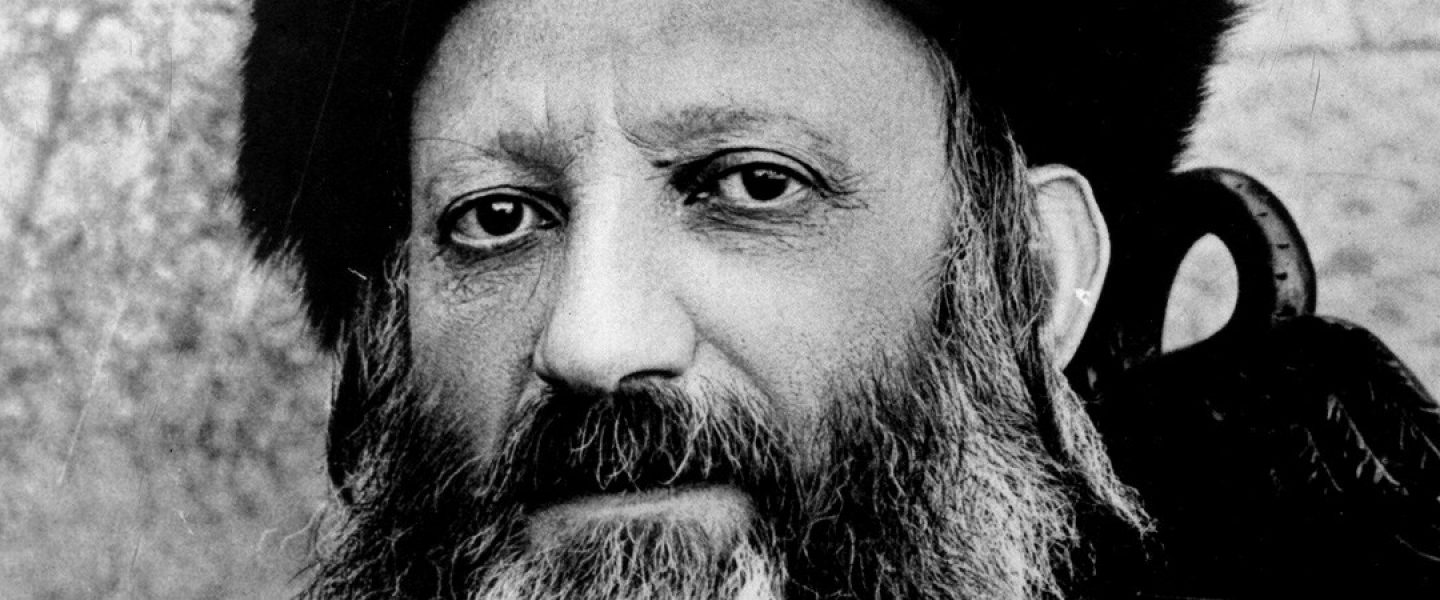
Translation – Orot haTeshuva 6:7
Our Sages teach that from the beginning of Creation, the taste of the tree was supposed to be the same as its fruit. [1] The means which facilitate any elevated, universal spiritual goal should be perceptible to a person’s spiritual sense, in the same degree of elevation and pleasantness that one feels in conceiving of the essence of that spiritual goal.
But the nature of earthly existence, the instability of life and the weariness of the spirit imprisoned within physical confines – this resulted in a reality in which only the taste of the fruit, of the final goal, the ultimate ideal, is perceived in its pleasantness and splendor. The trees, despite their necessity for the growth of the fruit, have grown thick and coarse, and no longer bear the taste of the fruit. That is the sin of the earth, on account of which it was cursed, along with mankind, for the sin of Adam haRishon. [2]
But every flaw will be ultimately rectified, and therefore we are clearly assured of days to come when Creation will return to its original state. The taste of the tree will be like the taste of its fruit, because the earth will return from its sinful state. At that time, the pathways of practical life will not obstruct the pleasantness of the ideal light, which is supported along its path by proper means that strengthen it and cause its emergence from potentiality to actuality.
When vigor is given to the spirit of righteousness, after the inner spirit had initially been constrained and immersed in the abyss of non-existence, teshuvah itself will cause the inner spirit to stream forth. This teshuvah will give strength to the spirit of idealism, which will penetrate not just the end but the multitude of means as well.
And at every stage, even in instrumentalities, one will taste of the radiance of the ultimate goal. Then mankind will no longer bear the shame of slothfulness upon the path of true life.
Commentary
In this passage, which one commentator has described as “one of the most famous in Rav Kook’s writings, [3] Rav Kook addresses a enigmatic midrash from Bereishit Rabbah, which is also quoted by Rashi in his commentary on the Torah. The midrash records that Hashem commanded the earth to produce trees whose fruit would taste as they did, but the earth rebelled against Hashem and did not do so.
Rav Kook understands this midrash as an allegory, wherein the ‘fruit’ represents the ultimate spiritual goal of reality, and the ‘tree’ represents the means/instrumentalities of attaining and experiencing that reality. [4] According to Rav Kook, the midrash does not mean that the world literally rebelled against Hashem – which would be puzzling and even preposterous. Rather, the midrash means that a certain distance from the ultimate spiritual reality is woven into the fabric of Creation itself. The confines of our earthly existence dim our ability to taste the spiritual sweetness of the ‘ends’ while we are occupied with ‘means.’
This may seem overly abstract, but consider the following examples:
- The parent who gets frustrated about being stuck in traffic while driving kids to school, not realizing that this facilitates the chinuch of his/her children and will provide them with the foundation to live Jewish lives and be faithful to the Torah.
- The chasan reluctantly dragged along by his kallah to peruse china and tableware, who doesn’t realize that this too will be a part of the home he will build and the Shabbos table he will share with his future wife and children.
- The student struggling to understand a difficult passage in gemara, who doesn’t understand that it is precisely these struggles that will lead to the deepest possible appreciation for and connection with learning.
Rav Kook teaches that this disconnect between ends and means, between potentiality and actuality, is an aberration that will ultimately be rectified. The world will be refined and rise to a state in which we will taste the sweetness of destination at every stage of the journey. Rav Kook connects this rectification to the concept of teshuva. This is connected to Rav Kook’s concept of teshuva as a universal spiritual process of refinement and coming close to the Divine – not merely (like so many of us were taught) recrimination and sadness in the wake of transgression and failure.
[1] See Midrash Rabbah quoted by Rashi on Bereishit 1:11.
[2] Ibid.
[3] Rav Moshe Weinberger in Song of Teshuva, Vol. 1, pg. 295.
[4] Perhaps Rav Kook based this interpretation on the notion that the Torah is עץ חיים`.
Questions for Reflection and Discussion:
- What areas of my life are there where I struggle to taste the sweetness of the destination in the journey? How can I change that in some small way?
- Chazal (Gem. Sukkah 35a) teach with regard to the esrog that its fruit tastes the same as its wood. How might this connect to Rav Kook’s idea? Is there anything about Sukkot that helps us tap into the higher level of reality Rav Kook articulates?
About this Piece
This excerpt was taken from Orot haTeshuva, which was first published in 1925. In seventeen brief chapters, Rav Kook develops the notion that teshuva is not a somber process of self-deprivation and embittered guilt. Instead, it is a joyful journey back to Hashem and one’s own essence, part of a cosmic process by which the entire Creation yearns for improvement and Divine closeness – hence the title Orot haTeshuva, or Lights of Teshuva.
Orot haTeshuva is available in various English translations or adaptions. In my opinion, the absolute best is the commentary of Rav Moshe Weinberger and Ya’akov Shulman, published in four volumes. This edition combines a clear, accessible translation with a commentary that presents the basic aspects of Rav Kook’s unique thought. Citations from other thinkers and other works of Rav Kook are presented to provide context and develop important themes. Ya’akov Shulman’s translation is also available in a standalone volume without the commentary. Other editions can be found here and here.
For the Hebrew original of this excerpt, please see pages 10-11, here.
