
Printable PDF available here.
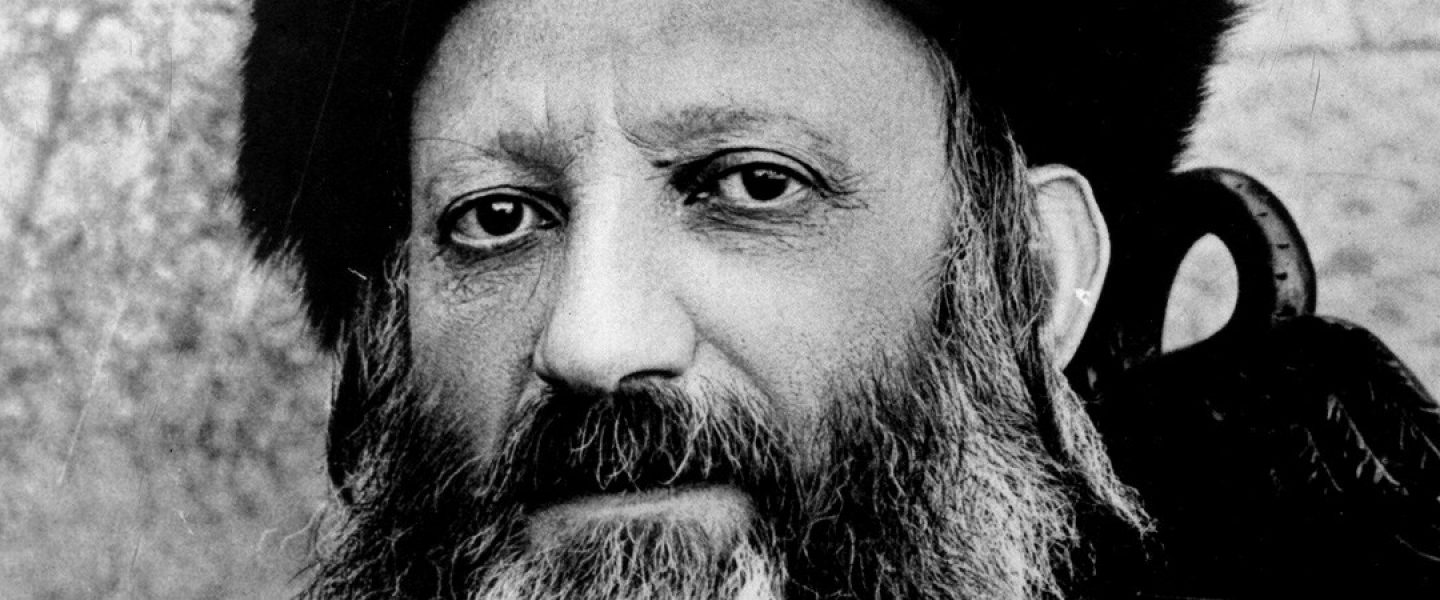
Rav Kook (Shemonah Kevatzim 4:106, Arpalei Tohar, 126)
And never was there a prophet who arose in Israel like Moshe, whom the Lord knew face to face, as manifested by all the signs and wonders that the Lord sent him to perform in the land of Egypt, for Pharaoh and all his servants, and for all his land, and all the strong hand, and all the great awe (lit. המורא הגדול), which Moses performed before the eyes of all Israel. Rashi: The phrase “before the eyes of all Israel” alludes to the incident where Moshe’s heart stirred him up to smash the luchot before their eyes, as it is said, “and I shattered them before your eyes” (Devarim 9:17). And our Sages teach that the Holy One Blessed is He approved of Moshe’s actions. (Devarim 34:10-12)
Like all other G-dly values principles, yirat Hashem must be calibrated, healthy and balanced. However, some people are overwhelmed by the magnitude of their religious and ethical obligations. They are crushed by fear that they have let G-d down and failed as ovdei Hashem. They suffer from an excess of Divine fear (lit. yirah), which traps them in passivity and prevents them from living an active life of Divine service. Their unique strengths and aptitudes remain dormant, suffocated underneath an excess of fear. One must act with wisdom in order to clear away this burden, so that his Divine potential can be actualized, so that he can live an active and vigorous life in service of G-d.
How does one achieve this? Why are some people energized by the thought of standing in G-d’s presence, while others fall into passivity and depression? What separates the healthy yirah that G-d wants us to strive for from yirah which is unhealthy and burdensome?
The answer is that it all depends on how one understands the “Hashem” of yirat Hashem. Although G-d’s true nature is unknowable, Jewish life is not about G-d’s ineffable essence, but His revelation to us and our relationship with Him. The central truth of Judaism is not that G-d exists, but that He cares about us and that we stand in his presence.
Now, a shallow and simplistic understanding of G-d places an unhealthy emphasis on G-d transcendent, infinite majesty. It emphasizes man’s pitiful and insignificant stature. It is deeply uncomfortable with man’s dignity as the bearer of tzelem elokim, and prefers instead to accentuate that מותר האדם מן הבהמה אין. In the time between his creation from dust and his return to dust, he is either outrightly sinful or constantly tempted by sin. Sin “crouches at the door,” but never leaves. This is yirat Hashem – but it is yirat Hashem that is devoid of knowledge (lit. יראת שמים שאין בה דעה). And it turns man into a squirming and pathetic idler (lit. זוחל ובטלן), who can do little more for G-d than grovel for His mercy and forgiveness.
Granted, true yirat Hashem also acknowledges G-d’s transcendence and requires that man “walk humbly before G-d.” But its humility is healthy and calibrated. It encourages man to broaden the splendor of his Divine soul, to a deepen his understanding of the world and his life in it. It arouses his Divinely given powers of imagination and thought, and demands that he delve into wisdom, science, ethics, language and culture, to purify them and use their power for holy living.
Israel strives for all of these through the Torah, in its broadest and most expansive manifestation. We must be diligent to ensure that the path of Torah broadens our thoughts and aspirations, instead of constricting and crushing them. We must proceed with calm and confidence, and not allow unhealthy yirah to block our spiritual potential from blossoming forth. With awareness of the supernal and holy source of our calling, with mindfulness of the boundary that separates good from wickedness, we must proceed with vigor, full of holy gevurah and supernal humility, warmed by the Divine light that entrusted us to build and accomplish wonders for ourselves and for the entire world.
Commentary
Rav Kook does not directly link his insights on yirat Hashem to Moshe destroying the luchot, but it seems to perfectly encapsulate his point. Moshe came closer to G-d than any other human being who ever existed. The Torah tells us that he was the humblest person on earth. And yet, his humility and awareness of Divine majesty did not paralyze him or keep him from taking bold and decisive action. Can you imagine the audacity, the courage it must have taken for Moshe to smash the luchot when he came down from Har Sinai? Put yourself in his shoes! “G-d did not tell me to destroy the luchot, His sacred handiwork. Maybe I’ll be punished. Maybe I should just sit back and wait on the sidelines.” And yet, we know this is not what happened. Clearly, yirat Hashem and humility do not in all instances demand passivity and quietism. Moshe was bold and decisive not despite his yirat Hashem, but because of it.
Food for Thought
Mishlei 28:14: Fortunate is the man who is always fearful, but he who hardens his heart will fall into evil. אַשְׁרֵ֣י אָ֖דָם מְפַחֵ֣ד תָּמִ֑יד וּמַקְשֶׁ֥ה לִ֜בּ֗וֹ יִפּ֥וֹל בְּרָעָֽה.
Ramchal (Introduction to Mesilat Yesharim): As Shelomo said: “If you seek it like silver, and search for it as for hidden treasures, then you shall understand the fear of the Lord” (Mishlei 2:4-5). He did not say: “Then you shall understand philosophy, then you shall understand astronomy, then you shall understand medicine, then you shall understand the laws, then you shall understand halakhot,” but rather “Then you shall understand the fear of the Lord.” You see, then, that in order to understand the fear of God one must seek it like silver and search for it as for hidden treasures.
Second, the fear of God requires wisdom and study… Scripture states: “The fear of the Lord alone [‘hen’] is wisdom” (Iyyov 28:28). And our Rabbis, of blessed memory, interpreted the word “hen” in the sense of “one,” for in Greek “hen” means “one” (Shabbat 31b). You see, then, that fear of God is wisdom, and that it alone is wisdom. And that which does not require study can surely not be called wisdom.
Dr. Erica Brown (Fear and Its Role in Adult Jewish Education):Yirat shamayim – that mysterious co-mingling of religious awe, fear, and an exalted sense of the sublime – is becoming a more elusive aspect of spiritual life today. Religion for vast segments of the American population has become a feel-good hobby that generates harmony and happiness, community involvement, and lowers stress levels. Yirat shamayim, however, is demanding. Fear of God involves another landscape of emotions entirely: humility, insecurity, submission, and surrender.
This sea-change in religious attitudes and expectations may best be described by a simple question posed by the art critic Michael Kimmelman. He wonders why we no longer paint pictures of mountains, why they no longer have a hold on us as a natural manifestation of religious dread. He entertains the possibility that the urbanization of society has made our attitude to mountains, among other awe-inspiring aspects of nature, less about fear and more about pleasure. Mountains are no longer wild, irregular, and asymmetrical natural structures that make us feel small through their vastness. Today we can cable-car or hike up mountains and then ski down them. We may even have cellphone reception at their peaks. It is hard to be in awe of something so easy to conquer.
Rabbi Efrem Goldberg(When is the Last Time You Had Goosebumps?):The home of the great composer Ludwig van Beethoven has been preserved and serves as a museum in Bonn, Germany. One historical gem in the museum is the piano upon which Beethoven composed most of his renowned works. The piano is estimated to be worth more than $50 million and is understandably roped off and out of the reach of the thousands of visitors who pass it by each day.
A group of students from Vassar College was once visiting the Beethoven museum. Matthew Kelly tells the story of how one of the students came to the room that held the piano and couldn’t resist the temptation to ask a museum guard if she could play it for a moment. The guard allowed himself to be influenced by her generous tip and let the young woman beyond the ropes for a few moments. She sat at the famed piano and knocked out several bars of Moonlight Sonata. When she finished, her classmates applauded.
As she stepped back through the ropes, the young woman asked the guard, “I suppose over the years, all the great pianists that have come here have played the piano?” “No, miss,” the guard replied. “In fact, just two years ago I was standing in this very place when Ignacy Paderewski visited the museum. He was accompanied by the director of the museum and the international press, who had all come in the hope that he would play the piano. “When he entered the room he stood over there, where your friends are standing and gazed at the piano in silent contemplation for almost fifteen minutes. The director of the museum then invited him to play the piano, but with tears welling in his eyes Paderewski declined, saying that he was not worthy even to touch it.”
Non-human mammals get what we call goosebumps, the constriction of skin surrounding hair follicles, when they feel threatened or attacked. Only human beings get goosebumps for a different feeling: awe. Awe is the feeling of being in the presence of greatness, of being exposed to that which is transcendent or extraordinary. Paderewski was in a room with Beethoven’s piano and was frozen with awe. The young student saw the piano and thought it would be cool to casually play it.
Questions for Discussion
- What are ways that one can acquire yirat Hashem? Which way resonates the most with you?
- How does the excerpt from Ramchal (in Food For Thought, above) support Rav Kook’s basic argument?
- What do you think yirat Hashem means?
- Rav Kook has his own ideas about how to distinguish between healthy and unhealthy yirat Hashem. What do you think are some are other ways to distinguish?
- Does our generation have an easier or a harder time acquiring yirat Hashem, compared to earlier generations? Why?
