
Printable PDF available here.
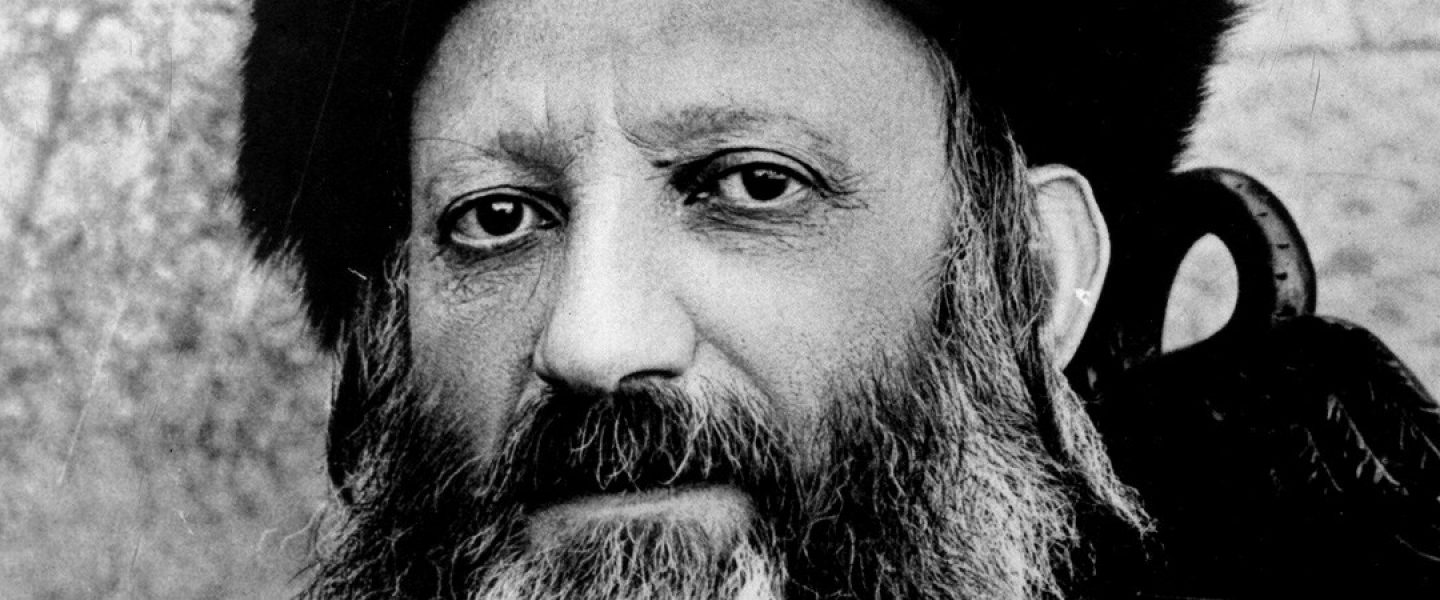
Rav Kook (Moadei haRe’iah, pg. 110)[1]
During the evenings of the Succoth holiday, there was music, dancing, and even juggling in the holy Temple. This joyous activity was called the Simchat Beit-HaSho’eivah, the Water-Drawing Celebration. While usually wine was used in libation ceremonies, during the holiday of Succoth the kohanim poured water — drawn the previous night from Jerusalem’s Shiloach spring – next to the altar. This water-offering alludes to the Heavenly judgment for rain that takes place on Succoth.
Yet the nature of these evening celebrations is peculiar. They are called Simchat Beit-HaSho’eivah, from the word sho’eivah meaning ‘to draw water.’ This term indicates that the celebrations were not in honor of the actual mitzvah of pouring water on the Temple altar, but rather for the preparatory act of drawing out water from the spring. This appears quite illogical. Why did the people dance and rejoice during the nighttime preparations, and not during the actual Temple service that took place the following day?
In fact, the Water-Drawing Celebration teaches us an important lesson. Generally speaking, we can divide up life’s activities into two categories: means and ends. We naturally distinguish between their relative importance, and look upon means as merely a prerequisite to attain a desired goal, but lacking any intrinsic value.
This divide between means and ends goes back to the very beginnings of creation. According to our Sages (Midrash Rabba, on Bereishit 1:11-12), G-d commanded the earth to produce עץ פרי עושה פרי, “fruit trees that make fruit”. Not only were the trees to produce fruit, but they themselves were to be ‘fruit trees,’ i.e. the trees themselves were meant to taste like their fruit. However, the earth ‘rebelled’ and only gave forth עץ עושה רפי, “trees that make fruit” — trees that bear fruit, but lack any taste of their own.
This midrash is an allegory, wherein the ‘fruit’ represents the ultimate spiritual goal of reality, and the ‘tree’ represents the means/instrumentalities of attaining and experiencing that reality. Our Sages do not mean that the world literally rebelled against Hashem – which would be puzzling and even preposterous. Rather, it means that a certain distance from the ultimate spiritual reality is woven into the fabric of Creation itself. The confines of our earthly existence dim our ability to taste the spiritual sweetness of the ‘ends’ while we are occupied with ‘means. The original ideal was that even within the means (the ‘tree’) one would be able to sense the same level of purpose and importance as the final goal (the ‘fruit’).[2]
While our current reality makes a sharp distinction between means and ends, nonetheless this original ideal was not completely lost to us. When we sanctify our actions and perform them altruistically, with a pure motive to fulfill G-d’s will, then even that which only facilitates a mitzvah is elevated to the level of the final goal. At this level of intent, even our preparations have a ‘taste’ of the sweetness and meaningfulness of the mitzvah itself. So it was with the Simchat Beit-HaSho’eivah celebrations: even in the preparatory act of drawing the water one could sense the joy and holiness of the actual mitzvah of offering the water on the Temple altar.
[1] Taken from Rabbi Chanan Morrison’s excellent work Gold from the Land of Israel, pg. 21-22.
[2] This may seem overly abstract, but consider the following examples: (1) The parent who gets frustrated about being stuck in traffic while driving his kids to school, not realizing that this facilitates the chinuch of his/her children and will provide them with the foundation to live Jewish lives and be faithful to the Torah. (2) The chasan reluctantly dragged along by his kallah to peruse china and tableware for their new home, who doesn’t realize that this too will be a part of the home he will build and the Shabbos table he will share with his future wife and children. (3) The student struggling to understand a difficult passage in gemara, who doesn’t understand that it is precisely these struggles that will lead to the deepest possible appreciation for and connection with his learning.
Food for Thought (Sichah of the Lubavitcher Rebbe)
Our Sages state that “he who has not witnessed the celebration of Simchas Beis HaShoevah has never seen happiness in his life.” In many respects, the water offering paralleled the wine offering that accompanied both the daily sacrifices and the additional Mussaf sacrifices offered on the holidays. In fact, the Torah’s only allusion to the water offering appears in its description of the wine offering. Nevertheless, no outstanding celebration marked any of the wine offerings, even though it is wine, not water, that figures prominently in the joy of so many festive occasions. Paradoxically, the Jewish people’s greatest outpouring of joy was associated with the water offering, not with wine.
Based on the principle that we must thank G‑d for all the pleasure we experience in this world, our Sages instituted the blessings recited before eating or drinking. The Sages indicated the unique status of wine – the degree to which it gives pleasure – by composing a special blessing for it, boreh pri hagefen. In contrast, they did not regard water, which is tasteless, as sufficiently pleasure-inducing to warrant a blessing; only when a person drinks water to quench his thirst is a blessing required.
Wine and water represent different approaches to our service of G‑d. The Hebrew word ta’am has two meanings, “taste” and “reason”. Taste and reason are related because the comprehension of an intellectual idea produces palpable satisfaction, not unlike the pleasure derived from tasting good food. Because wine is pleasant-tasting it has come to symbolize the kind of divine service that is flavored by understanding. Water, which is tasteless and simple, symbolizes kabbalas ol, the acceptance of the yoke of heaven – a simple commitment to fulfill G‑d’s will whether one understands or not.
Generally, we take pleasure from performing a mitzvah we understand, because this enables us to appreciate the positive effect produced by our efforts. By the same token, when we do not understand the reasons for a mitzvah, we may feel less fulfilled. Though we may be willing to obey G‑d’s will at all times, we do not usually derive as much pleasure from mitzvos which require our unquestioning acceptance. There are times, however, when the approach of kabbalas ol generates a satisfaction deeper and more fulfilling than that which is experienced from a rational service of G‑d. When we are “thirsty”, when we desire to be united with G‑d in a way that transcends the limited scope of our thoughts and feelings, we derive pleasure from “water”, from kabbalas ol.
At this level of commitment, the pleasure of fulfilling mitzvos through kabbalas ol exceeds the satisfaction of the rational approach, since the happiness produced through our understanding is, by definition, limited in proportion to our understanding. The more extensive our knowledge, the greater the pleasure we receive; where our knowledge is limited, so is our pleasure. In contrast, the commitment of kabbalas ol that results from “thirst” results in a happiness that knows no bounds. For by making a commitment beyond the scope of our understanding, we connect with the infinite dimensions of G‑dliness. This brings about a joy which entirely surpasses our human potential.
In this context, Sukkos and the water offering can be seen as a stage in the progressive divine service begun on Rosh HaShanah. On Rosh HaShanah and Yom Kippur we accept G‑d’s sovereignty and turn to Him in sincere teshuvah. These days challenge us to penetrate to our core and awaken within ourselves a “thirst” to enter into a deep, all-encompassing relationship with G‑d. This “thirst” is satisfied through the service of kabbalas ol that is symbolized by the water offering.
The celebrations of Sukkos are an outgrowth of our soul-searching on Rosh HaShanah and Yom Kippur. Because we awaken a commitment to G‑d that is unlimited, our celebrations are likewise unbounded.
Both the wine offerings and the water offering had to be brought during the daytime. However, while a wine offering offered at night was thereby invalidated, this restriction did not apply absolutely to the water offering; after the fact, it was acceptable even at night. Day and night are classic metaphors for states of revelation and concealment in our divine service. A rational commitment, which is symbolized by the wine offering, is relevant only “during the day,” when one has a conscious awareness of G‑dliness. Since a rational commitment fluctuates with the varying extent of each person’s understanding, it grows weaker when one’s awareness wanes. A commitment based on kabbalas ol, by contrast, weathers all seasons; it is not shaken, even when our understanding is weak.
The unique significance of the water offering does not minimize the importance of the wine offering; both were required in the Beis HaMikdash. Similarly, in the personal sphere, each mode of divine service complements the other. While the basis of our service of G‑d must be kabbalas ol, that simple and superrational commitment is enhanced and intensified by a conscious relationship with G‑d. A commitment to G‑d which exists beyond the limits of our understanding is not sufficient. For our relationship with G‑d to be complete, it should be internalized until it permeates and involves all of our faculties – and that includes our minds.
Questions for Discussion
- In what areas of life is it hard to taste the sweetness of the destination along the journey? What are some things we can do to change that?
- Chazal (Gemara Sukkah 35a) teach that the esrog tree’s fruit tastes the same as its wood (lit. טעם עצו פריו שוה). How might this connect to Rav Kook’s insights above? Is there anything about Sukkot that helps us tap into the higher level of reality that Rav Kook describes?
- Is Rav Kook saying something similar to the Lubavitcher Rebbe in ‘Food for Thought’ above? If so, how?
- As noted above, Simchat Beit haShoeivah involved pouring out water on the mizbeach. Where else in the holiday of Sukkot does water figure as a prominent motif?
- How does one strike the right balance between emphasizing accomplishments vs. effort when it comes to education? When it comes to parenting?
