Printable PDF available here. Last year’s piece on Vayeitzei is available here.
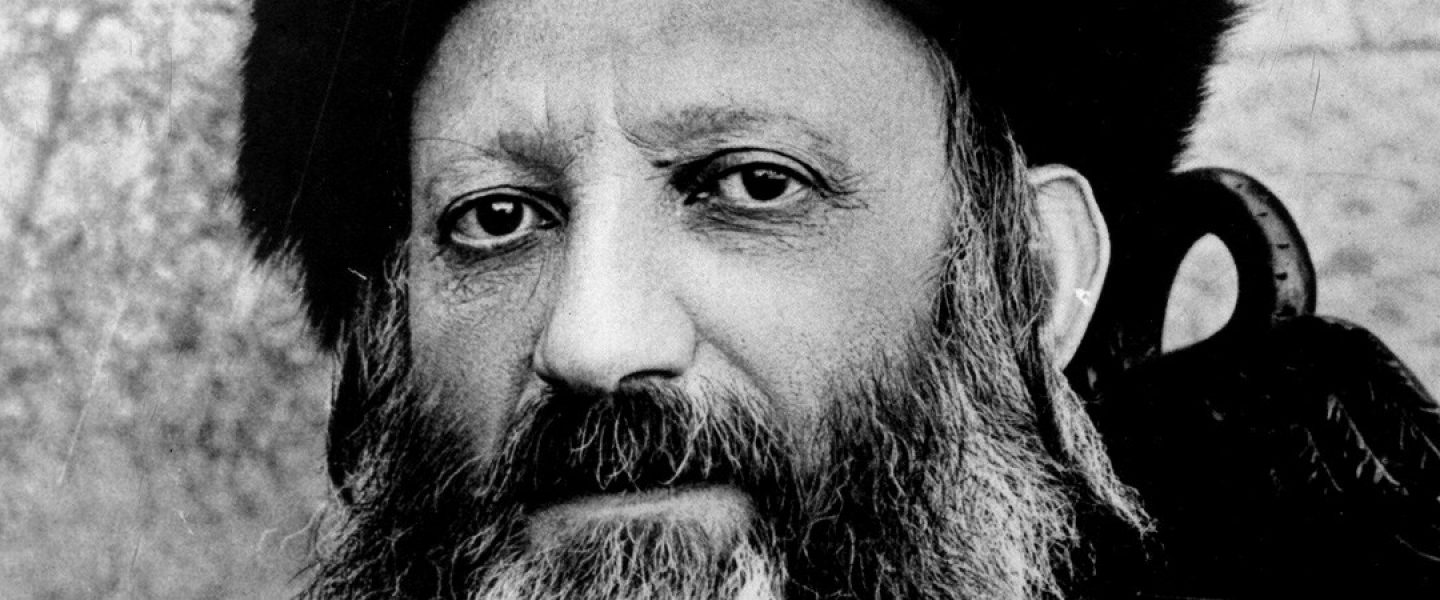
Rav Kook (Shemonah Kevatzim 2:280)
So she named him Joseph, saying, “May the Lord add for me another son.” (Bereishit 30:24)
Different perceptions of truth are bound to conflict and constrict each other. Every discipline of wisdom (lit. חכמה) feels threatened and encroached upon by others. But this is only when various perspectives of truth are unrefined and not yet understood in their true profundity. Division exists only on the level of expression and manifestation (lit. סגנון), which a function of our finite existence (lit. מצד המקבלים). But on the deepest level of reality, all Truth is unified and indivisible. Every discrete truth – whether in the realm of the Torah, ethics, or worldly wisdom – contributes to the totality of this Truth and strengthens the spiritual energy (lit. השפעה) that flows through all of existence. Thus, to the extent that a person focuses on the outward dimension of wisdom, he will fill threatened by truths that emanate from outside of his field of study. But if he seeks the fundamental essence of Knowledge, he will realize the unification of all disciplines. He will become enriched, not threatened, by other bearers of truth. Every level of reality – inner essence and outward manifestation, holy and profane, pure and impure – will be united in his soul’s inner gaze. They are all sparks in a greater holy flame.
Admittedly, there are few people who merit this level of perception. The spiritual elite, those who focus on inner essence, are few in number (Gemara Sukkah 45b). The vast majority do not advance beyond the outward level of expression in which separation and division reign. But this is appropriate. Our Sages (Gemara Chagigah 10a) apply the verse “Neither was there any peace to him that went out or came in” to one who goes back and forth between halacha and mikra, gemara and mishnah, Talmud Bavli and Talmud Yerushalmi. And all the more so is this true of one who flits between sacred and profane, pure and impure. Most people need to concentrate their focus on one discipline of the larger Truth, and for them, the guiding principle is that “To add is to detract” (lit. כל המוסיף גורע) (Gemara Sanhedrin 29b).
If this analysis seems too abstract, let us consider Yosef haTzadik. Yosef epitomizes the elite spiritual personality who contains within himself the unified reality of all Truth. Yosef was the favored son of Ya’akov, who saw him as his spiritual heir. Ya’akov was “a wholesome man who dwelled in tents [of Torah].” But Ya’akov was neither naïve nor unworldly, as we see in his shrewed response to Lavan’s deviousness. As our Sages teach, Ya’akov could declare to Esav that “I have lived with Lavan and kept all 613 mitzvot” (lit. עם לבן גרתי ותרי׳ג מצוות שמרתי).
Yosef embodied this same integration of seemingly disparate aptitudes.(1) In the face of temptation from Potiphar’s wife, he held fast to the ethical demands of Avraham’s covenant. He was also a man of chesed who oversaw the distribution of food to starving and impoverished masses. He was the ranking advisor of the most powerful empire in the world, a role in which he displayed incredible initiative, vision and administrative talent. According to our Sages (Gemara Sotah 36b), he was unmatched in worldly wisdom, as the angel Gabriel bestowed upon him fluency in all seventy languages. He also displayed graciousness to the brothers who had sold him into slavery, and repaid their cruelty with kindness. Our Sages also teach that he proclaimed his love for Eretz Yisrael even in the pit of imprisonment in Egypt. And even on his deathbed, as the clouds of enslavement were beginning to darken, he expressed his yearning for the eventual redemption – “G-d will surely remember you and take you up out of this land to the land that He swore to Abraham, to Isaac, and to Jacob… G-d will surely remember you, and you shall take up my bones out of here” (Bereishit 49:24-25).
Can there be a better archetype than Yosef for the personality who integrates all talents and spiritual aptitudes, who joins the worlds of kodesh and chol in one harmonious and integrated whole? This is the path of Yosef, whose gaze is unconstrained by the boundaries within which most others – even tzaddikim – operate. The Torah (Bereishit 49:22) describes Yosef as “עלי עין,” and from here our Sages derive that Yosef’s descendants are עולי עין, that they rise above ayin ha’ra. The select few who follow Yosef’s path rise transcend the realm in which separation and division reign. This is the deeper meaning of Yosef’s name, of Rachel’s declaration “May the Lord add for me another son.” Yosef is the one who seeks to add, to join all levels of truth – Torah and chochmah, holy and profane, pure and impure – into one integrated reality.
(1) In the Hebrew original, Rav Kook refers to Kabbalistic sources that Ya’akov embodies the sefirah of tiferet, which represents a harmonious synthesis between chesed (embodied by Avraham) and din (embodied by Yitzchak). He also refers to the midrash (see Rashi to Bereishit 37:3) that Yosef’s appearance resembled that of Ya’akov.
Food for Thought
Rav Aharon Lichtenstein: There were times at which the balance between talmud Torah and other areas of life needed to be worked out. I remember on one occasion in graduate school I felt that my Torah learning was flagging a bit, and, among all people, I discussed it with my thesis advisor, a non-Jew, Prof. Douglas Bush. He was a wonderful person and a great scholar – probably the top person in English literature when I was at Harvard. I felt a little in distress, perhaps my emphases were being somewhat skewed, and I went to talk to him. I told him, “I think that I know what I am doing and why I am doing it, but I would like to hear it from the master.” I was at Harvard for four years: the first two years, courses; then generals; then dissertation. This was the first semester of my second year, my third semester at Harvard. I said to him, “I think I understand the value of English literature, but I would like to hear it formulated more fully.” I was taking a course in sonnets, and he said, “You know, I ask myself about the legitimacy of investing so much time and effort in literature; I must know some of Dryden’s sonnets better than some of the psalms!” He was a religious person, and he could understand my tension very deeply; that is where we connected. We went on to discuss the need to understand the human spirit, to realize human potential, through the study of the humanities in particular. I thought that experience was extremely valuable, and it helped me overcome my brief crisis.
Hermann Struck:(2) I went up to Jerusalem and visited the Rav. He received me warmly. Apparently, he had heard about my activities in Poland and Russia during World War I, when I served as a special officer for Jewish affairs on the staff of the invading German army. The conversation quickly turned to the topic of art; and I – the professor of art – suddenly saw myself as a student sitting before his master, listening with admiration to his comprehensive knowledge. When the Rav began talking about the place of art in universal culture, I thought to myself, “It is, indeed, fascinating that this great Torah scholar knows about such matters, but that must be part of his broad knowledge of general philosophy,” of which I was already aware. However, when he went on to discuss – effusively – the art of painting, even relating to great and famous painters and their artistic genres, I was completely amazed. When and how did he attain such wide-ranging proficiency and such subtle distinctions in this complex discipline? Suddenly, I realized that this great rabbi sees all; his poetic soul is open to the entire range of artistic expression, and his brilliant grasp encompasses all of its varying approaches. He is also able to define and find precise terminologies to describe its most unique approaches.
During that broad conversation, which lasted much longer than I had expected, the Rav did not lose sight of me. He had a special request of me. He asked me to devote more of my energies to painting the scenery of Eretz Yisrael. “As an artist,” he said, “you have an important mission. You must reveal the beauty, grace, and sanctity of our Holy Land. You must depict historical sites which, when seen, will inspire Jews to love the Land and yearn for its hills and valleys.” The Rav concluded with a blessing: “May the Holy One, Blessed be He, Who bestowed wisdom upon Betzalel and Oholiav for the purpose of building the Mishkan, continue to bestow wisdom upon anyone whose artistic talents are devoted to the Jewish nation and its land.”
(2) Herman Struck (1876-1944) was an outstanding artist in Germany. He was born to an Orthodox family and remained an observant Jew his entire life – an extraordinary rarity for someone with artistic tendencies during this period in Jewish history. Among his students was Marc Chagall.
Rav Soloveitchik (Days of Deliverance): In aristocracy, each family has a coat of arms, an emblem. What was the emblem of Joseph? It was the ketonet passim, of course, the multicolored coat, a coat composed of stripes that his father made for him (Gen. 37:3). When Joseph came to Dothan, the brothers immediately stripped him of the ketonet passim, the banner that Joseph carried (Gen. 37:23). Without the ketonet ha-passim, Joseph’s power dissipated and disappeared. I believe the ketonet ha-passim is the symbol of the Jewish people as well…
Joseph beheld two visions. He dreamt of his alumot, sheaves, which rose and stood up high while the sheaves of his brothers came and bowed down to his. When he told that dream to his brothers, they were not envious of that dream. True, their hatred was deepened and strengthened, but their envy was not aroused. Then he dreamt another dream. He dreamt of the sun and the moon and the stars bowing to him. When he told this dream to his father… his brethren envied him” (Gen. 37:11) – not only did they hate him, but they were envious of him as well… The prima facie interpretation is that Joseph had two visions. One was of material economic power, of prosperity and opulence, and that vision came true one hundred percent. The other dream apparently revolved around spiritual greatness, heavenly sweep and heavenly grandeur. Joseph wanted to be powerful in a political sense, to attain wealth and prosperity, to be respected by people because of his power, feared by people because of his might; but he also wanted to be great spiritually, to be loved by people, to be revered by people because of the greatness of his wisdom and his kindness.
Can one person combine both qualities? Can one person fulfill both dreams, the dream of the sheaves—of economic and military power—and also the dream of spiritual greatness, of moral heights and communion with G-d? Joseph, as an executive, paid attention to the hard facts of life; he organized the storage of the food during the seven years of prosperity. He divided and then removed the peasants from their land. Could he at the same time be a dreamer, a visionary, and a spiritual leader loved by people? Apparently, Joseph thought that he could combine both. This is the meaning of the ketonet ha-passim—multicolored, not monochromatic, not one monotonous color. If there are many colors, there are many contradictions. Colors clash with one another, and Joseph was the synthesis of alumot and the heavenly bodies.
The Jews throughout history have imitated Joseph. We also have two visions. The Jew is a good merchant and he is skillful in trade. Jews dreamt of sheaves, otherwise they could not have survived. At the same time the Jew—the small merchant, the grocer, the peddler—would come home for the Sabbath. I knew such people in my childhood. The same Jew, sometimes in rags, had another dream—not of alumot, not of dollars and cents, of rubles and kopeks, but of something else, of a “sun, a moon, and eleven stars” (Gen. 37:9) of spiritual greatness. He was a great spiritual personality.
Questions for Discussion
- How is Rav Soloveitchik’s understanding of Yosef (excerpted above) the same as Rav Kook’s? How is it different?
- According to Rav Kook, both Yosef and Ya’akov excelled at integrating different talents. What else do they have in common?
- Are there any dangers to the spiritual path of Yosef, as articulated by Rav Kook?
- Who have you met (or read about) that expresses the path of integration/harmony which Rav Kook sees represented by Yosef?
- What is the proper role of chochmah and worldly knowledge in Torah life and avodat Hashem?